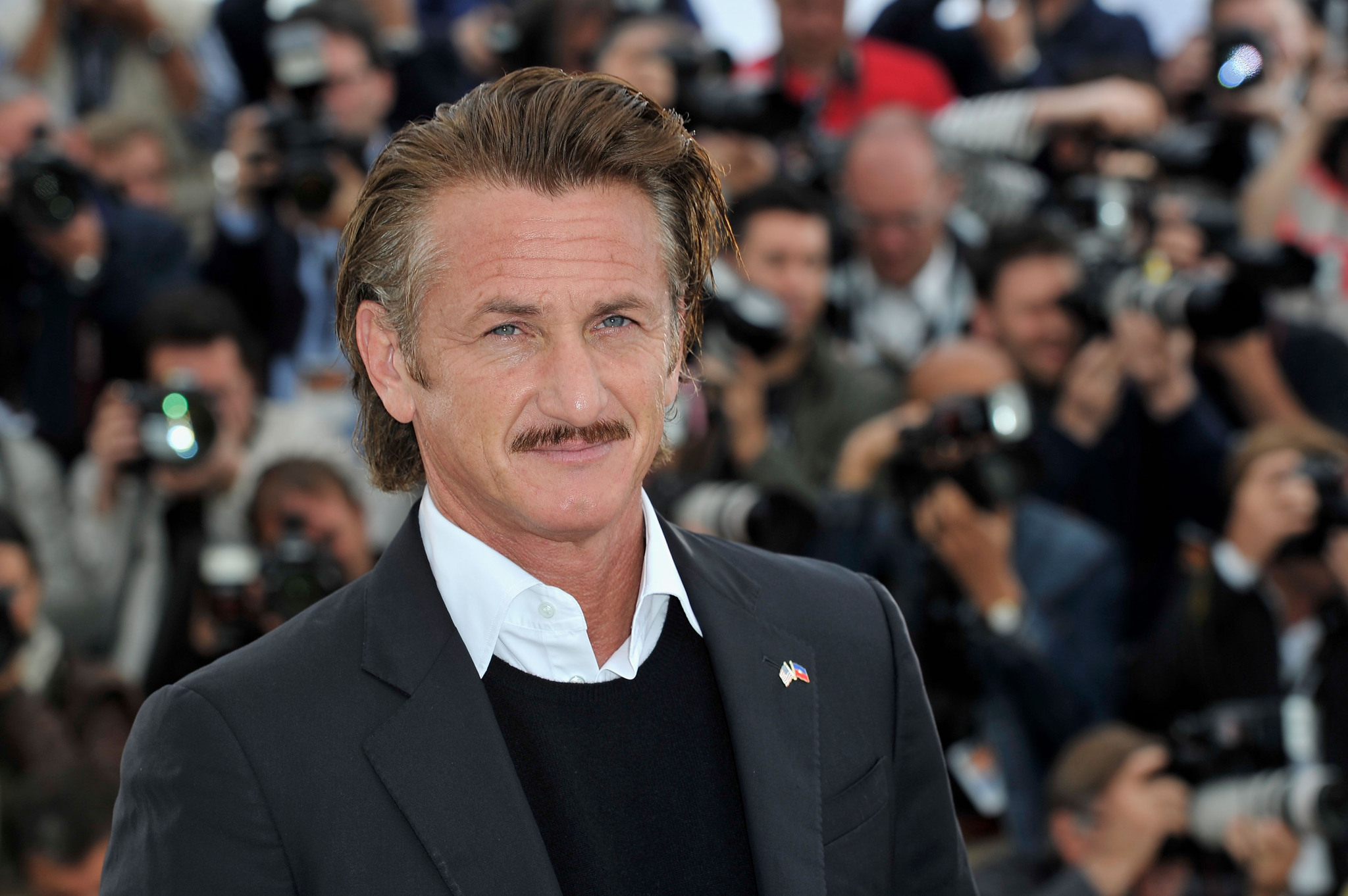
Exclusive: Sean Penn on Fascism, Friendship With Leo and One Battle After Another
The actor breaks silence on the film and his first-ever role opposite DiCaprio
Who could forget American actor Sean Penn’s shamanic transformation into Harvey Milk in Milk (2008)? The role earned him his second Academy Award and cemented his reputation as an actor unafraid of political intensity or moral complexity. His first Oscar, almost two decades ago, was for Mystic River, Clint Eastwood’s crime-thriller that excavated the emotional wreckage of a childhood trauma.
Now, in One Battle After Another, directed by the inimitable Paul Thomas Anderson, known for films like Phantom Thread and There Will Be Blood, Penn takes a darker turn, stepping into the cold, militarised soul of American authoritarianism.
Yet, in an exclusive interview with Esquire India, the 65-year-old actor confessed he couldn’t help but laugh the moment he first laid eyes on the script, a reaction sparked entirely by Paul Anderson’s unmistakable originality.
Set in a not-so-distant future, One Battle After Another unfolds in an America that has curdled into a fascist state, where immigrants are detained en masse, a shadowy Christian nationalist regime controls the narrative from behind closed doors, and armed resistance flickers in isolated bursts.
At the heart of One Battle After Another is Bob played Leonardo DiCaprio, a burned-out revolutionary living off-grid with his daughter, Willa (Chase Infiniti). Interestingly, the young actress has also played daughter to Jake Gyllenhaal in Presumed Innocent and Elizabeth Moss in The Testaments, the sequel to Hulu’s hit series The Handmaid’s Tale.
So, when she disappears, Bob is forced back into action, confronting not only the dangers of the regime but also the ghosts of his past, embodied most viscerally in Colonel Steven J. Lockjaw, the film’s chilling antagonist played with searing menace by Sean Penn.
Lockjaw’s character is as physically restrained as he is psychologically complex. A U.S. Army officer with the rigid discipline of a military relic, he hides a repressed inner world that seeps through Penn’s glowering silences and barely contained rage. His unexpected, politically charged entanglement with Perfidia Beverly Hills (Teyana Taylor), the film’s insurgent femme fatale, adds layers of emotional ambiguity to an already tense narrative.
So, what about this dystopian American drama had Penn laughing when he first read the script?
"This script came to me like a gift. Paul's a special filmmaker and writer, and has been a friend for a long time. We had talked about working together over the years, and I worked with him briefly on Licorice Pizza, so before I read page one, I sat down with high hopes and the assumption that it was going to be something I was going to want to do," he reflected.
"Paul's such an original, and I read (the script) it, and I started laughing at what he was approaching with the story right away. It was the timeliness of it, the freedom with which he wrote (and writes) was exciting, great characters all the way down the line. It was a page turner."
Having said yes almost instantly, Penn was equally excited by the calibre of talent already attached to the film, especially Leo, who plays the film’s tormented lead. Their paths have crossed for decades, but this marked their first collaboration onscreen.
Leo plays the rebel haunted by the weight of his past while Penn’s Lockjaw is the embodiment of institutional power—his rigid morality hiding layers of inner conflict. At one point, he shares a night with Perfidia, a moment that reveals the blurred lines between ideology, control, and vulnerability. The result of that night carries heavy symbolic weight, hinting that the clash of political extremes can lead to deeply human, and often tragic, consequences.
While the relationship between Bob and Lockjaw may not be so straight-forward as in the film, Penn shares a long-standing friendship and admiration for our September cover star, Leonardo DiCaprio, in real life.
"I did know that Leo was involved, and we had never done anything together before and we’d been close since he was about 15 years old. (So) Watching this great actor that he's become—that he already was when he was doing This Boy's Life... I think I called Paul right away and said, you know, where do I go?" he said.
Oddly enough, it may come as a surprise then that One Battle After Another is not set to be a didactic dystopia, there’s sharp humour and a surprising intimacy threaded through the narrative. Rather than glorify revolution, the film lays bare its futility against system that is fuelled by implacable authoritarian forces in America through over-the-top thriller-satire of the present and the incoming future.
Anderson, working from an original screenplay inspired in part by Thomas Pynchon’s Vineland, is set to deliver a film that feels eerily prescient. Though completed before the current U.S. administration took office in 2025, the film plays like a warning or a maybe a mirror towards where the world is heading or has already headed -one may have to decipher it firsthand when it hits theatres on September 26, 2025 in India.