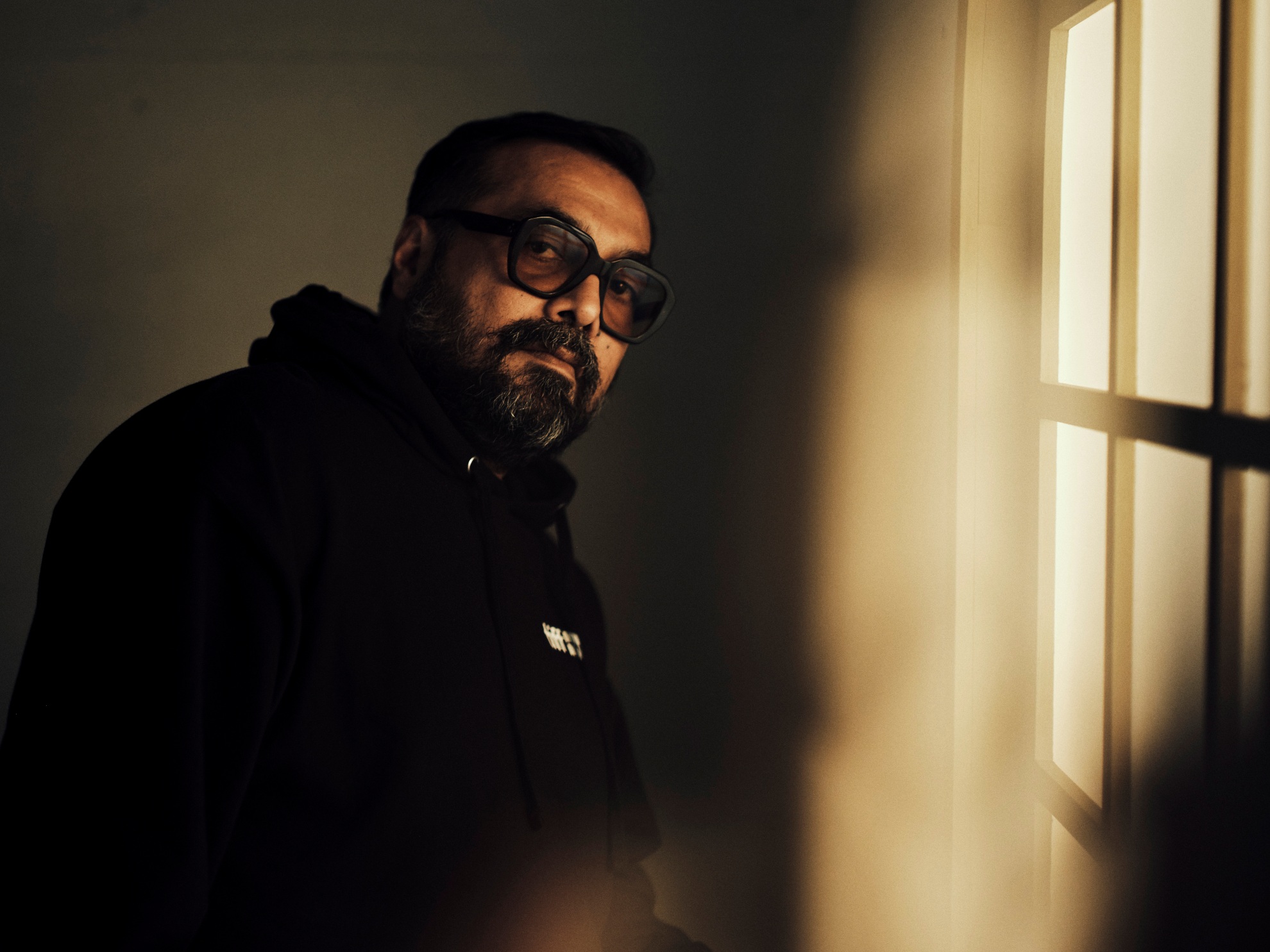
Anurag Kashyap Shares Why Gangs Of Wasseypur Became The Bane Of His Existence
On the verge of releasing his next film, Nishaanchi, the filmmaker gets candid on leaving Mumbai, backing independent voices and balancing commerce and creativity
Anurag Kashyap has never played by the rules.
A filmmaker who thrives on unpredictability, he has built his career around stories that refuse to be boxed into templates. Like his upcoming film, Nishaanchi, a gangster family saga spanning two decades, a project he has nurtured since 2016, silently, without announcements or teasers. For Kashyap, filmmaking is not about spectacles or numbers, but about telling stories honestly, even if that honesty makes the industry uncomfortable.
In a candid conversation, he reflects on moving away from Mumbai, his disillusionment with the system, his enduring belief in new voices, and the weight of carrying Gangs of Wasseypur like an unshakable shadow.
Nishaanchi comes bearing your signature style. And this was a story you nurtured for nine years and no one knew until you announced it.
I never announce any of my films or projects until they are done. That’s my modus operandi. Nishaanchi was something I started in 2016 and needed a producer who believed in it. It is the kind of commercial cinema we watched in the 70’s, an ode to Deewar, Trishul, Don, a gangster drama of its kind. It is a simple story, two brothers, their mother, their past, a love triangle—it is a simple story but within its simplicity there is so much happening. Emotional dramas were a major part of our cinema earlier, something we’re lacking today. Post the social media explosion, people started judging a film by its numbers, and everybody started chasing those numbers in a race to outdo the other. Everyone’s doing everything but making movies. Everybody wanted to be in charge.
Was this also the impetus for your move from Mumbai to Bengaluru earlier this year?
It had been simmering over time, since covid. Increasingly you feel isolated by the system, because they look at you as a pariah of some sort, who is attacking them. Then you slowly start losing support, friends, and people, and increasingly everybody gets uncomfortable associating with you. I had to step away and move because I don’t think anybody wants advice, they just kept thinking I was on a warpath with them. Having said that I don’t have to be in Mumbai to make movies, it’s a misnomer that you can only do films if you live in Mumbai. If I need to work, I can live wherever and go shoot wherever the story demands. I am getting so much love and acceptance in the South which I never got in Mumbai.
How would you define the current chapter of your life?
I don’t think it has ever changed, it’s been the same right from the beginning of the time when Black Friday came out. It’s just that now the world knows what they think is best for me, there has been a constant claim to have ownership.
Your portrayal of characters is very nuanced, they are flawed, they have agency. Do you think we allow filmmakers like you to portray the kind of characters you want to, since the template has always been either black or white?
Grey in our industry is very difficult, because the Hindi film industry likes unidimensional templates. Saiyaara was a great mainstream film and it worked. People like black and white, usually more black than white. They want things they can understand simply but the nuances and complexity they step away from. The fear stems from the so-called power brokers in entertainment today – they are businessmen, not filmmakers. Their world is very limited. The mainstream Bollywood world is between Juhu and Bandra. They lack imagination. They are extremely incestuous, who just want to outdo the other and want to be bigger.
But how does one actually strike that balance between commerce and creativity?
What is the balance between commerce and creativity? Every film that has worked recently is not something that a trade could predict. Every week there has been a film in every language that has surprised everyone. Lokah. Saiyaara. Right now it’s Demon Slayer. Nobody can predict that game. There’s no striking a balance between commercial and creativity. You have to just go out and be creative and tell your story authentically and honestly, and it will happen, whatever has to happen.
You have also been backing independent voices such as Jugnuma and Anuparna Roy’s Songs of Forgotten Trees.
I get inspired by new filmmakers because they have a certain honesty in them. The same honesty I had made Black Friday with. Then I became clever. You have to when you are constantly dealing with opposition and this myopic industry. You need to be clever to survive, and you lose that person who had no fear, was totally honest and would go out and make a film he believed in. Which is why I like to support young filmmakers so that they are secure and they continue on their path.
If you had to introduce yourself to a 20-year-old film student who has never seen your work, which one of your films should they start with? And which one should they avoid until they are done?
They should start with Black Friday. And the last film they should see is Gangs of Wasseypur. Because Gangs of Wasseypur blew up and became the bane of my life since every film of mine was compared and equated to that. People would compare whether it was like Gangs of Wasseypur or not, and that weighed me down.
If someone were to direct your biopic, who would you trust?
No one. My biopic should not be made or written. I don’t like the way biopics are made. There are too many dishonest biopics made in Bollywood where the characters do only heroic things.