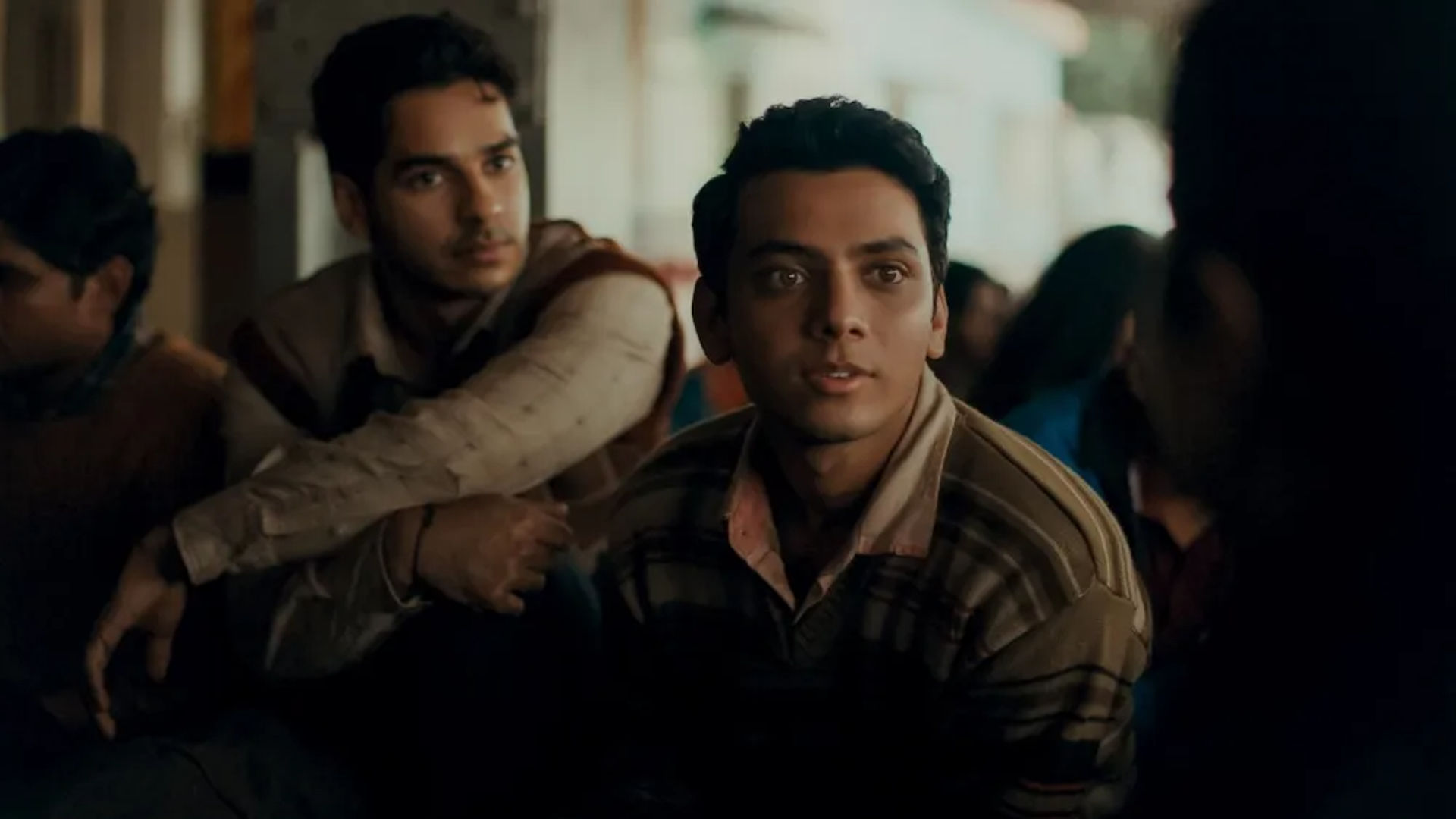
Neeraj Ghaywan’s Homebound Makes the Oscar Shortlist
Homebound enters the Oscar race and Indian cinema finds itself back into rare international territory.
On Tuesday morning, while the world scrolled past the usual avalanche of headlines, something quietly seismic happened for Indian cinema. Homebound, Neeraj Ghaywan’s long-gestating second feature, slipped into the Oscar conversation!
The film has been shortlisted for the 98th Academy Awards in the Best International Feature Film category, placing it among just 15 titles chosen from 86 official submissions worldwide.
Yes, Indian films are rarely invited inside, but being shortlisted means Homebound now survives the Academy’s first cut. The next step is more brutal: Academy members who opt into the category must watch all 15 films before voting. Only five will make it through.
Still, this moment matters. In the history of the category, only four Indian films have ever reached this stage—Mother India, Salaam Bombay!, Lagaan, and Last Film Show. Of those, just three earned final nominations. None won. That makes Homebound the fifth Indian film to clear the shortlist hurdle—and the first in over two decades to feel genuinely competitive in the post-Lagaan era.
For Ghaywan, it’s also a return. Nearly ten years after Masaan announced him as a filmmaker with uncommon restraint and emotional intelligence, Homebound brings him back into the international awards bloodstream—older, sharper, and uninterested in spectacle.
The Movie
At its core, Homebound is a deceptively simple story. Shoaib and Chandan—played with aching precision by Ishaan Khatter and Vishal Jethwa—are childhood friends from a North Indian village chasing the same thing: a government police job.
As the story unfolds, shared ambition corrodes into desperation. The system they’re trying to enter—slow, opaque, quietly brutal—begins to demand compromises neither man is fully prepared to make. What Ghaywan captures isn’t melodrama; it’s erosion. The slow grinding down of decency when the stakes are survival.
The film is adapted from journalist Basharat Peer’s 2020 New York Times essay, “Taking Amrit Home.” But Homebound doesn’t behave like an adaptation of reportage. Ghaywan uses the piece as scaffolding, not scripture—letting silence, observation, and withheld emotion do the heavy lifting. It’s a film that trusts the audience to lean in.
Cannes, TIFF, Scorsese
Homebound premiered at Cannes earlier this year in the Un Certain Regard section, where it reportedly received a nine-minute standing ovation—one of the strongest responses to an Indian film at the festival in recent memory. From there, it travelled to Toronto before releasing theatrically in India on September 26, 2025.
Yes, Martin Scorsese is an executive producer. No, this is not a film trying to behave like a Scorsese movie. Homebound remains intentionally unspectacular—unflashy, unhurried, and allergic to emotional manipulation. That restraint is its power.
A Brutal Year to Break Through
If Homebound advances further, it will have earned it the hard way. This year’s Best International Feature shortlist reads like a global auteur roll call: Jafar Panahi, Park Chan-wook, Joachim Trier, alongside formidable entries from Japan, Palestine, Spain, Switzerland, and Tunisia.
There are no weak seats at this table.
Producer Karan Johar called the journey “overwhelming,” crediting Ghaywan for shepherding the film from Cannes to the Oscar shortlist. Ghaywan himself responded with characteristic understatement, thanking audiences for what he described as an “extraordinary” response.
Whether Homebound makes it to the final five is still an open question—and history is not on India’s side. But even at this stage, the film has already done something rare. It has crossed borders without sanding down its edges. It has spoken softly and been heard anyway.
For now, Homebound waits.
And for Indian cinema, that wait—tense, improbable, and loaded with possibility—is already worth paying attention to.