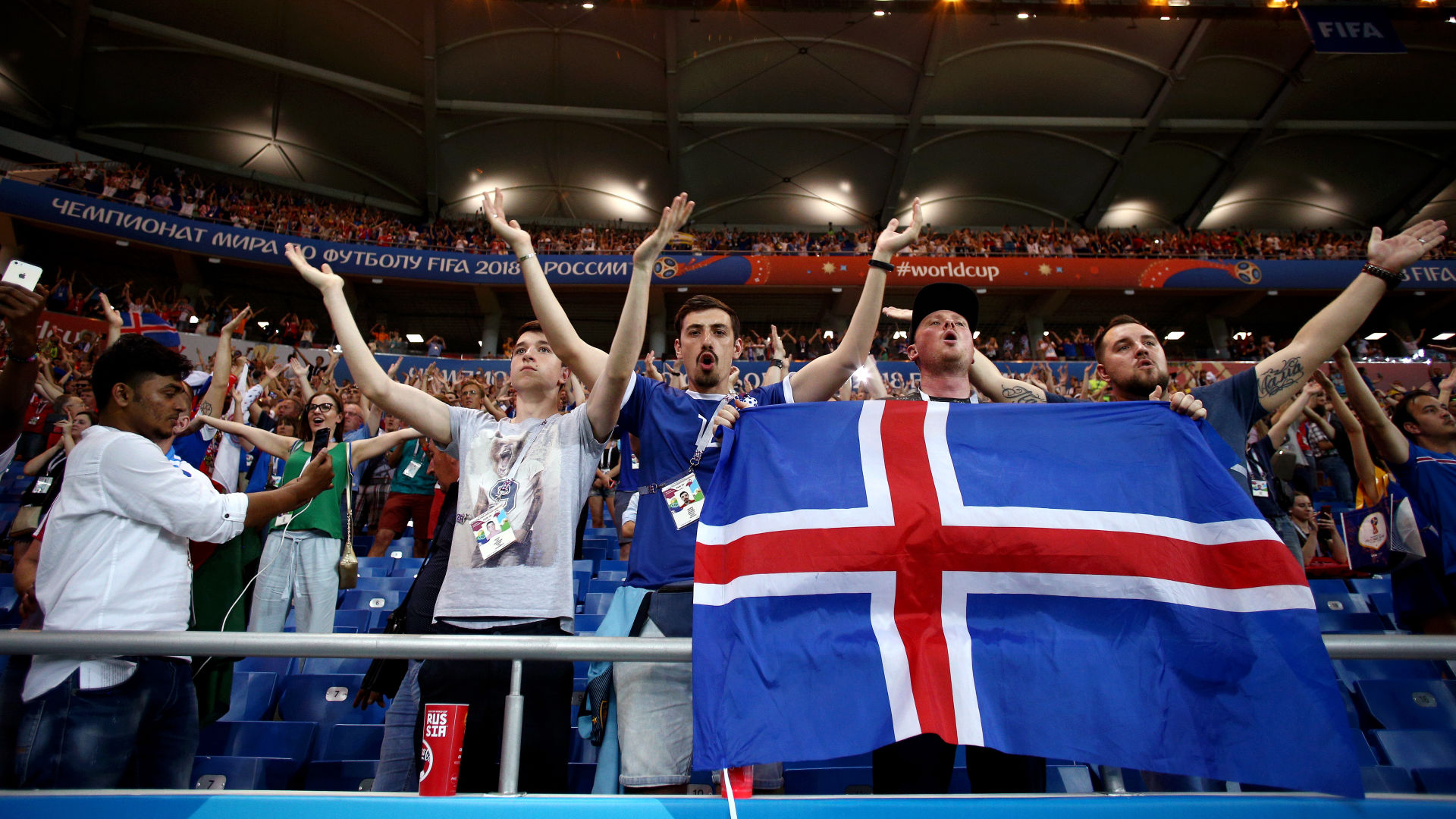
The World Cup will always need its giants — the Brazils, the Frances, the Argentinas who make the world stop for 90 minutes. But it’s the tiny nations, the ones that shouldn’t be there on paper, that make football feel like mythology.
Remember Morocco in 2022? They tore through a group with Croatia, Belgium, and Canada, sent Spain and Portugal home, and stood — impossibly — in a World Cup semifinal. Yes, we were all staring breathlessly at our TV screens silently hoping for a miracle. The underdog. The reminder that the trophy doesn’t just always belong to the heavy giants.
And now, Cape Verde — a sunburnt cluster of volcanic islands off West Africa — have just qualified for the 2026 World Cup. They thrashed Eswatini 3-0 and they will now walk into the world cup and they will make us hope for that impossible dream once again.
There have been similar nations in the past who’ve qualified for the World Cup – Iceland, Trinidad, Northern Ireland. Again and again, these countries have proven that you don’t need the numbers to dream big.
So, here’s a look at the smallest nations to ever make it to the FIFA World Cup—and the cultural weight their qualifications have carried.
Iceland (Population: approx. 360,000 | World Cup 2018, Russia)
In 2018, the island nation of just over 360,000 people then became the smallest country ever to qualify for the World Cup. Two years earlier, at Euro 2016, they’d already humiliated England in the knockout stages—a result that redefined underdog victories.
Their World Cup debut was nothing but wholesome. The team’s assistant manager was a dentist (literally). Their players were sons of fishermen, teachers, and accountants. Against Argentina, they held Lionel Messi and team to a stunning 1–1 draw, before eventually bowing out after defeats to Nigeria and Croatia. But by then, the Viking clap had already echoed through global football.
Cape Verde (Population: approx. 526,000 | World Cup 2026, USA–Canada–Mexico)
Born from volcanic rock and shaped by the Atlantic winds, Cape Verde has always lived in between — Africa and the diaspora, Creole and continental, memory and migration.
Roberto Lopes, left, and Deroy Duarte of Cape Verde celebrate their side's qualification for the 2026 FIFA World Cup after the FIFA World Cup 2026 African qualifying match between Cape Verde and Eswatini at Estádio Nacional de Cabo Verde in Praia, Cape VerdeGetty Images
Ranked 73rd in the world, the country swept their qualifying group, finishing four points clear of Cameroon. Their qualification was a cultural landmark. For a nation whose diaspora far outnumbers those who live on the islands, this is proof that you can be small and scattered, and still make great strides in a highly competitive sport.
Paraguay (Population: approx. 7 million | World Cup 1930, Uruguay)
The first World Cup in 1930 was barely a “World” anything — 13 teams, telegrams, and wooden goalposts. Paraguay was there, one of the smallest countries in that early lineup. In a South America still healing from war and poverty, their inclusion was a mark of pride.
Paraguay has qualified for 10 FIFA World Cups now – 1930, 1950, 1958, and now 2026. They even reached the quarter finals in 2010. Their qualification for the 2026 World Cup marks a full-circle moment.
Trinidad and Tobago (Population: 1.5 Million | World Cup 2006, Germany)
If you remember the 2006 World Cup, you remember Dwight Yorke leading Trinidad and Tobago’s “Soca Warriors” out under the German sun. For the Caribbean nation of just 1.3 million people, that moment was electric. It was the first time they’d ever made it—and they did so with a squad that looked more like a Premier League reunion: Yorke (Manchester United), Stern John, Shaka Hislop, Kenwyne Jones.
Dwight Yorke of Trinidad on the ball during the FIFA World Cup Finals 2006 Group B match between England and Trinidad & Tobago at Frankenstadion on June 15, 2006 in Nuremberg, GermanyGetty Images
They held Sweden to a 0–0 draw in their opening match—a small miracle—and while they failed to score a goal in the tournament, their qualification reverberated across the Caribbean.
Trinidad & Tobago Team Group (br) Dwight Yorke, Kenwyne Jones, Shaka Hislop, Brent Sancho, Aurtis Whitley, Dennis Lawrence, (fr) Chris Birchall, Cyd Gray, Carlos Edwards, Densill Theobald, Stern John before the FIFA World Cup Finals 2006 Group B match between England and Trinidad & Tobago at Frankenstadion on June 15, 2006 in Nuremberg, Germany. Getty Images
Northern Ireland (Population: 1.4 Million | World Cup 1958, Sweden)
Back in 1958, Northern Ireland, with just 1.4 million people, made its debut in that tournament. They beat Czechoslovakia, drew with West Germany, and eventually bowed out to France. But what mattered more was that they made it there at all.
They’d qualify twice more, in 1982 and 1986.
Roberto Lopes of Cape Verde celebrates his side's qualification for the 2026 FIFA World Cup with supporters after the FIFA World Cup 2026 African qualifying match between Cape Verde and Eswatini at Estádio Nacional de Cabo Verde in Praia, Cape Verde.Getty Images
Kuwait (Population: 1.5 Million | World Cup 1982, Spain)
The oil-rich Gulf nation was an unexpected guest in Spain ’82. Having won the Asian Cup two years earlier, Kuwait stunned footballing powerhouses like South Korea and Australia to qualify. Their first match saw them draw with Czechoslovakia, featuring a penalty scored by Antonín Panenka.
Their World Cup run ended in controversy when a Kuwaiti prince famously stormed onto the pitch to protest a French goal. The goal stood, but the moment burned itself into football lore.