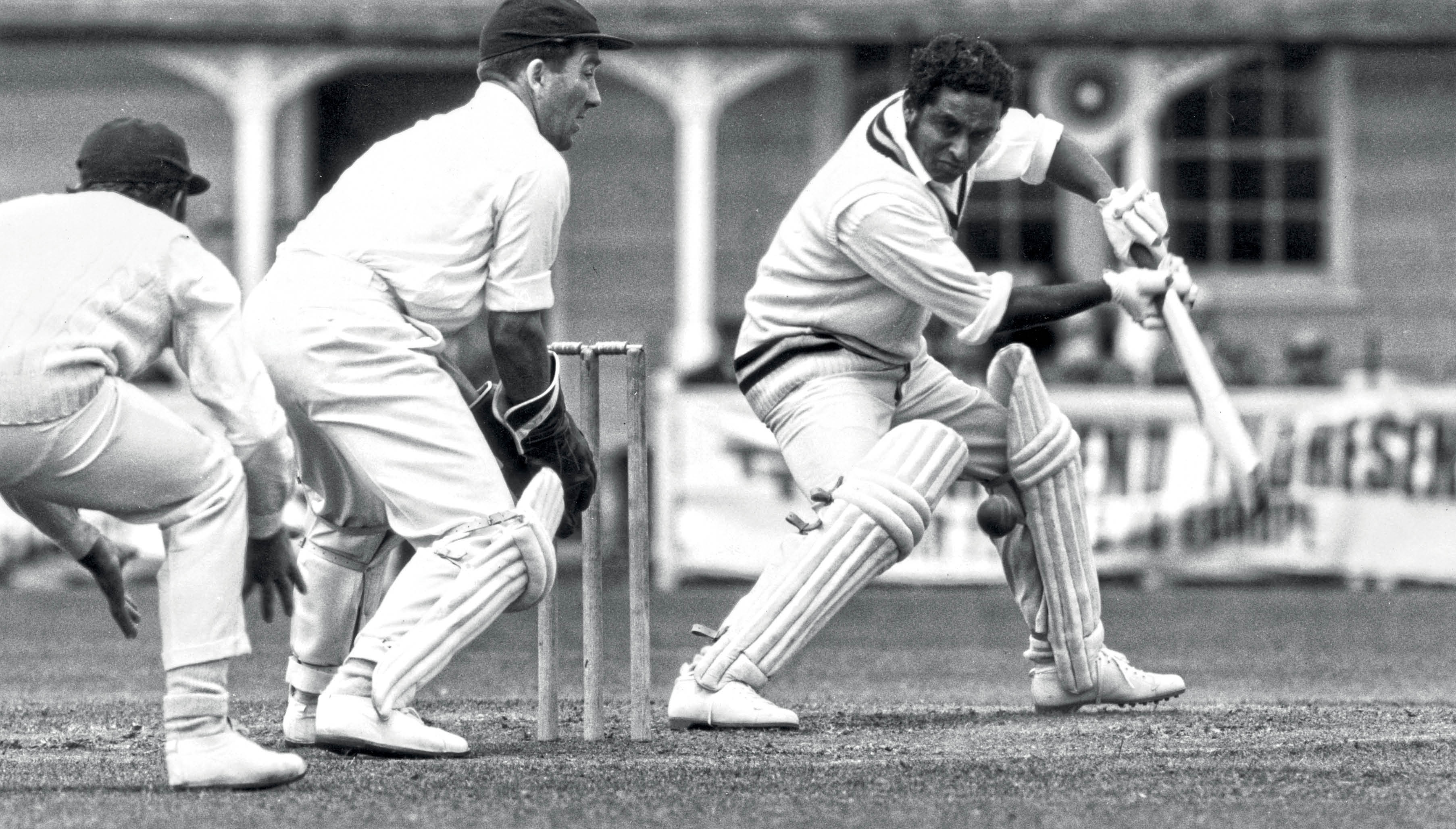
Rajdeep Sardesai On His Hero, His Father, Dilip Sardesai
Dilip Sardesai was a hard man to please, but he also represented what sport is all about—talent and meritocracy
Like many young people, I grew up looking up to my father—Dilip Sardesai. He was a Test cricketer. When your father is a cricketer, the game becomes a big part of your life.
Growing up, what he achieved was the ultimate thing for me. He remains till date the only Goa-born cricketer to play for India. He was born in Margao in 1940, and came out of a very small, middle-class family in Goa. This was Portuguese Goa and there was really no cricket around at the time. Till the time he was 17, he played cricket by the railway tracks, with friends and family.
In 1957, he came to Bombay. He knew no one in the city and had never seen a proper cricket ground. Four years later, he was playing for India at the age of 21. It’s like MS Dhoni's story but in a different time.
I remember, in 1971, when I was six years old and had just gone to school, my dad scored a double century for India against the West Indies, making him the first Indian to score a double century overseas. He got 600-odd runs and India won the series. They also went to England the same year and beat them for the first time. There I was, six years old, in school for the first time. Suddenly my name was being called out in the assembly as the son of an Indian cricketer.
There is a lot of external noise around you if your father is a famous name. But he gave me wings to do whatever I wanted. He never put pressure on me to try to play for India.
He helped me but I think he realised pretty early on that I was not good enough and he would tell me that. Dad represented what sport is all about—talent and meritocracy. He made me believe you reach where you are not because you are someone’s son or daughter. You get there because you are just supremely talented.
In that early period of life, I just wanted to be like him and play for India. But somewhere down the line, I, too, realised that in sport, talent doesn't run in the blood. Just because your father played for India doesn’t mean you can. I remember he would often tell me: “When you go on the ground, you are going to have to score the runs, I can't. I can only guide you.
I remember Sanjay Manjrekar and I were in the same Under-19 camp. My dad made it very clear that Sanjay was going to play for India and I wasn’t. He was honest and blunt. So, he spent far more time working and training with him than he did with me. While it hurt initially, I think it was useful because it forced me to look for other avenues.
Once I decided to do what I wanted in life, my father never stopped me. When we had set up the CNN-IBN studios here in Delhi, I brought him to see it. He had never seen a TV studio and he was very happy to see that I had made a life outside the cricket pitch.
In life, your heroes change. One of the happiest moments for me as a journalist was meeting Nelson Mandela in the early ’90s in South Africa. I had gone to cover the first cricket series between India and South Africa, and the country was just coming out of apartheid. Mandela was a remarkable man—jailed for more than 30 years by the government and yet he didn't seem to have a trace of anger or bitterness in him.
The other big lesson that my father left me with was the need to be rooted and have your feet on the ground irrespective of the highs and lows of life.
The generosity of spirit—I learnt that from him. At the end of the day, you should be judged by the fact that you stay humble and never allow ego to get the better of you. I think it’s a Goan way of life; I like to call it that. I always tell people that living in the moment is a good way to live. It’s the only way you can handle all the pressures of life.
My life has gone in a very different trajectory, and I had the luxury of options. My dad knew if he couldn’t have played for India, he’d have to go back to his town. He had a fire in the belly—and that’s the kind of inspirational figure we should look up to. It’s always good to have self-made figures as your heroes.
DAD WAS GOOD AT SPOTTING TALENT AND A GOOD example of that is Rohit Sharma. Anyone in Mumbai cricket will tell you that he had a habit of going to maidans on the weekends. Short pants and a T-shirt—he would just sit and watch matches. I remember my father ringing me up to say he had spotted the next big talent of Mumbai cricket and that I must come see this player. When I went to Mumbai next, we went to the maidan where Rohit would play. Even when dad was a selector, there were other cricketers he would go out of his way to fight for. If they were good, he would make every effort to ensure they got their due.
I remember he and I played a local club match together in Mumbai once in 1980. He was about 40-45. I was 15 years old. We had a century partnership—he obviously outscored me. In every over, he would tell me what I should do. Mostly, it was about what I was doing wrong.
The next day, there was a newspaper clipping on how we had both scored half centuries in the game. He looked at me and said: “You scored 50 runs, but you should have scored 100.” He was not easy to please. But batting with him on the opposite end—was a special moment that I will always remember.
As told to Nitin Sreedhar
To read more such stories from Esquire India's May-June 2025 issue, pick up a copy of the magazine from your nearest newspaper stand or bookstore. Or click here to subscribe to the magazine.