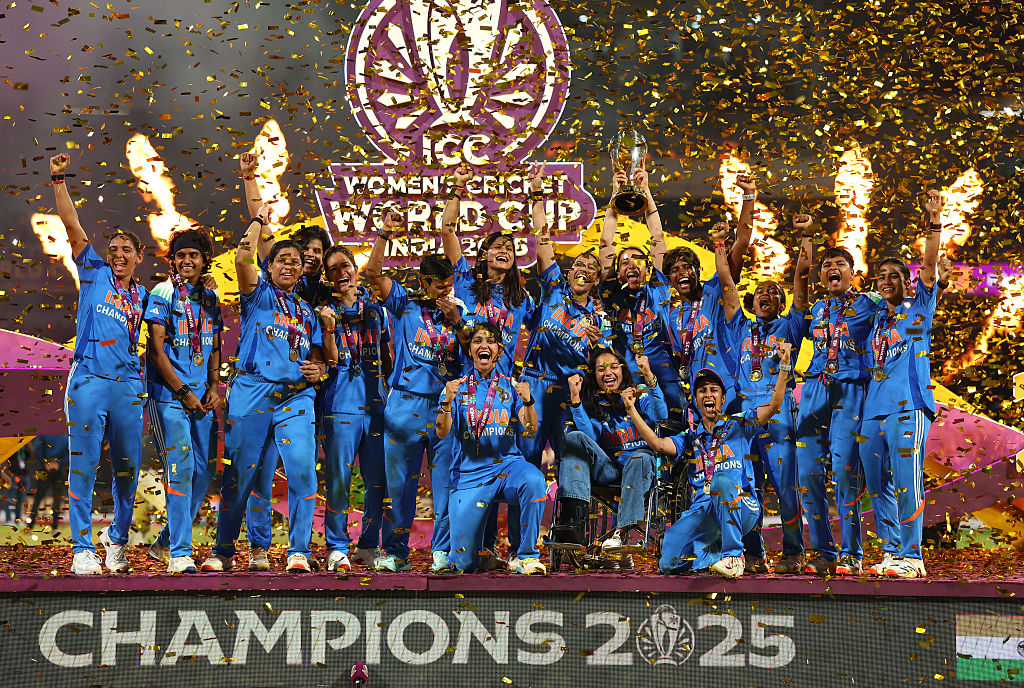
What India’s Maiden Women’s World Cup Win Means to Every Girl Who Once Looked Away
A 45,000-strong crowd, a fearless team, and a victory decades in the making, India’s historic Women’s World Cup triumph isn’t just about cricket; it’s about changing what every little girl believes she can be
There was a time, not too long ago, when I’d switch the channel the moment women’s cricket came on.
Not because I didn’t care, but because nobody around me seemed to. My father would be glued to a men’s Test match, my brother could name every IPL player by heart, and I was just the girl who tagged along to gully cricket games that never quite felt like mine. So when I found myself watching a packed DY Patil Stadium last night filled with 45,000 roaring fans, faces painted, flags flying, voices hoarse, watching India lift their maiden ICC Women’s World Cup, something inside me shifted.
Do you know how far women’s cricket has come to get here? To have a World Cup final on the same day as an India vs Australia men’s T20 and not have anyone talk about the men’s match? It’s unthinkable. If you’d told me this before the tournament began, I’d have smiled politely, the kind of rueful smile you give when you wish something could be true.
But it is true. And it happened because this team, led by a relentless, fearless Harmanpreet Kaur, made it so.
The campaign that turned us all into believers!
From the edge-of-seat semis against Australia to that electric final against South Africa, the women’s team delivered a campaign that was everything sport is meant to be: unyielding, unpredictable, unforgettable. South Africa, chasing 299, started strong. Laura Wolvaardt looked like she was scripting a heartbreak for India, but Deepti Sharma’s five-wicket haul, including the prized scalp of Wolvaardt, was nothing short of poetic justice. Shafali Verma, who till the semis had been left out of the ODI squad, came back with fire in her eyes and wickets in her hands. And when Harmanpreet leapt into Shafali’s arms after a key dismissal, you could feel it: this wasn’t just victory. It was vindication. By the time the last South African wicket fell, it was well past midnight, but the noise inside DY Patil could’ve shaken Mumbai awake. Fireworks lit up the sky; strangers hugged each other; tears flowed freely.
A win that was decades in the making
Ten years ago, you couldn’t find more than a handful of people watching a women’s match.
The idea that a women’s cricket game could fill a stadium, 45,000 people screaming, singing, praying, felt impossible. But this win changed that. This was our 83 moment. I wasn’t there for Kapil Dev’s victory, but I imagine this is what it must have felt like that sense of national pride crashing over you like a wave, washing away years of doubt, dismissal, and “maybe next times.”
Why it feels personal
As a woman who once only played cricket with brothers because no one thought it was “for girls,” this victory feels deeply, achingly personal.
It’s for every girl who was told it wasn’t worth pursuing. For every parent who’ll now watch Harmanpreet and say, “maybe my daughter can, too.” What this team has done is bigger than sport; they’ve changed the story. So yes, when the tricolour went up and the team hugged each other in tears, I wasn’t just watching history. I was watching a possibility.
For every little girl who once looked away from women’s cricket at night, we looked back, eyes wide, hearts full, and we believed.