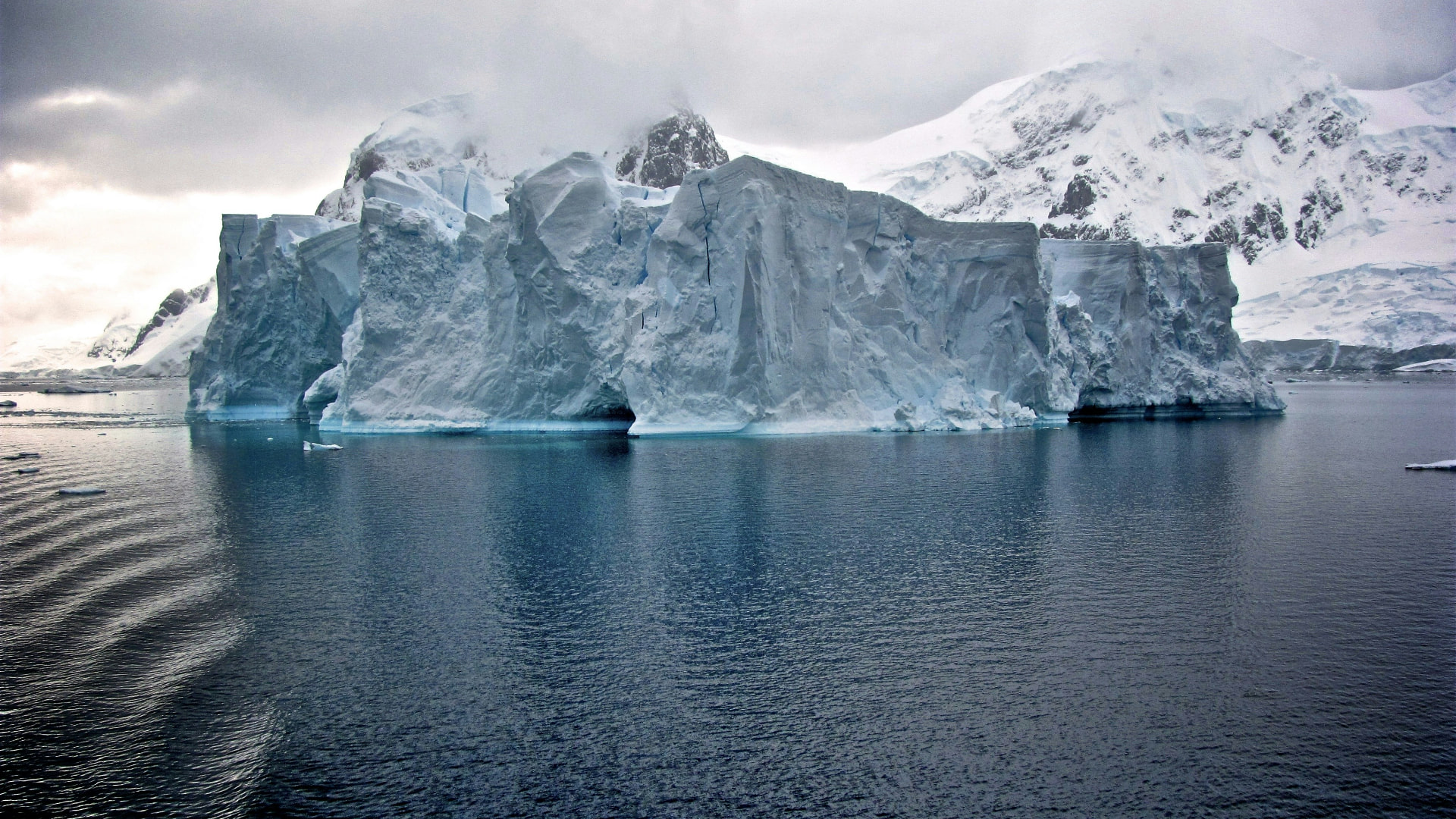
This Ice Is Older Than Humanity And It's About to Spill Secrets
What are scientists in Cambridge doing with a 2.8km-long cylinder of ice drilled straight from Antarctica’s underworld?
If you remember the opening scene of The Day After Tomorrow, it starts in Antarctica. A team of scientists, parked somewhere frozen and nowhere, drill into the ice to pull out what looks like a long glass wand. One of them squints through his goggles and says something ominous about the sample: "This shouldn't be happening." Then the ice shelf splits clean in half. Cut to: global chaos.
Okay, spoiler: the world doesn't quite work like that. But the part they got right? That the past is written in ice. And we’re reading it right now.
This month, researchers announced they're about to start melting a 1.5-million-year-old ice core, the oldest of its kind ever extracted from Earth. Researchers at the British Antarctic Survey (BAS) welcomed what could be the oldest ice on Earth—a glassy core potentially dating back over 1.5 million years.
It was drilled out of the East Antarctic ice sheet, at a site called Little Dome C, a place that sounds charming until you realise it’s basically walking into some of the harshest conditions.
Inside this frozen time capsule that are so shiny and clear that you can see what's on the other side of the surface where the ice is stacked. These 1m ice sticks are bubbles of ancient air ( actual prehistoric atmosphere ), grains of volcanic ash, dust, and even microscopic marine life.
Each of these elements is a time-stamped clue sealed under layers of snow long before humans walked the Earth. It's like opening a bottle of vintage air, only this one was corked back when sabre-toothed cats were a thing.
From Antarctica to a Freezer in Cambridge
Getting this ancient ice to the UK was no small feat. It took four field seasons, high-tech drilling gear, and the efforts of a multinational team (including engineer James Veale, who compared holding the ice to handling an ancient manuscript—only colder and with more pressure not to drop it).
Once extracted, the ice was carefully boxed, shipped by boat, and transported in a refrigerated van to Cambridge—proof that some deliveries really do need tracking.
Now housed in a -23°C lab, the ice will be slowly melted over the next seven weeks. Scientists will extract its secrets drop by drop, analyzing everything from trapped gases to rare earth elements using a machine with a very sci-fi name: the inductively coupled plasma mass spectrometer (ICPMS, for those keeping score at home).
“We’re talking about a completely unknown period of Earth’s history,” said Dr. Liz Thomas, who leads ice core research at the BAS told the BBC.
Her team is hoping to decode what the climate looked like during a mysterious era when Earth’s glacial rhythms did a complete switch-up—from cycles every 41,000 years to every 100,000 years. It’s called the Mid-Pleistocene Transition and don't worry, you didn’t miss this in school! Scientists are still trying to figure it out.
So... Why Melt It?
Because locked in this ice is the story of how the planet has behaved for the last million and a half years. Of how CO₂ levels rose and fell. Of how warm periods triggered cold ones, and how life (including ours) responded to all of it.
This specific core is from a time when Earth’s climate flipped — ice ages used to come and go every 41,000 years, then something changed. That “something” is still a mystery, and scientists think the answer is trapped in the bubbles.
So yes, we’re melting ancient ice. On purpose. Carefully. And in ultra-controlled labs, not Bond villain lairs. (Though they’re probably just as cold.)
Moreover, it is also a bit of a wake up call for us as melting this ancient ice is about looking back, so we can look forward. And not in a cheesy tagline kind of way. The further back we can look, the better we can understand what’s happening to our climate today.
These researchers are trying to understand how fast the climate changed before industry, oil, and internet speeds got involved — so we can predict what happens next, with all those things in the mix.
In other words, this ice is here to tell us a story. Possibly a warning!