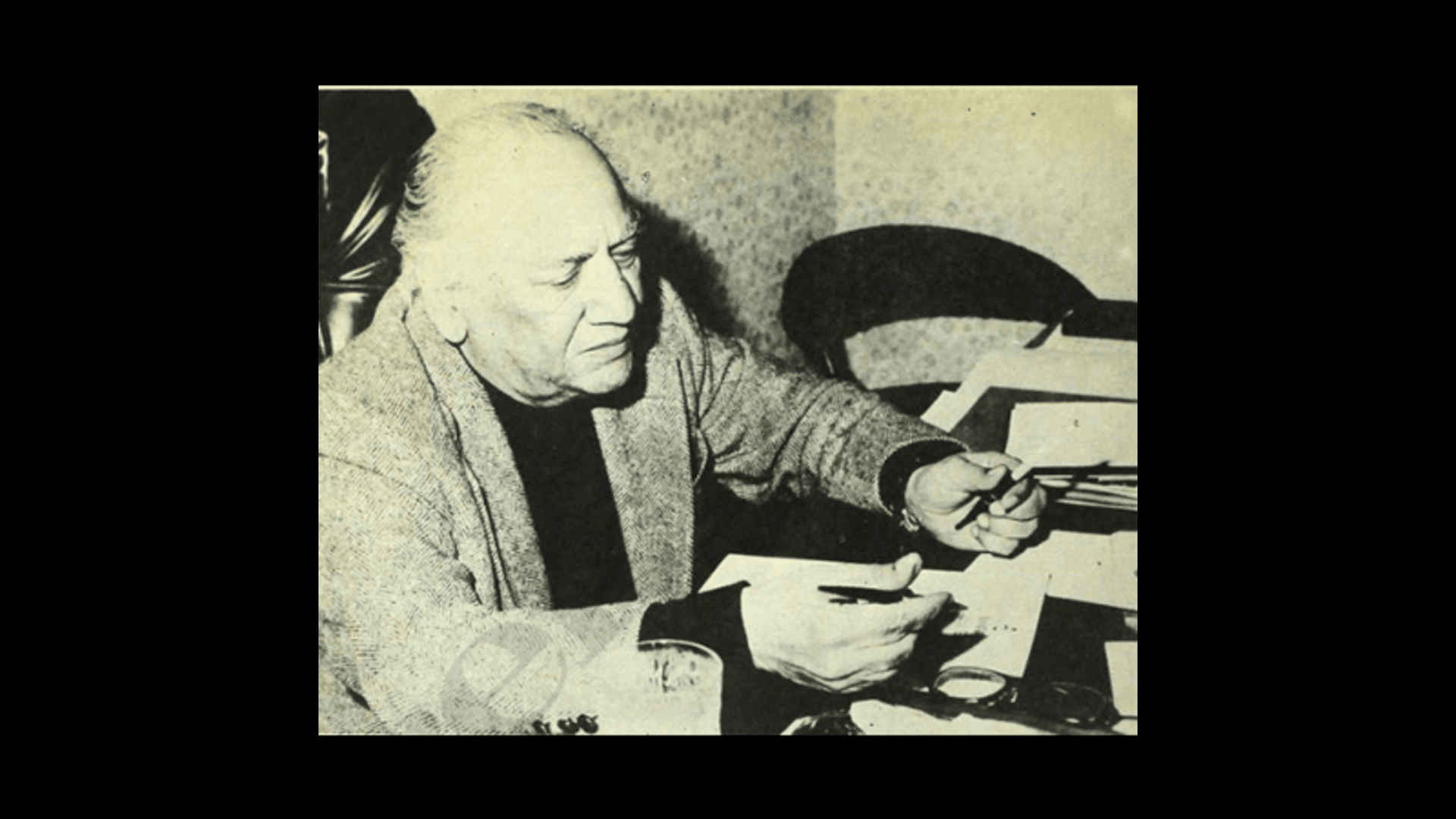
8 Lesser-Known Facts About The Poet You Know: Faiz Ahmad Faiz
A force to reckon with, even after his death in 1984, Faiz Ahmad Faiz is one of the most quoted poets on the internet. His verses are a balm that soothes and bane that awakens our passive acceptances of things. From Bollywood to protests, music to meme culture, his poetry has traversed beyond geographies to resonate, rebel, and redefine art.
Born to a family of farmers in the Punjab Province of British India in 1911, the great, poet, journalist, and activist Faiz Ahmad Faiz grew up surrounded by local poets and writers in Sialkot that now sits on the fault lines of Partition. To many, Faiz is the romantic Urdu poet who also shaped literacy resistance and was partially obscured by censorship. For some, his identity as a trade union activist and a member of the Communist Party adds to his humanist vision of society. Among progressive poets, Faiz is renowned for mastering, both ghazals and nazms.
In a world where poets don't usually trend, on his birthday, here's a look at some lesser-known aspects of the man who redefined Urdu poetry and inspired lovers, and unsettled governments:
Connection with World War II
Way before the Partition of 1947 and his rise as the voice of resistance, Faiz served in the British Indian Army during the World War. He began as Captain and worked in the Public Relations department in Delhi. In 1944, Faiz was promoted to Lieutenant Colonel before resigning in 1947 and returning to Lahore.
Awarded Peace Prize
Despite the American military's opposition, Faiz Ahmad Faiz attended Nobel Peace Prize equivalent Lenin Peace Prize in Soviet Union in 1962 alongside Mahmoud Darwish, Pablo Picasso, Pablo Neruda, Fidel Castro, and Angela Davis. That night Faiz became the first Asian poet to win Lenin Peace Prize.
Journalist and Rebel Throughout His Life
Editor of Imroz and left leaning English daily Pakistan Times. He also headed the monthly magazine Abd-eLatif as an editor until 1958. Interestingly, during his self-imposed exile of 5 years, Faiz joined Yasser Arafat of the Palestinian Liberation Association (PLF) to work as an editor of Lotus, the magazine of Afro-Asian Writer's Association in London, Moscow, and Beirut. In later years of his life, he became the secretary of National Council of Arts, Pakistan.
Scriptwriter and Lyricist
Faiz played many roles throughout his life and one such was on the film Jago Hua Savera (Day Shall Dawn) directed by A.J Karder. Faiz wrote the script and penned the lyrics for the movie. With father who wrote Amir Abdul Rehman, the ruler of Afghanistan's biography, storytelling was in his DNA.
Two Master's Degrees
Post his B.A in Arabic, Faiz Ahmad Faiz earned two master's degrees. One is English and the other in Arabic shaping his unique style of blending classical urud poetry traditions with modernist and revolutionary themes. His famous poem Dua (Prayer) written in 1979 challenged Zia's military regime.
Faiz Paralleled Himself with The Authoritarian System
In one of poems from during his 4 years in prison, If You Look at the City from Here, Faiz paralleled his own fate with the authoritarian regime. He wrote:
Hum Dekhenge
During the 2020 anti-CAA protests in India, Faiz's song defined the protest and reclaimed him as the fighter and activist.
Bollywood and Coke Studio
Faiz's contributions have seeped through the fabric of Indian cinema over the years. Classics like Gulon Mein Rang immortalized in Mehdi Hassan's voice have found way into the mainland musical sensibilities. Moreover, the Coke Studio adaptations have introduced his verses to newer audiences that play on repeat.
Nobel Prize Nomination
Although nominated four times for Nobel Prize for Literature, including shortly before his death in 1984, Faiz was never awarded the prize-something that remains a topic of discussion among literary circles.
With 88 Ghazals, 150 Nazms, and 85 Shers in Hindi, Urdu, and English, the national poet of Pakistan, Faiz Ahmad Faiz, has a unique following worldwide. His enduring influence and the widespread appreciation of his poetry in contemporary internet cultures is unmatched.