A Reader’s Guide To Hopepunk, ft. Project Hail Mary
Not every dystopia makes you feel bleak
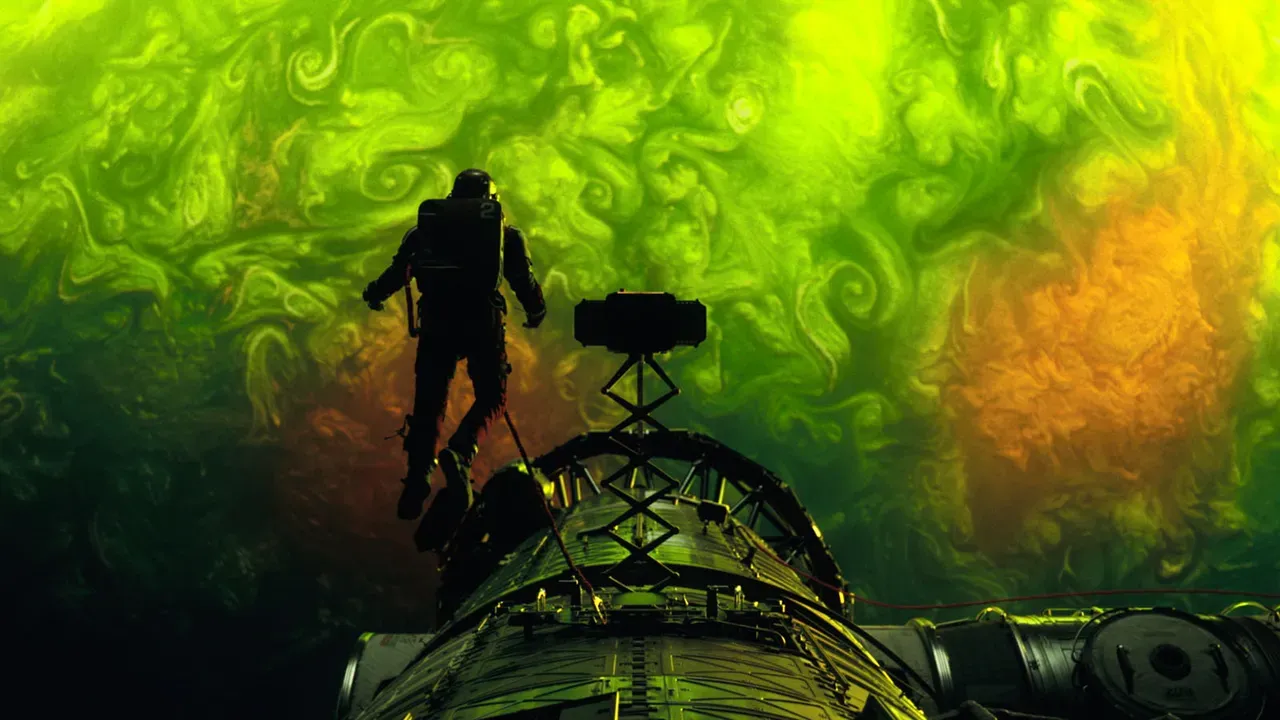
Project Hail Mary hasn’t even been released in India yet, but if the international reactions are anything to go by, it is shaping up to be one of the biggest sci-fi crowd-pleasers of the year. It's the James Gunn Superman of 2026. Confused? Here’s the deal.
The movie is an adaptation of Andy Weir’s book of the same name (that’s also the writer of The Martian, in case you missed it). Without giving away any spoilers, it’s about an infamous former molecular biologist turned middle school teacher, Ryland Grace, who is sent on a suicide mission to space to protect the earth from an outer space microorganism that is slowly blocking all sunlight from the earth. A typical sci-fi premise, except that Project Hail Mary focuses more on its characters collaborating with each other to turn a race-against-time adventure into an uplifting, heartwarming read. This, in popular culture, is called Hopepunk.
It’s a relatively recent term, coined by the fantasy author Alexandra Rowland as recently as 2017. But don't let the recency fool you; it's already been extensively studied by literary scholars. These books set their characters in a dystopian adjacent world, and glamourise their selflessness and resilience as a counter to apathy and cynicism. As Rowland later said, hopepunk is “One Atom of Justice, One Molecule of Mercy, and the Empire of Unsheathed Knives”. Basically, you rebel against a bleak world, but the focus is on how you help your fellow rebels and on the final feeling that a new, better life awaits you, rather than on a violent revolution that ends in a pyrrhic victory. At the end, readers are left feeling inspired, optimistic about the inherent goodness of human nature, and of course, hopeful.
If that sounds like something you would especially want to read in the current scenario, get your reading glasses out. You’re in for a ride.
Children Of Time by Adrian Tchaikovsky
Spanning millennia and multiple species, Children of Time tells the story of a failed terraforming experiment that accidentally accelerates the evolution of a planet’s spider population, creating a new intelligent civilisation. As the last remnants of humanity arrive in orbit seeking refuge, the novel alternates between the rise of this alien society and the slow moral collapse of the human survivors. What makes it hopepunk adjacent is not the scale but the conclusion: rather than defaulting to annihilation, the story imagines the possibility of coexistence and mutual understanding between radically different intelligences.
A Psalm For The Wild-Built by Becky Chambers
Becky Chambers is practically the face of the genre. To Be Taught If Fortunate, The Wayfarers series, The Long Way to a Small, Angry Planet... just pick up any work of hers, and it will fall squarely in the genre. This novella is set on a moon where robots gained sentience centuries ago and peacefully left human society to live in the wilderness. We follow Sibling Dex, a tea monk searching for purpose, who encounters Mosscap, the first robot to return to human lands. Chambers builds a post-capitalist, eco-conscious world where problems still exist but are addressed with care instead of cruelty.
The Wild Robot by Peter Brown
Yep, the movie was based on a book series. After a storm, a service robot named Roz washes up on a remote island after a shipwreck. Now, she must learn to survive in a hostile wilderness populated by animals who initially see her as a monster. Over time, Roz studies their behaviour, adapts to the environment, and eventually raises an orphaned gosling as her own. The novel, often shelved as middle-grade fiction, carries a deeply hopepunk message: difference and otherness can always be overcome, if only you are willing to be kind to everyone no matter what.
The Martian by Andy Weir
Long before Ryland Grace floated through space with only equations and determination, Mark Watney was cracking jokes on Mars while trying not to starve. The Martian follows an astronaut accidentally left behind on the Red Planet. He survives through ingenuity, dark humour, and a sheer refusal to give up even when every calculation predicts death. The novel is technically about isolation and engineering problems, but emotionally it is about global cooperation and human resilience, as scientists across Earth and Watney himself work insane odds to bring him home.
A Song For A New Day by Sarah Pinsker
In this dystopia, pandemics and terrorist attacks have pushed society into a permanently online existence where public gatherings and live concerts are banned for safety (sounds familiar?). The story follows a young musician who has never attended a real show and a former touring singer who remembers what was lost, as their paths converge in an underground movement determined to bring live music back. Pinsker’s novel is a love letter to music, artistic resistance, and the joy of human connection.
This Is How You Lose the Time War by Amal El-Mohtar and Max Gladstone
Structured as a series of letters between two rival agents on opposite sides of a war across two universes, this novella begins as a game of one-upmanship and slowly transforms into a forbidden romance. Red and Blue are trained to manipulate history and destroy each other's realities so that the one in which they exist survives. Yet their growing affection becomes a form of rebellion against the militarised systems that created them.
2312 by Kim Stanley Robinson
2312 explores a future where humanity has reshaped the solar system to its needs, hollowed out asteroids into habitats, and engineered new forms of life, yet still grapples with inequality and corruption. In the midst of all this, an artist-engineer, Swan, uncovers a conspiracy that threatens the fragile balance of this interplanetary civilisation. The book falls into what you would call hard scifi, but beneath the technical detail is a persistent belief that large-scale collective action, slow reform, and imaginative thinking can still steer humanity away from self-destruction.