With ‘Non-Residency’, Rajiv Menon Asks: What Is Home, Really?
Fourteen artists. One iconic palace. A debut that imagines what diasporic identity looks like today.
On August 9th, Rajiv Menon will trade the clean austerity of his recently opened Los Angeles gallery—a white monolith of restraint and seamless surfaces—for the nearly 300-year-old City Palace in Jaipur, built on the ancient tenets of Vastu Shastra.
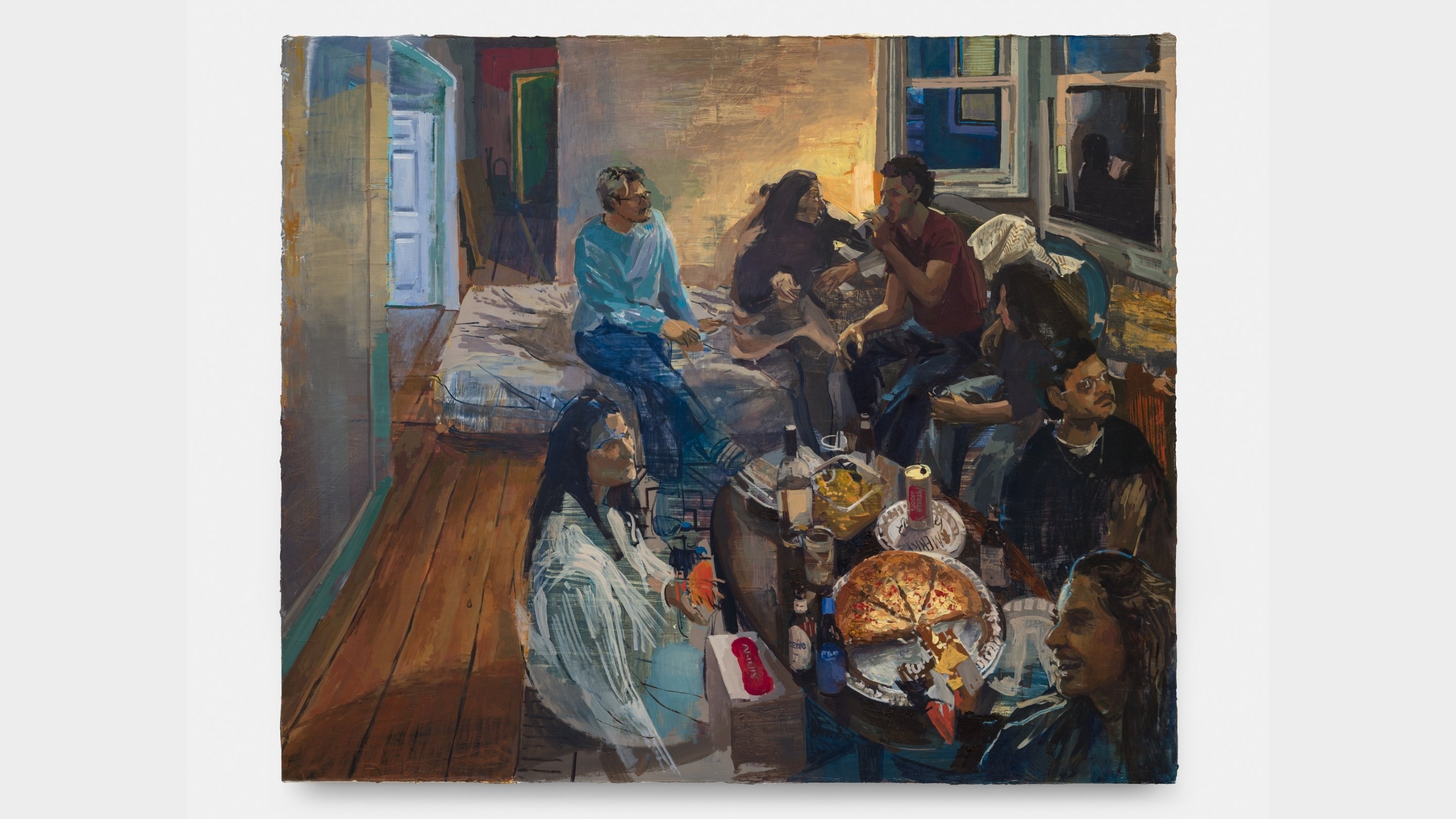
His curated group exhibition at the Jaipur Centre of Art, titled Non-Residency, marks his first professional project in India. Featuring 14 artists working across painting, sculpture, and textiles, the show explores the layered dualities that define diasporic identity.
"Being in the diaspora means having to contend with constant contradictions and simultaneous cultural belongings. I felt that bringing contemporary diaspora work to an iconic heritage site like the City Palace exemplified those dualities,” Menon shares in an exclusive conversation with Esquire India. “Rather than positioning the heritage and contemporary against each other, I wanted to show how these two ideas are always intertwined."
For Menon, the diaspora encapsulates the cultural shifts and evolutions that occur when India encounters the world - a productive tension he sees as central to the gallery's mission. The monumental nature of the City Palace conveys both the stakes and ambition of this exhibition.
The project began, like most things at JCA, in conversation. Noelle Kadar, co-founder of the centre and former VIP Relations Director of the India Art Fair, says the exhibition grew from years of dialogue with Menon. "He approaches diasporic identity, not as something removed from India, but as something that’s constantly evolving in dialogue with it. For Non-Residency, that perspective was key."
Non-Residency celebrates the beauty and boldness of Indian identity, she says, while also asking deeper questions about memory, belonging, and cultural inheritance. "The diaspora experience is layered; it reflects what it means to be Indian today, not just in India, but anywhere in the world, where identity is constantly shifting, adapting, and evolving. There’s power in that tension, and we think that this show, against the context of historical Jaipur, and the glamour of our location, of course, is very interesting."
Of course, the backing of HH Maharaja Sawai Padmanabh Singh ensures visibility. But as Kadar points out, Jaipur’s real resonance lies in its "incredible duality".
"It’s steeped in living history, but also full of creative energy that’s just waiting to be tapped into. For both H.H. and me, the drive behind JCA comes from a deep love for Jaipur and a belief in the city as a cultural force, not as it has been historically, but in the present moment as well. The city has always been known for its craft and heritage, and we felt it was time to show how that legacy could evolve through contemporary art," she adds.
It's also a reclamation of sorts for Menon, who, with his gallery in the heart of Hollywood, is holding space for South-Asian voices to bloom. "I was inspired and challenged by the ways I saw NRI culture being described in an Indian context. Growing up, the critique I often heard about NRIs was that we were over-Westernised or had lost touch with India. As India has ascended globally, that critique has shifted, and now focuses on the ways that NRIs are stuck in the past and out of touch with Indian modernity. Even as the criticism changes, the diaspora is always placed in a subordinate position to the motherland. To counter this, I wanted to demonstrate that the emotional and cultural placement of the diaspora was a fertile ground for artmaking," he explains.
Menon frames Non-Residency not only as a social or demographic project but as an aesthetic one. He draws on the German concept of the unheimlich—the un-homely—to describe the strange, generative dissonance of diasporic belonging. This semantic link helped the gallerist to imagine, in his mind, a productive space for innovation and creativity.
And he hopes to achieve this physically with what he calls the "Non-Resident School", a cohort of artists who demonstrate singular practices, but also work in concert to create a larger cultural wave globally. "These artists speak to the existential, universal questions of our time: migration, belonging, and displacement. Rather than demonstrating "authentic" Indian identity, their work highlights the complicated hybridity born of migration and serves as a powerful bridge between India and the wider world," he adds, signing off.