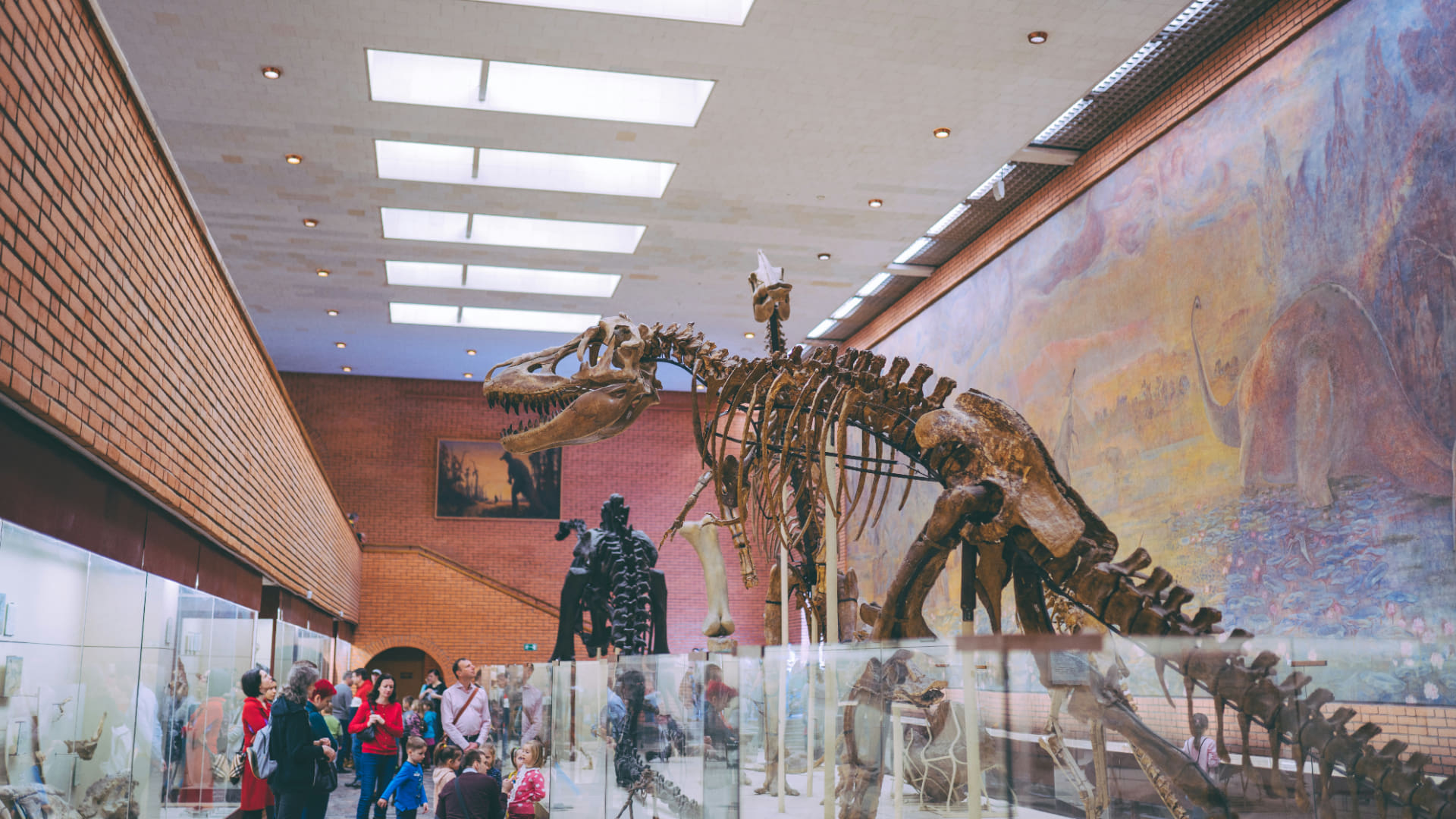
Why Fossil Collection Is So Popular Amongst Uber-rich People?
Leonardo DiCaprio and other celebs love collecting dinosaur bones. Do you have room enough for dinosaur skeleton to lounge?
Many people struggle to understand why art is auctioned for millions of dollars or why it is auctioned at all. To critics, it can look like an exclusive game for the ultra-wealthy, disconnected from public value. That same question now applies to a far stranger object of desire: dinosaur bones.
Once the exclusive domain of natural history museums and universities, dinosaur bones and other ancient remains have entered the luxury market this decade. with auction houses now treating fossilised skeletons much like blue-chip artworks, complete with glossy catalogues, celebrity buyers, and headline-grabbing prices. Hollywood actors including Nicolas Cage, Leonardo DiCaprio, and Russell Crowe have all purchased dinosaur fossils and have helped turn prehistoric remains into status symbols, signalling not only wealth, but taste, rarity, and cultural capital.
In 2019, Leonardo DiCaprio and Nicolas Cage entered into a bidding war over a $276,000 dinosaur skull (which Cage ended up securing but later had to return to Mongolia, where it had been smuggled out of), the desire for dinosaur bones has just grown. In 2025, a Ceratosaur fossil was auctioned for $30.5 Million by Sotheby's while American auction house Phillips entered the arena of fossil auction by selling a juvenile Triceratops skeleton in New York on Wednesday night for $5.4 million with premium for the first time in its history. The dinosaur was discovered nearly a decade ago in the South Dakotan section of the Hell Creek Formation, whose layers of oxygen poor sentiment created the ideal conditions for fossilization and have made it a global hotspot for dinosaur fossils.
But Why Fossil Collection Is So Popular Amongst Uber-rich People?
As contemporary art prices skyrocketed, collectors began searching for alternatives that were equally impressive but more exclusive. Fossils fit the bill. Unlike paintings, no more can be made. Each specimen is unique, monumental, and instantly recognizable. A dinosaur skeleton towering in a private home functions much like a masterpiece on a wall, except it also carries the thrill of deep time and scientific discovery.
Moreover, the urge to collect fossils is not a modern eccentricity or a byproduct of wealth. Fossil collection is a deeply human instinct that long before paleontology existed as a science, had already found meaning- ancient bones, shells, and imprints left behind by creatures that couldn't be named were documented. Fossils captivated early humans precisely because they disrupted ordinary experience: they were tangible evidence of worlds that no longer existed.
Unlike tools or weapons, fossils had no obvious practical function. Their appeal lay in their strangeness. Perfectly patterned shells embedded in stone, massive bones emerging from the earth, or teeth shaped unlike anything living nearby invited questions that had no easy answers. For early societies, fossils were puzzles—objects that seemed both natural and supernatural, familiar yet alien.
Across cultures and continents, humans incorporated fossils into jewelry, burial practices, myths, and art. This suggests that collecting fossils was not simply about aesthetics, but about meaning-making. Fossils allowed people to imagine deep time before they had language for it. They offered proof that the land had once been different, that enormous creatures had lived and vanished, and that the world itself could change.
Psychologically, fossils satisfy a powerful desire for connection. Holding a fossil collapses time: it allows a person living now to physically touch something unimaginably old. That sensation—of proximity to deep history—is rare and emotionally resonant. Fossils make the abstract idea of the past concrete. They transform extinction, evolution, and planetary change into something graspable.
So many argue that those indulging in modern day fossil collection are following the same impulse. However, many paleontologists are unconvinced.
Unlike art, fossils are not simply cultural artifacts. These ancient remains are scientific evidence that hold value and are part of the continued study. When fossils are privately owned, access is never guaranteed. Researchers may avoid publishing work on such specimens altogether, knowing they could be resold, relocated, or withdrawn from study at any time.
There is also the question of permanence. Museums exist to preserve knowledge for future generations. Private ownership, no matter how well-intentioned, is temporary. When a collector dies or sells, a fossil’s fate becomes uncertain. Will it remain accessible or disappear into another private collection?
Ironically, the same arguments used to justify million-dollar art auctions are now being applied to dinosaur bones: passion legitimises ownership, money ensures survival, and exclusivity increases value. Yet fossils challenge these assumptions.