The Kolkata Jail That's Now A Reimagined Art Gallery
The art studio at the former Alipore Jail transforms into an art gallery where history, memory and art meet
Anyone who has visited the capital of West Bengal will tell you how rarely history and art sit still in the city of Kolkata. At the former British-era jail of Alipore that once confined freedom fighters, this confluence is more palpable. Part of the 116 year old central jail that was recast as an art studio in the correctional programme during the 1950s, is now for the first time turned into an art gallery. It is within the grounds of Alipore Museum which itself is the redeveloped site of the former central jail in Kolkata.
The gallery founded by Prateek Raja and Priyanka Raja, Experimenter, has opened its latest outpost on Sunday 15, March and is conceived as an iterative exhibitions program beyond the gallery spaces, where an extension of their programme inhabits disused, characterful sites, imagining a renewed life for them.
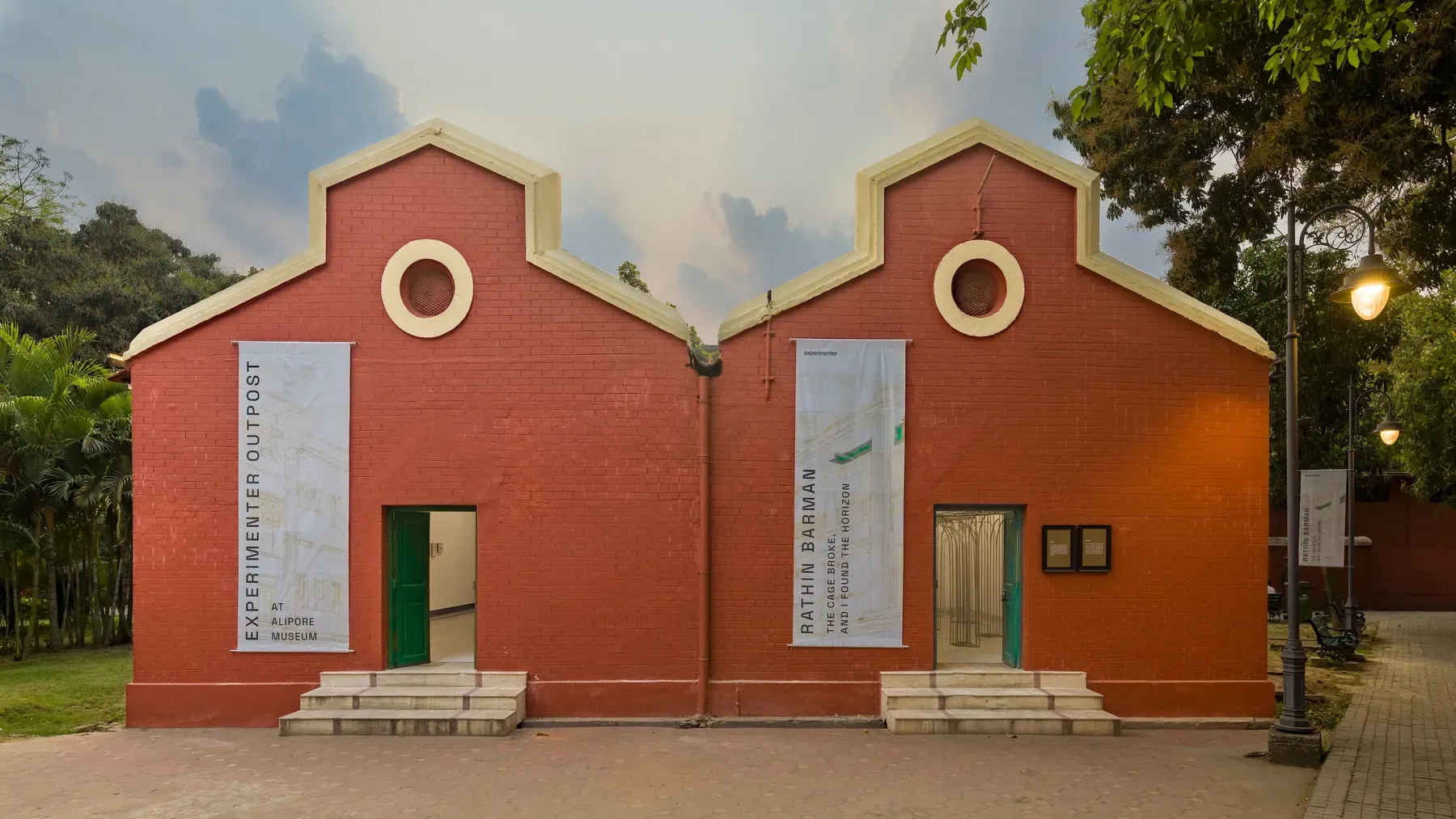
Located just a short walk away from from the cell where Jawaharlal Nehru was imprisoned in 1930s and was visited regularly by daughter Indira Gandhi, Experimenter Outpost is a red-brick walls with gently sloping terracotta-tiled roof, and arched grille windows that look out onto patches of lawn and tree cover.
The gallery space that rejects the typical all white walls space for double gabled structures, is currently showcasing a solo exhibition “The cage broke, and I found the horizon” by Rathin Barman until June 14. Bringing together recent sculptures and drawings, the exhibition draws on the artist’s research on communities living in northern Kolkata, including migrants who arrived from Bangladesh after the Partition.
The title of the exhibition alludes to the duality of confinement and liberation, that fits the space of Alipore jail that it is being exhibited at and bears witness to a time that marked several unprecedented forced and economic migrations—a central and longstanding enquiry in Barman’s practice.
The configuration of spaces and other architectural features transform over time to mirror the spatio-temporal transformations and lives of people. He draws from spontaneous responses to a sensorial realm in his representation of spaces. Barman reimagines the memory of lives left behind, alongside the enduring aspiration for a place to call one’s own much like one of the largest jails in Asia, Alipore, whose history and memory is reinterpreted allowing memory, architecture, and movement to open itself to discourse.