The Greatest Museum Heists Of All Time
Art heists aren't just for the movies
For all our alarms, sensors, and surveillance cameras, the truth is this: museums were never built to keep people out. They were built to invite them in. Which is why, every few years, someone still finds a way to walk out with jewels and art in their hands.
Last week, that someone—or rather, two of them—turned the Louvre into a crime scene. In a seven-minute blur of precision and audacity, they slipped into the Apollo Gallery and vanished with eight royal jewels, including a diamond-studded crown once worn by Empress Eugénie. Paris woke up to headlines that sounded like a movie plot. But the Louvre knows better. This isn’t its first humiliation. Over a century ago, the Mona Lisa herself disappeared from the same building.
Art has always drawn thieves the way flames draw moths. From monks and monarchs to ex-museum staffers and adrenaline junkies, the promise of beauty—and its price tag—has tempted some of the boldest criminals in history. From Boston’s empty frames to Dresden’s shattered vitrines, here are the biggest museum heists ever pulled off.
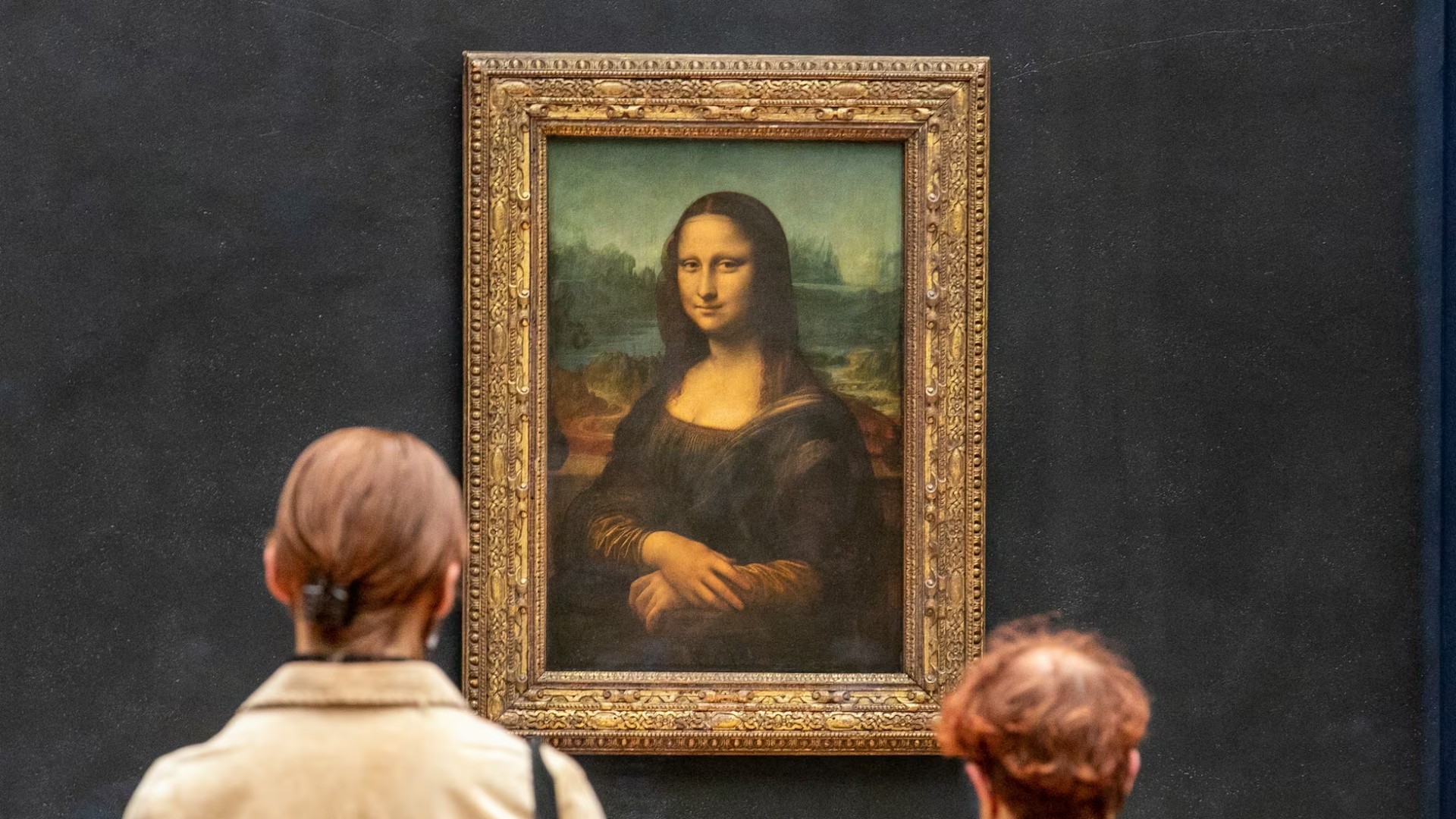
The Mona Lisa Heist (Paris, 1911)
Before 1911, La Gioconda was just another painting on the wall. Then Vincenzo Peruggia, an Italian handyman who’d once worked at the Louvre, hid in a broom closet overnight, waited for the museum to empty, and calmly walked out with the world’s most famous smile tucked under his arm.
For two years, the Mona Lisa was gone. France panicked. Picasso was questioned. Paris turned into a whodunit. When Peruggia was finally caught trying to sell it in Florence, the painting returned home — but no longer as just a portrait. It had become a global obsession. Ironically, it was theft—not art history—that turned her into the icon she is today.
The Isabella Stewart Gardner Museum Heist (Boston, 1990)
It all started with a buzz, literally. A guard let in two men dressed as Boston police officers. Eighty-one minutes later, thirteen masterpieces — by Vermeer, Rembrandt, Degas, and Manet — were gone. The total take was over $500 million in stolen art, none of which has ever resurfaced. The thieves cut the canvases straight from their frames and vanished into history. Today, the empty frames still hang in the Gardner Museum like open wounds.
The Green Vault Heist (Dresden, 2019)
At four in the morning on November 25th, Dresden’s Green Vault — home to Saxony’s royal treasures — went dark. A fire outside had cut the alarms. In the blackout, the burglars smash glass vitrines and grab 21 pieces of diamond-encrusted jewellery worth nearly €100 million. It was fast, brutal, and stunningly efficient. Most of the jewels were later recovered, but the damage was psychic. The Green Vault had stood for centuries as a monument to royal opulence. In one night, it became a monument to how fragile that opulence really is.
The American Museum of Natural History Heist (New York, 1964)
Before he was a convict, Jack “Murph the Surf” Murphy was a surfer, a violinist, and a playboy with a knack for trouble. In 1964, he and an accomplice scaled a fire escape, crawled through an open window, and slipped out with a bag of priceless gemstones — including the 563-carat Star of India, one of the largest sapphires on earth. The museum’s security was laughable: no alarms, open windows, sleeping guards. The thieves were caught days later when a hotel clerk noticed glass shards in their shoes. Still, Murph’s legend lived on.
The Antwerp Diamond Heist (Belgium, 2003)
They called it The Heist of the Century. In February 2003, a gang of Italian professionals known as The School of Turin infiltrated Antwerp’s Diamond Center — the most secure vault in the world. It took them years of planning, months of surveillance, and forty-eight meticulous hours underground. They bypassed infrared sensors, magnetic fields, and a lock system considered “uncrackable.” When security opened the vault Monday morning, $100 million in diamonds, gold, and jewelry had vanished without a trace. The crew’s leader, Leonardo Notarbartolo, was eventually caught — but the loot never surfaced.