Inside The Gujral House, Where A Family’s Life Became A Work Of Art
The Gujral House is a structure shaped like a sculpture, carved by the renowned artist who built it as a playhouse for his family’s creativity. Today, Mohit Gujral adds his own flourish, keeping that spirit alive for a new generation
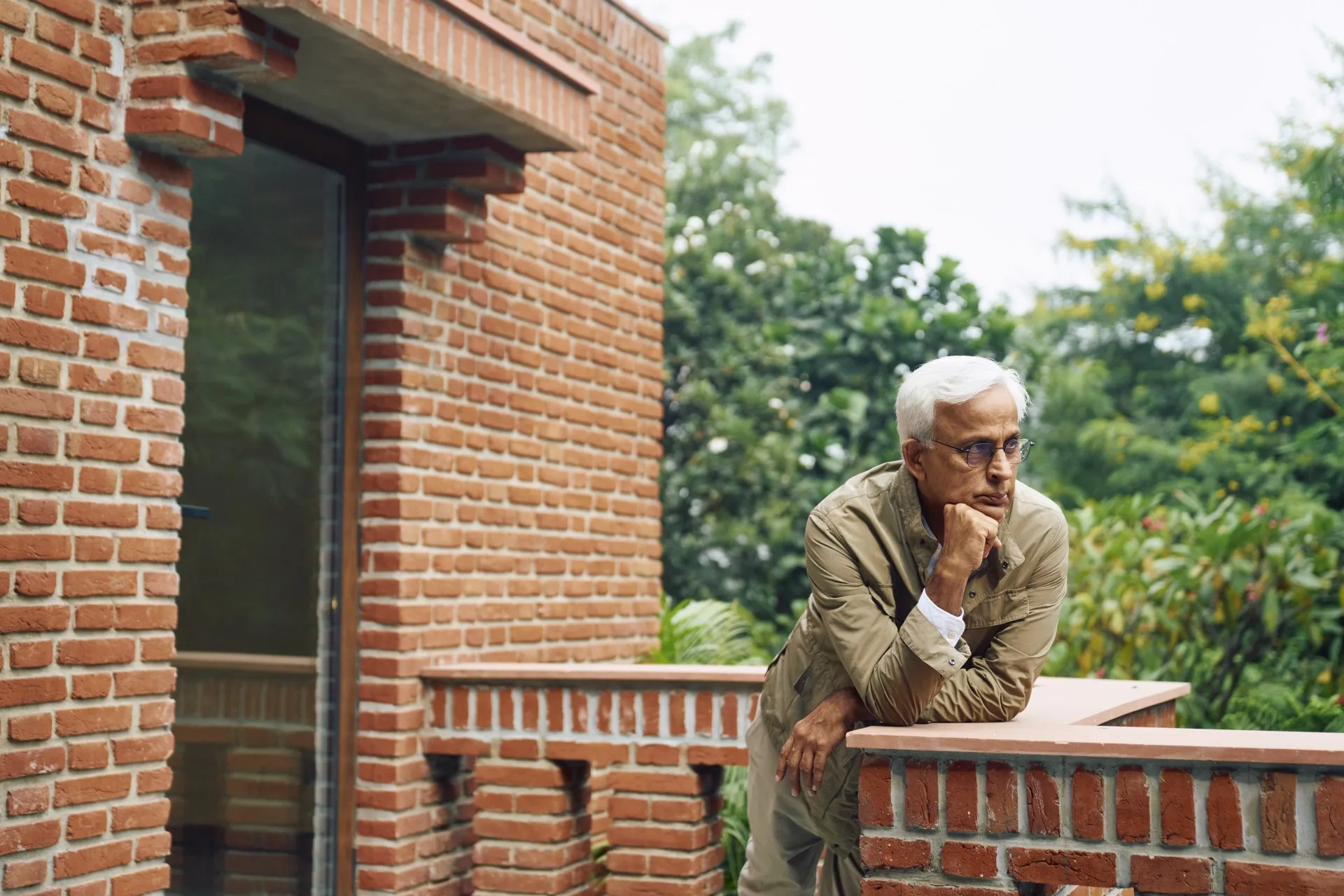
Mohit Gujral may have built a distinguished career in design, working on some of India’s most high-profile projects, but place him back in his childhood room and he turns into a boy like any other. We’re at The Gujral House, tucked inside the bustle of Central Market in Lajpat Nagar 3—a home built by his parents, the renowned Indian modern artists Satish and Kiran Gujral. Today, it houses the headquarters of The Gujral Foundation, which Mohit runs with his wife, Feroze. Seated in what is now his study, Gujral glances around the room: a European Modernist space, defined by Corbusian lines and restrained materials. “I was just a boy when I started living here,” he says. Back then, Saturday Night Fever was all the rage, and his father—a Padma Vibhushan painter, sculptor and muralist—designed him a bedroom to match the mood of the times. It came alive with vivid colours and psychedelic lights. “It was a room to show off,” Gujral says, with a laugh. “All my friends loved it.”
The strobe lights may belong to a dimmer past, but the memories remain vivid. A house of memories and masterpieces, this is where the Gujrals—Satish, Kiran and their three children, Mohit and sisters Alpana and Raseel—lived for over three decades, after first moving in during the 1960s. Much of the senior Gujral’s work took shape within these walls and it remained his home with Kiran until the end.
“The Gujral House is autobiographical, because it is inseparable from the man who built it,” his son says. Satish Gujral chose this pocket of land simply because it was what the family could afford at the time. Today, the road outside is far busier, the market overpopulated, the crowds bigger—but the Gujral House remains a tucked-away oasis of calm and thoughtful aesthetics.
Every surface bears the imprint of his father’s temperament—his curiosity, his humour, his restlessness. “He never saw architecture as something outside himself,” Gujral says of his father. The house was initially entrusted to noted architect Raj Rewal. Later, Gujral recalls, his father felt the need for change and rebuilt it on his own terms, almost carving the structure like a sculpture from the land it occupied. “The house changed as he changed. It grew with him, questioned him and in many ways became his self-portrait in brick.”
When Satish Gujral first conceived the house, architecture was rarely spoken of as art. He imagined it instead as a kind of playhouse for the family’s creativity—a workspace, a studio, an art gallery and a home that welcomed friends and family in equal measure. Art was never merely decorative here; it was integral to the way the house functioned and felt.
With its shifting levels, textured surfaces and dramatic play of light, the house became an immersive artistic experience in itself.
“The past, present and future come together here, which is why I feel this house is an autobiography of a life of two people,” Gujral says, careful to stress the plurality. “It was not just Satish Gujral’s home, it was also Kiran’s. Much of it reflects her aesthetics—her minimalism, her ceramics, the stone sculptures, her taste in carpets and art. Even details like the silver chairs find expression here.”
After initially considering turning the house into a museum for his parents’ work, Gujral has since reimagined it as a collaborative space, one that allows for new interventions and functions as a place to show art, talk about art and foster collaborations. “I had promised my father that I would pay homage to his work and through the Foundation, that is what I am doing,” he says. The opening of The Gujral Foundation has coincided with the centenary celebrations of Satish Gujral.
Once, paintings, ceramics, metal reliefs and sculptures from different phases of their lives lined the rooms, walls, passages and open spaces of the house. Today, the works are on rotation and on the day Esquire India visited, the walls were relatively bare. Yet the art remains vividly etched in Gujral’s mind as he adapts the space for its new purpose.
“This home has been through many transformations and the more changes the house allows, the more it reflects those who live in it,” he says. “The openness of the design mirrors my parents, who always kept an open house. I want it to continue welcoming people.”
Having begun his career as an architect alongside his father, Gujral knew every nuance of the house, every inch of its space, knowledge that made its reinvention feel instinctive rather than intrusive. “I’ve created more openings, brought in more light and reworked the finishes into a more neutral language—one that can speak to a younger, more contemporary audience,” he says, adding that the idea of spaces-within-spaces allows for enormous flexibility.
Keeping the periphery as a green buffer, he has shaped the front courtyard into a natural amphitheatre. “It will be a place for artists to visit, to hang out and share experiences,” he says envisioning a space that will curate experiences for anyone who loves art.
“When you intervene in an old house, you either respect it or impose a new character of your own,” Gujral reflects. He believes he has done the former. “The changes are subtle and they required time and restraint.” There was never a question of pulling the house down and starting afresh. “There is value in history. A new building doesn’t carry memory. This place doesn’t just hold my parents’ final years—it preserves their entire lifetime and my own transition from boyhood into adult life.”
After all, as he puts it, the truest inheritance his parents left him was memory.