How To Arrange Your Work Desk
Here’s a comprehensive guide to organising your desk for maximum productivity
Lately, I've been staring at my desk- a wide, generous slab of laminated white rectangle holding almost nothing. Just a small, deliberate stack of printed sheets in one corner, a few pens and sticky notes, and a notepad that make up for the exact volume of clutter I can tolerate before my brain starts sending distress signals.
To my right though, my colleague has built a miniature world. Tiny decorative objects line the edge of her work laptop, a few sticky notes. A few desks away, another colleague has created what can only be described as motivation station: a still from one of the greatest romantic films pinned neatly on one side of the whiteboard, a small portrait of Joan Didion watching over the day's deadlines, a stack of our latest magazines arranged so crisply they don't appear to age, a perfume bottle, and a hand cream perpetually on the brink of replacement, proper stationery stand and miraculously - enough space left for a laptop and a calendar.
It's a workstation I'd happily inherit.
But I am a loyalist. So prefer the bare minimum look of my desk. And this is despite someone once telling me to that most of our adult life is spent at the desk working. If there is any truth to that, then treating your work desk as an extension of your personal space isn't indulgent. It is where you think and inevitably shape the work you produce.
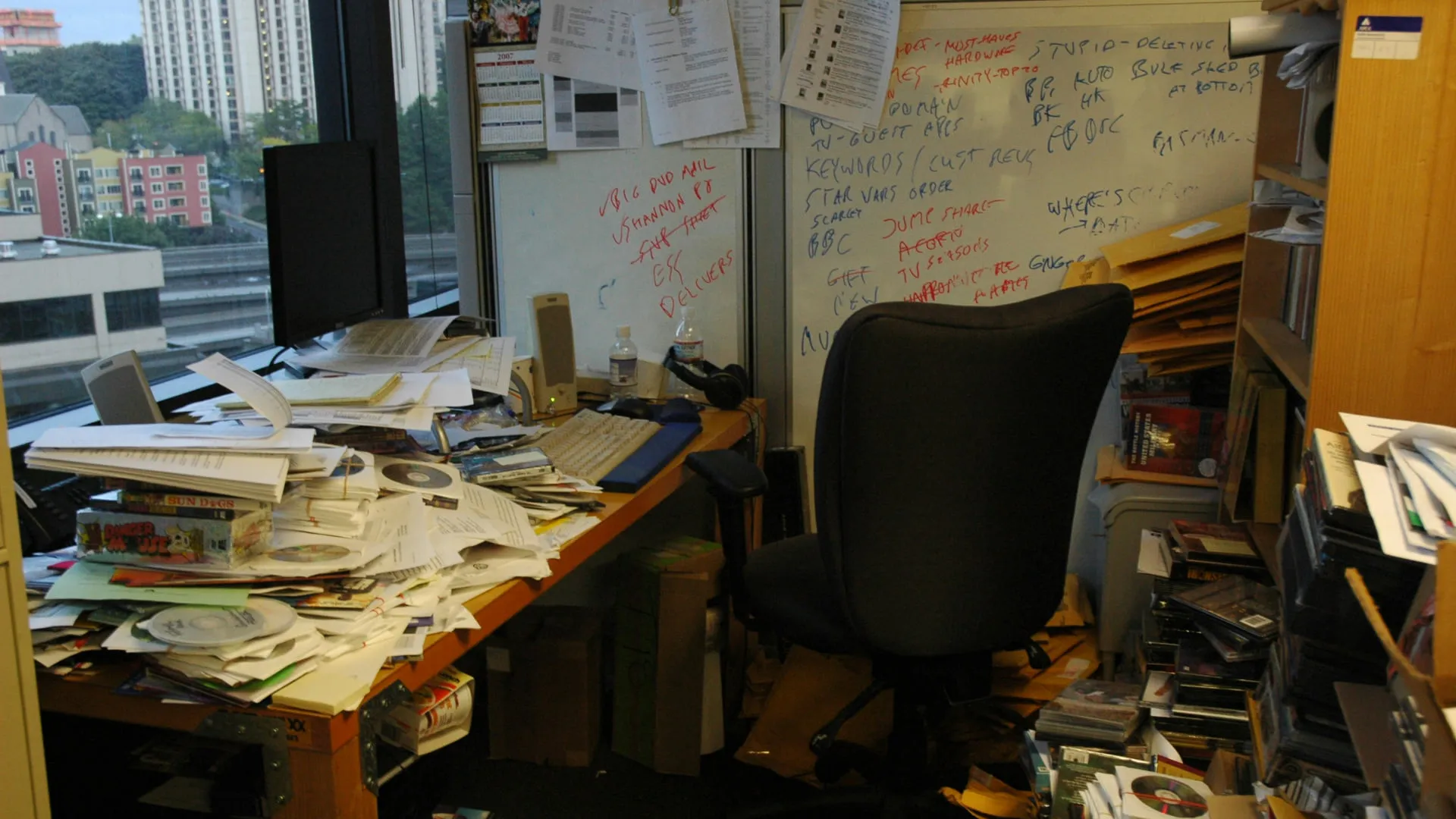
But then again, there are those who say your desk should be as clear as your thoughts. Whichever camp you belong to when it comes to setting up your work space, there isn't a single rulebook for how your desk should look. It can be spare, expressive and even messy, if you are one of those Einstein-like geniuses who prefer a controlled chaos system that only makes sense to them.
How should a modern work space be arranged isn't exactly an original inquiry. According to the author of the book One Year To an Organised Life, Regina Leeds shares her "zen-approach" to tackling the sources of stress, disorganisation and it starts at the desk. In her book Leeds writes that your workspace "should be ergonomically set up to minimise strain and fatigue. This includes a comfortable chair, proper lighting, and a desk layout that promotes focus and efficiency."
Of course, ergonomics is the unglamorous backbone of any good setup. A screen positioned at eye level so your neck doesn’t tilt in quiet protest. A chair that encourages your spine’s natural curve rather than punishing it. Frequently used items within arm’s reach, so your body isn’t performing small, repetitive strains all day long. In other words: arrange for the human first, the aesthetic second. Beyond that things are prescriptive.
Some designers suggest carving up the surface by creating invisible but demarcated boundaries between tasks. One area for research, another for administrative odds, another for research. Of course, modern desks at most corporate offices today have little room for piles of papers given most of it is all digitalized. Nevertheless, even if little paper trail should be arranged in neat piles, arranged deliberately to create a structure. Once the project is over, archive it properly and move on to the next.
And of course, technology complicates everything. Laptop and the charging cord, phones, earphones and other necessary tech gadgets that you need to be productive. The modern desk demands a certain discipline- elevating screens, concealing wires, hiding printers in cabinets when possible. Use cable clips, ties, or a cable management box to keep your cords organised and prevent them from tangling. The eye is easily distracted so even artificial harmony, helps.
While a clutter-free desk is essential, personal touches can make your workspace more enjoyable. Choose a few personal items that inspire you, such as a motivational quote, a small plant, or a photo. Too many personal items can become distracting, so limit it to a few meaningful pieces.
Lastly, organising your desk is not a one-time task. Set aside a few minutes at the end of each day to tidy up. Put items back in their designated spots, file away papers, and clear any clutter. Regular maintenance will keep your workspace organised and your productivity high.