
- Entertainment
- Style
- Lifestyle
- Food & Drinks
- Tech & Auto
- Culture

There are maps, and then there are the places maps don’t bother with. The blank spaces. The ones that seem to whisper: Don’t. Just... don’t.
Which, of course, only makes people want to go there more.
Take North Sentinel Island—a 60-square-kilometre slice of unspoiled wilderness in the Andaman Sea. No airports, no hotels, no Starbucks, no WiFi. Just the Sentinelese, a tribe that has lived in absolute isolation for tens of thousands of years and has made it abundantly clear they’d like to keep it that way. They do not want your Instagram geotag. They do not want your GoPro footage. They will absolutely shoot you with arrows if you try.
Recently, Mykhailo Viktorovych Polyakov didn’t care and he made headlines. The 24-year-old American thought he could waltz onto North Sentinel with nothing but an inflatable boat, a GPS, a coconut, and a can of Coke. A peace offering? A snack? The logic remains unclear. He spent a grand total of five minutes on the island, filmed a video, scooped up some sand, then left. And got arrested the second he returned.
Polyakov isn’t the first person to try this. In 2018, an American missionary named John Chau made the same attempt. It ended with a flurry of arrows and a swift, undignified burial. The Indian government has made it illegal to approach the island for good reason—one, to protect the Sentinelese from outsiders and, two, to protect outsiders from the Sentinelese. Their immune systems can’t handle modern diseases. Their patience can’t handle modern tourists. The whole place is a living, breathing do-not-disturb sign, but that hasn’t stopped people from trying to force their way in.
You May Also Like: The Best Destinations for Adventure Travel
And why? To plant a flag? To say they did it? To turn an uncontacted tribe into a viral moment? North Sentinel is one of the few places on Earth that civilization hasn’t sunk its claws into. And yet, some people just can’t help themselves.
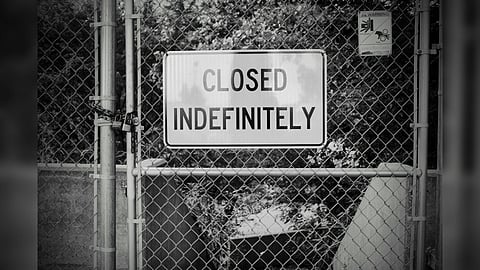
North Sentinel Island isn’t the only place that has adventurers throwing common sense out the window. Across the world, certain locations are off-limits for good reasons—danger, preservation, or just plain common courtesy—but that hasn’t stopped people from trying to sneak in.
Chernobyl’s Red Forest, Ukraine – This is the most radioactive place on Earth. After the 1986 Chernobyl nuclear disaster, this stretch of land turned into a toxic wasteland.
Area 51, USA – A military testing site so secretive that conspiracy theories practically write themselves. In 2019, people even tried to “Naruto run” into it during a meme-fueled ‘storming’ event.
Poveglia Island, Italy – Dubbed ‘the most haunted place in the world,’ this Venetian island was once a plague quarantine zone and later a psychiatric hospital.
Lascaux Caves, France – These caves are home to 17,000-year-old prehistoric art, but they were closed to the public since the 1960s to protect the delicate paintings from human contamination, but people still try to sneak in from time to time.
Human beings are fundamentally terrible at being told no. It’s psychological. The moment something is forbidden, it becomes infinitely more desirable (also called the “forbidden fruit effect”). It’s why kids stick forks into electrical sockets and why adults hop fences to see what’s on the other side. Tell us we can’t, and we must.
Some of it is ego—people want to be the ones who did what others couldn’t. Some of it is the allure of scarcity—if few have seen it, it must be special. And some of it is just plain rebellion. “Who are they to say I can’t?” says the guy sneaking into a radioactive wasteland.
You May Also Like: The Places You'll Go: The Underrated List For 2025
And then, of course, there’s social media. Forbidden places make for incredible content. The more off-limits, the better the flex. Snap a selfie in a place you weren’t supposed to be, and suddenly you’re a risk-taker, a rule-breaker, an explorer. Never mind that you’re also, possibly, a biohazard.
There’s another kind of forbidden travel—one that isn’t policed by governments or guardrails, but by time itself. Last-Chance Tourism. The frantic, almost primal urge to see a place before it disappears.
The Great Barrier Reef, once a riot of color, now bleaching itself into a ghost of its former self. The Arctic, melting into a slush pile of what used to be. Venice, drowning under the weight of its own beauty. Climate change is erasing landscapes faster than we can save them. And the closer they inch toward oblivion, the more we want to see them with our own eyes. A final pilgrimage. A farewell tour. A macabre stamp in the passport of human curiosity.
However, the hilarious irony is that in our desperation to bear witness, we become part of the problem. Flights spewing carbon. Cruise ships belching fuel into fragile ecosystems. Tourists trampling through delicate sites, speeding up the very destruction they came to mourn. It’s not just sightseeing—it’s sightseeing with a shovel, digging the grave of the very wonders we claim to love. (Brought to you by Expedia!)
You May Also Like: 3 Of The 10 Best Beaches In The World Are Less Than 5 Hours Away From India
At some point, we need to ask ourselves: Is our curiosity worth the cost? Do we really need that selfie inside a radioactive wasteland? That illicit grain of Sentinelese sand?
There’s something deeply human about wanting to explore the unknown, but there’s also something profoundly selfish about refusing to leave certain places alone. Some places shouldn’t be visited—not because they aren’t beautiful or fascinating, but because they simply don’t belong to us.
I mean, also because you might die. But hey, don’t let me stop you.