- Entertainment
- Style
- Lifestyle
- Food & Drinks
- Tech & Auto
- Culture

AI generated summary, newsroom reviewed
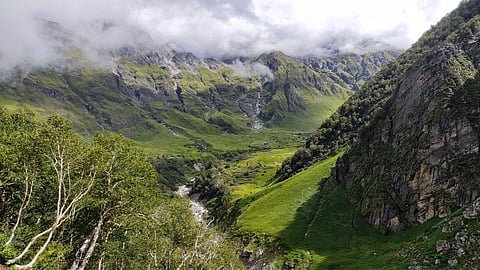
The Valley of Flowers opened for the 2026 season, and it's the most underestimated luxury destination in South Asia. Not because it's hidden, it's UNESCO-listed, it draws crowds, but because the kind of beauty it offers simply cannot be manufactured, packaged, or replicated anywhere else on earth. When you reach there check out the fragrances. In fact, nobody tells you about the smell. Before the colours hit you, before the peaks come into view, it's the cold, wet-earth smell of the Himalayas in full monsoon that announces you've arrived somewhere that operates by entirely different rules.
At 3,600 metres in the Garhwal Himalayas, this is Uttarakhand stripped down to its most essential self.
July. Specifically, late July into the first two weeks of August, when the monsoon has been at work long enough to coax the valley into its full bloom.
Hundreds of species flower here simultaneously, the Himalayan Blue Poppy (which looks like someone painted it, it cannot be real), the Brahma Kamal, species whose names you won't recognise but whose colours you'll remember for years. The snow-capped ridges sit above all of it. On overcast mornings the whole valley disappears into mist and then slowly reveals itself again as the cloud lifts. You could photograph it for a week and still feel like you'd missed something.
The park does open earlier in summer, and some visitors prefer the thinner crowds. Fair enough. But early season is not the same place.
Permits are mandatory, ₹200 per person for Indian nationals, ₹800 for international visitors, and they're issued right at the park entrance near Ghangaria. Nothing complicated, nothing that needs sorting weeks in advance from a city desk.
What the permit system actually represents, though, is something worth appreciating: deliberate limitation. Visitor numbers are capped. The fragile ecosystem that makes this place extraordinary is actively protected from being loved to death. In a world where most beautiful destinations have been overrun, the Valley of Flowers has held its ground.
The destination rewards commitment. Here's how the logistics break down:
By Air
Jolly Grant Airport, Dehradun, your nearest option, sitting about 277 kilometres from Govindghat. Road transfer from there through the Uttarakhand hills, which is its own kind of journey.
By Train
Rishikesh is as close as the railways get. Taxis run onward to Govindghat from there without much fuss, and the road follows the Alaknanda river for long stretches, worth a window seat.
By Road
Govindghat connects well to Haridwar, Rishikesh, and the rest of the state. The drive gets more interesting the higher you climb.
From Govindghat, you walk. Sixteen kilometres through Ghangaria, gaining altitude the whole way. There's no shortcut and no substitute, the trek is genuinely the transition between the ordinary world and what's waiting above it.
The trek closes at a fixed hour each evening, and overnight stays inside are not allowed. Build your days around an early start, the light is better anyway, and you'll want the extra hours.
Gear matters more than people expect. Waterproof boots, not trail runners. A proper rain jacket, not a packable one from a hotel gift shop. Trekking poles for the descent, which is harder on the knees than the climb. Phone signal vanishes somewhere around the lower valley and doesn't return until you're back in Ghangaria, plan for that.
One more thing: if you have an extra day, go to Hemkund Sahib. It sits above Ghangaria at a higher elevation still, a glacial lake ringed by seven peaks, one of the most sacred Sikh pilgrimage sites in the country. The kind of place where even people with no religious feeling at all go quiet. Combined with the valley, it makes for a trip that's hard to explain when you're home but impossible to forget.
The Valley of Flowers doesn't perform for you. It simply exists, vivid, cold, briefly accessible, entirely on its own terms.