
- Entertainment
- Style
- Lifestyle
- Food & Drinks
- Tech & Auto
- Culture

Update (September 16, 2026): The Indian Embassy in Tashkent has since clarified that Uzbekistan's 30-day visa-free entry does not apply to all Indian citizens. It's available only to Indians who already hold a valid multiple-entry Business or Tourist visa from Australia, Canada, Japan, New Zealand, South Korea, Schengen states, the UK, or the US, along with a confirmed return or onward ticket.
Indians without one of these visas still need to apply for a regular Uzbekistan visa. Read the full breakdown here.
With Uzbekistan becoming another visa-free country for Indian travellers in the world, the Silk Road destination's allure has become too accessible.
For years, Uzbekistan has been considered as undiscovered by some and a known destination on the bucket list by others. Nevertheless, the name is familiar to many Indians for its closeness, for centuries of history, trade and cultural exchange that have connected the Central Asian country to the South Asian one.
While Samarkand has appeared in history books, Bukhara in poetry, Tashkent in geopolitics, travelling to these places in Uzbekistan for Indian travellers has become hassle-free.
On 30 August, Uzbekistan announced a 30-day visa-free regime for Indian citizens, unveiled during delegation-level talks between Uzbek President Shavkat Mirziyoyev and Indian Prime Minister Narendra Modi's visit to the country. The move is expected to give a further push to tourism and people-to-people connections between India and Uzbekistan.
Uzbekistan has updated its travel policies for Indian travellers recently. For Indian travellers, the change is a meaningful one as they can now enter Uzbekistan without a visa for stays of up to 30 days as opposed to having to fill in an e-visa form previously.
Since the policy is newly announced, travellers should check the official implementation date and entry requirements before booking their trip.
The move comes as ties between India and Uzbekistan deepen beyond tourism. During the announcement, President Shavkat Mirziyoyev described India as a “reliable strategic partner”, noting that bilateral trade crossed US$1 billion for the first time last year. The number of joint ventures between India and Uzbekistan has also grown sevenfold in recent years.
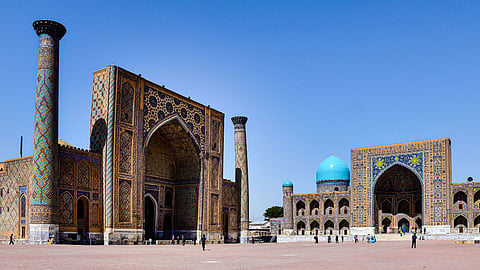
For travellers, the visa change is perhaps the most immediate sign of that closer relationship. It also makes Uzbekistan, a home to the Silk Road cities of Samarkand, Bukhara and Khiva a considerably easier proposition for Indian holidaymakers. A destination that has long felt culturally familiar yet geographically distant is suddenly much more within reach.