
- Entertainment
- Style
- Lifestyle
- Food & Drinks
- Tech & Auto
- Culture
For most of whisky's history, "single malt" has meant Scotland above all else. All the top names originated from that place. Whisky is essentially composed of barley, water, wood, and time. None of those components are exclusive to a single location. In the past two decades, several Indian distilleries have embraced that concept and created single malts that now compete for awards alongside Scotch.
The pivotal moment occurred in August 2004, when a distillery in Bangalore took a daring step. Rather than debuting its new single malt locally, it went directly to Glasgow, the center of Scotch territory and served it to Scottish patrons in a small curry restaurant named Café India. The logic was straightforward: to launch your whisky seriously, showcase it in the most challenging environment globally. It worked. Twenty years later, that same confidence has built a whole new category of whisky, and it comes from India.
One reason is climate. The heat in India accelerates whisky maturation significantly more than in the cool, moist climate of Scotland. The wood and the spirit engage rapidly, leading to significant liquid loss through evaporation annually, often three or four times greater than what a Scottish distillery would experience. That might seem like a drawback, yet it isn’t. What remains is whisky that offers more flavor and complexity than its age implies.
Here are five Indian single malts bringing that concept to life:
It all began with Amrut. The business started in 1948 producing common Indian spirits and only attempted a single malt in 2004 , the one introduced in Glasgow instead of its home market. Six years later, whisky reviewer Jim Murray listed it among the top three whiskies globally, prompting the whisky industry to pay attention. Composed of Indian six-row barley and occasionally mixed with peated Scottish malt, Amrut is bold spicy, and rich in flavor.

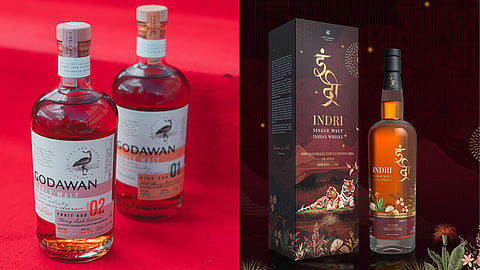
Produced on the coast of Goa since 2008, is gentler and more inviting. Anticipate sweetened barley, tender fruits, and a hint of smokiness. The master blender of the distillery has stated that the heat in Goa can age whisky in four or five years, a process that would take fifteen years in Scotland. The brand currently distributes in over 40 nations and has received nearly 400 accolades, including Best Indian Single Malt at the 2026 World Whiskies Awards.
Situated at the base of the Himalayas, where winters are genuine and the weather is significantly cooler compared to Goa or Bangalore. This imparts a softer, smoother character to its whisky, despite maturing approximately four times quicker than Scotch. Its Asava expression, matured in Indian wine casks, was the first single malt globally produced in this manner, and it received Best World Whisky at the 2023 John Barleycorn Awards.
Hailing from Haryana, is the quickest climber in the group. The brand was established only in 2021. Only two years later, its Diwali Collector's Edition outperformed more than a hundred whiskies globally , Scotch included, to claim Best in Show at the Whiskies of the World Awards. It continued to achieve success afterward, and by 2024 had allegedly emerged as the quickest expanding single malt brand globally.
Produced by Diageo in the Rajasthan deserts, takes the concept of heat to the extreme. Casks mature at temperatures exceeding 100°F, and the brand indicates that it loses approximately 10% of its whisky to evaporation annually. Since its debut in 2022, it has received 46 awards, including the title of Single Malt Whisky of the Year at the 2024 London Spirits Competition for the exclusive Godawan 100 edition.