
- Entertainment
- Style
- Lifestyle
- Food & Drinks
- Tech & Auto
- Culture

AI generated summary, newsroom reviewed
For the first time in the festival's 79 years, a Nepali film has walked away with a prize at Cannes. Elephants in the Fog, the feature debut of writer-director Abinash Bikram Shah, took the Un Certain Regard Jury Prize on May 22 — a section that runs parallel to the Palme d'Or race and exists, by design, to flag the filmmakers everyone will be talking about in five years.
That a small Nepali film got there at all is the story. That it got there by training its lens on a transgender community in a forested village in the Terai is the better one.
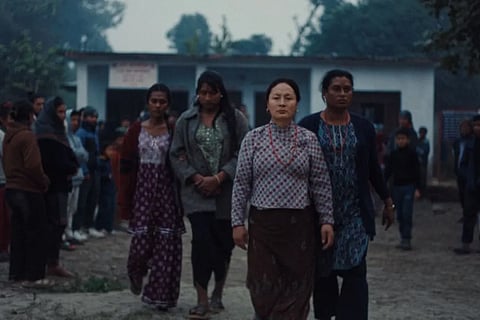
The film is set in Thori, a village hemmed in by elephant country in southern Nepal. At its centre is Pirati, played by Pushpa Thing Lama, the matriarch of a Kinnar household and the kind of character world cinema rarely makes room for: middle-aged, trans, in love, and tired. The Kinnar, or meti, community has been legally recognised as a third gender in Nepal for years now, much like in India. Legal recognition, as anyone paying attention knows, is not the same thing as a life. Most of them still scrape by singing and dancing at births and weddings, ignored at traffic signals, waved off at government offices.
Pirati has fallen for a local drummer, which the community's codes of chastity do not permit. Her adopted daughter Apsara, a former sex worker, has fallen for a rickshaw driver. When Apsara disappears, Pirati's search becomes the spine of the film — part missing-person story, part reckoning with what it costs to want something for yourself when you are also responsible for everyone else.
What makes the film land, by most accounts out of Cannes, is what it refuses to do. It doesn't exoticise. It doesn't turn its subjects into a cause. It just sits with them, in their crowded homes and their bright clothes and their rituals, and lets the texture do the work. Anurag Kashyap, posting on Letterboxd, called the closing shot the best he had seen at the festival this year. The premiere on May 20 reportedly got somewhere between seven and eight minutes of ovation, which in Cannes arithmetic is the difference between a polite reception and a real one.
The elephants of the title are not decorative. They drift through the forest around Thori, hunted for profit and pleasure, and Shah lets the parallel breathe without underlining it. Gentle giants on one side of the trees, a community treated as ghosts on the other.
This isn't entirely out of nowhere. Nepali cinema has been quietly building for a decade now — Deepak Rauniyar's White Sun, Min Bahadur Bham's Kalo Pothi and Shambhala, Shah's own short Lori, which picked up a Special Mention at Cannes in 2022. Shah, in fact, wrote on several of those films before stepping behind the camera himself.
The team flew back to Kathmandu on Monday to ministers at the airport, marigolds, and a 250,000-rupee cheque from the Nepal Film Development Board. The cheque is sweet. The shift it marks is sweeter.
"We have made the invisible visible," Shah said from the Cannes stage, his cast standing behind him. It is the sort of line that, in most acceptance speeches, would read as a flourish. Coming from this film, it reads as a description.