
- Entertainment
- Style
- Lifestyle
- Food & Drinks
- Tech & Auto
- Culture

"Knowing I had far to go; but not, as yet, how far." That's how Laurie Lee remembered the morning he left home in As I Walked Out One Midsummer Morning. It was a bright Sunday in June 1934, and he was a 19-year-old with a violin, setting out from a Gloucestershire village in England. He walked to London before taking the ferry to Spain. At the time, all Lee knew was one Spanish phrase. 30 years later, the world got one of its finest travel narratives of the 20th century.
That distance is the gift of the memoir. While a travel guidebook can tell you where to go, a memoir tells you what it felt like to go. It's a companion that owns flaws, isn't afraid to opine, and is wonderfully specific account. They are intimate and give insights into the life of a writer first hand. Some memoirs become gateways to reading non-fiction, others remind you of the journeys you've forgotten, the ways you've changed and things rarely planned.
Here are some of the most interesting memoirs worth reading:
Book of Lives starts with Atwood's parents and shares being left largely to her own devices as a child that helped her develop a close connection with Nature. The memoir also connects readers to her early books including The Handmaiden's Tale and more.
Prompted by the death of her mother, Mary Roy, in September 2022, Roy pours her smashed heart and confusion into her memoir. A recount of her mother's cruelty, her childhood in Kerala, her prize-winning novels and growing up with a single-mother who founded a school.
A 304 pages long book snow leopards, The Ghost of The Mountains is a personal narration of decades of work, from high-peak fieldwork to building a community-based model for protecting snow leopards.
The Japanese author of Norwegian Wood writes about running, writing after closing his jazz bar and committing to being a full-time novelist in 1982. It's loosely organised aroung his training for the 2005 New York City Marathon, alongside earlier races, including his first marathon in Greece and an ultramarathon in Japan.
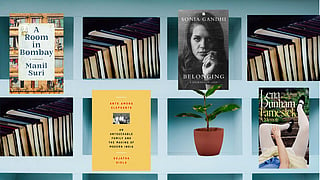
Gidla grew up in Andhra Pradesh in a Dalit family before moving to New York where she worked as a subway conductor. Her memoir Ants Among Elephants: An Untouchable Family and the Making of Modern India centres on her mother and uncle Satyam- a poet, activist and Naxalite-linked communist leader.
The mathematician and novelist of The Death of Vishnu, the rented room in Razia Mansion in a four-storey Bombay building where the Hindu parents share the flat with three Muslim families, the memoir draws over 2700 letters written to his mother across 3 decades and follows his coming of age, his negotiations with his sexuality and life in US.
Sonia Gandhi's memoir published in November 2026 explores family, duty and her search for belonging. Written over 544 pages, the memoir gives her accounts on Emergency in 1975, Babri Masjid demolition, 2004 and Manmohan Singh, her 2010 breast cancer diagnosis, surgery in Milan, Indira Gandhi's temper and fallout with Maneka Gandhi amongst other things.
A second memoir after Not That Kind of Girl, Famesick covers a decade shaped by sudden fame and ongoing illness. She treats her decade-long struggle with chronic illness and her of being famesick as parallel, debilitating conditions while portraying fame as something that erodes well-being and sense of self.
A 2024 release, Knife recounts Salman Rushdie's account of the attack on him from his own knowledge which led to loss of sight in one eye and serious neck, face and hand injury. The book moves between the attack, his recovery and the reflections on his life under the 1989 fatwa while also including an imagined conversation with his attacker and his love story with wife and poet Rachel Eliza Griffiths.