- Entertainment
- Style
- Lifestyle
- Food & Drinks
- Tech & Auto
- Culture

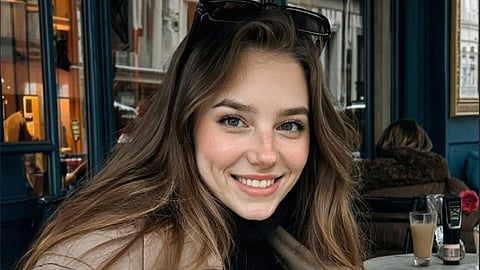
Over the past week, headlines have lit up with the debut of Tilly Norwood, a doe-eyed, smooth-skinned new “actress” introduced by London-based studio Particle6, via its new AI talent lab Xicoia.
Some media outlets have playfully mocked her for not knowing her mark on set (perhaps unsurprising, since she doesn’t have a body), while Eline van der Velden, her spokesperson, hopes her to be the next big star of Hollywood. In fact, in an interview with Broadcast International Velden said that, “We want Tilly to be the next Scarlett Johansson or Natalie Portman. That’s the aim of what we’re doing.”
Comparing Tilly to Johansson is more than just a reach, it’s a fundamental misunderstanding of what acting actually is.
Yes, it’s true that artificial intelligence is working its way into every corner of modern life, from writing emails to composing music. And some level of AI involvement in film and television production was probably inevitable.
But it’s one thing to use AI for background enhancements or production logistics, it’s another to position it as a replacement for human performance. That crosses a line not just technologically, but culturally and artistically.
Tilly Norwood made her public debut at the Zurich Summit, an industry event held during the Zurich Film Festival. She was unveiled as a prototype AI character meant to challenge our ideas about casting, storytelling, and production and made her on screen presence in AI Commissioner, a new comedy sketch that playfully explores the future of TV development.
According to van der Velden, the project is a response to shrinking studio budgets and skyrocketing content demands. As she posted on LinkedIn:
“Audiences? They care about the story, not whether the star has a pulse."
And there it is. That’s the part that should give us pause. Because this is something more than mere creative experimentation. It’s about a growing willingness to sideline human labour, emotion, and experience in favour of algorithmic novelty.
Naturally, since the unveiling, the backlash has been swift. Actress Melissa Barrera urged agents to drop anyone representing synthetic talent. Actor Lukas Gage joked that Norwood was “a nightmare to work with.” On The View, Whoopi Goldberg challenged the premise outright, saying, “You can always tell them from us. We move differently, our faces move differently, our bodies move differently.”
Even the British actress, Emily Blunt, starring in the upcoming film along side Dwyane Johnson in The Smashing Hit, said on a podcast recently “Good Lord, we’re screwed. That is really, really scary, Come on, agencies, don’t do that. Please stop. Please stop taking away our human connection.”
Even more pointed was the official response from SAG-AFTRA, the union representing performers in film, television, and audio. In a public statement, they made their stance clear:
“Tilly Norwood is not an actor. She is a character generated by a computer program that was trained on the work of countless professional performers — without permission or compensation.”
They went further, warning that this kind of AI “creativity” doesn’t solve any industry problems, instead it fuel them, by threatening jobs, undercutting contracts, and devaluing the essence of human artistry.
Norwood may look flawless. Her voice may be perfectly modulated. Her social media posts are, by design, photogenic. But art isn’t about perfection alone. What about vulnerability, spontaneity, failure, recovery, all the messy, beautiful things that make us human. And none of that can be synthesised, or can it in the wake of AI revolution?
Not to forget, real actors bring lived experience into every role, and audiences expect to see those lives spill out onto red carpets, into interviews, or even in a casual taqueria sighting. AI doesn’t have that. It can’t. And that matters.
There may be room for synthetic characters in niche storytelling or experimental art, just as there is for animation or puppetry. But pretending that a synthetic avatar can carry the emotional weight of a human performance or comparing it to one of the most respected actors of a generation is not just misguided. It’s dangerous.
As we enter this new era of digital storytelling, we need to ask a hard question: What are we willing to sacrifice in the name of innovation?
We’re erasing the people who made it worth watching in the first place.