
- Entertainment
- Style
- Lifestyle
- Food & Drinks
- Tech & Auto
- Culture
What makes an iPhone…an iPhone? Is it the ease of use or the hardware-software integration that bestows iPhones their legendary longevity? Is it the higher-quality apps on iOS or even the ecosystem benefits that just work better “together” with Macs, AirPods and iPads? Or is it merely the status signalling of being a “blue bubble”?
By all measures then, Apple’s latest iPhone 16e has all the pillars of the core iPhone experience covered, at a price that’s best described as affordable…by Apple standards. The spiritual (if not direct) successor to the iPhone SE series upgraded to a 2025-ready spec sheet, the 16e has Apple dialling down the iPhone experience to the essentials but is it worth the still pretty price of admission (Rs. 59,900 onwards) into the iPhone club? And really, what does the e in 16e stand for? Entry-level? Exciting? Economical? Essential? Or the iPhone for “Everyone”? Having spent a week with the 16e as my daily driver, the answer is… a bit of Everything.
You May Also Like: Why I Would Totally Purchase The iPhone 16e
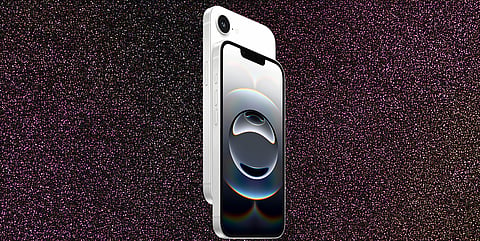
It starts with Apple forgoing the wildly outdated iPhone SE design for a relatively modern look with its flat aluminium edges and matte glass rear. The display notch and the slightly thicker bezels around the screen remind you that while this may be a part of the iPhone 16 family by name, it’s got its looks and dimensions from the older iPhone 14. To be fair, anyone coming to the iPhone 16e from an older iPhone SE or iPhone X (or earlier) is unlikely to be bothered by this, though I do wish Apple had gone beyond the black and white colourways – heck even the older SE had a Product Red edition! Gone is the SE’s home button, replaced by an all-screen interface and gestures, though you will miss out on the useful functionality enabled by the Dynamic Island on recent iPhones. You still get IP68 dust and water protection and the one-generation old Ceramic Shield display protection, plus the customizable Action Button which can be used to invoke the camera or flashlight, trigger shortcuts or launch Visual Intelligence, the latter arriving via a software update soon.

Now, while some folks may rue that the smallest screen you can buy on a current iPhone has been bumped up to 6.1-inches, the Super Retina XDR OLED display feels just the right size for watching content or catching up on emails, without having to constantly adjust one’s grip as one has had to do with larger slab-like phones. The screen tops out at 1200 nits of peak brightness (a shade lower than the iPhone 16’s 1600 nits) and only refreshes at 60Hz, features Android proponents will remind you to no end are available on phones at this price point (and lower), but the overall experience and fluidity of use is on par with the base iPhone 15 and 16 models.
For every bit that the iPhone 16e may have come across as a scaled-down, ‘almost there’ iPhone 16, Apple’s choice of kitting it with the same A18 chip and 128GB of storage as the iPhone 16 (both top out at 512GB) is a solid move, not only for performance today but longevity and software support for the years to come. Sure, you get four graphics cores instead of five on the iPhone 16, but you’re not going to be able to discern the difference in daily use, or handle games like Resident Evil 4 or Roblox. For all intents and purposes, you’re getting the best bang for your buck for current generation iOS hardware. Apple has used the 16e as the launch vehicle for its homegrown C1 modem, and I haven’t seen any issues with data or voice calls in two weeks of use on Airtel’s 5G networks across Bengaluru and Mumbai. Launching with the latest chip also means that the iPhone 16e will get the full set of Apple Intelligence tools when it rolls out via software update in April.
Coupled with the slightly bigger battery and the more efficient C1 modem, the 16e nudges past the iPhone 16 in battery life, lasting nearly two days with average use, or comfortably till the end of the day on a day when I went to town taking photos and 4K videos, using Maps over 5G and the like. Battery anxiety traditionally used to be a weakness on the base/smaller iPhones, nudging folks towards the Plus or the Pro Max variants, but that was not the case when I used the 16e. Not to say it’s all roses – charging speeds are still slow (29W) by any standards, albeit over USB-C(finally!), wireless charging is slower still at 7.5W Qi and there’s no support for Apple’s MagSafe standard which magnetically attaches any recent iPhone onto stands, grips and power banks. Equally perplexing is the exclusion of ultra-wideband support, meaning if you’re locating other devices or AirTags via Find My, you will have to rely on plain old Bluetooth instead of a more precise spatial tracking. The iPhone 16e is likely to be a gateway drug for many first time iOS users, and MagSafe and UWB support would have been a perfect opportunity to play nice with a whole host of Apple ecosystem accessories, and not including it feels like a missed opportunity.
Yet, it’s likely how much you prioritize cameras that will decide whether the 16e will be enough for your needs or if you should be considering the base 16 instead. You get only the single 48-megapixel Fusion camera on the 16e, which means you can take 24-megapixel or 48-megapixel wide photos, or 12-megapixel 2x in-sensor-crop “zoom” photos. Yet, no ultrawide shooter means you have to physically take a few steps back to get those cityscapes or indoor group shots, and no macro shooting either. There’s no sensor-shift stabilization that's been an iPhone staple for years now (albeit on pricier iPhones), and portrait mode is an older version, so you can’t use it on food, objects or animals, only people. No Cinematic mode or Action mode for videos either, for what it’s worth.
What sounds like a crippled, fixed lens shooting experience is anything but when you take the 16e out to shoot – images are sharp and vibrant with boatloads of details, and night shots aren’t pushovers either (except low-light portraits). Videos are a little shakier than the iPhone 16, but are otherwise rock solid, with the ability to capture Dolby Vision content at 4K resolution/60 frames-per-second. It’s a solid single camera, but certainly less versatile than the iPhone 16 and many of its price segment peers.
For many Apple fans, the iPhone 16e is a good entry point into the Apple ecosystem, the perfect model to spring for without having to figure out how to save cash on an older iPhone model during the latest online sales. Yet at ₹59,900 without cashbacks, the 16e is not nearly as affordable as the ₹43,900 SE it replaces as Apple’s lowest-priced current phone, and the Android competition at this price point is fierce. Even the base iPhone 16 is available online for ₹69,999 at the time of writing, less so during sale season, and the iPhone 15 for a little more than the 16e, though the latter will never support Apple Intelligence. Swing a good deal on the 16e via cashbacks or the inevitable online sales and the 16e could then be “Exactly what you need” without breaking the bank.