
- Entertainment
- Style
- Lifestyle
- Food & Drinks
- Tech & Auto
- Culture
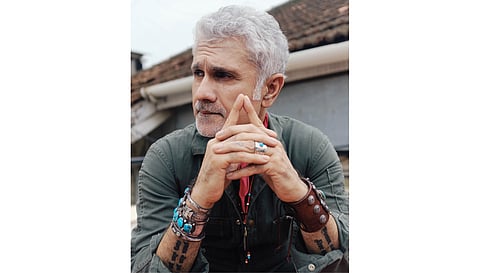
EVERY FEW YEARS, FASHION REDISCOVERS TAILORING, FALLS BACK IN LOVE WITH CRAFTSMANSHIP AND GIVES QUIET luxury a new name. Arjun Khanna never needed the reminder. Since launching his eponymous label in 1989, the designer has built one of Indian menswear’s most enduring legacies by doing what fashion often forgets to do—getting the fundamentals right. Military precision, architectural structure, vintage references and an almost forensic understanding of the male silhouette have long been the grammar of his design. The objective has always remained the same: to create clothes with integrity and lasting relevance.
Now, as he prepares to take his newest venture, AKOG, to an international audience, Khanna remains committed to clothes designed to age gracefully, acquire character and outlive the very moment that inspired them. In this conversation with Esquire India, he reflects on a career shaped by instinct over impulse, why great tailoring still matters and why, in a world of disposable fashion, timelessness endures.
Was there a first moment that you fell in love with clothing and menswear that you can remember?
I’ve always had an aversion to anything ordinary. It wasn’t just about clothes; I wanted everything around me to feel unique. Growing up in Mumbai and studying at Campion School, the uniform became my first canvas. When we were finally allowed to wear white trousers and shirts in the senior years, I started experimenting, adding turn-ups to my trousers and cuffs to my sleeves. My mother had a local tailor she visited regularly, and I was fascinated watching him work. That curiosity quickly turned into experimentation. I even remember cutting up a pair of checked curtains at home to make baggy trousers for myself and my closest friend—who, incidentally, is now my brother-in-law. I got into plenty of trouble for it, but that was really the beginning.

So at that point, becoming a designer was already the plan?
Not at all. If I hadn’t become a designer, I think I would’ve been an artist—most likely a painter. Photography has also always been a natural creative outlet for me, especially through fashion. That said, I’ve always had a soft spot for mechanics, too, so a garage full of classic cars wouldn’t have been a bad alternative either.
Your collections draw from a lot of things like architecture, military uniforms, vintage objects, global cultures. After over 30 years in the game, how do you still balance storytelling with wearability?
When I started out, I was incredibly rebellious. I wasn’t thinking about sales or commerciality—I was simply following my instincts. There were even pieces I didn’t want to sell because I felt they had to go to the right person. Looking back, it was naïve, but it was also honest. Over the years, I’ve become far more aware of the business, but I’ve never compromised on creating from the gut. The interesting thing is that the audience has evolved, too. Men today are far more experimental, more style-conscious and much more willing to embrace individuality. That’s why many of the ideas I introduced years ago still feel relevant today.
Military history has always been a constant source of inspiration—not just the uniforms, but the craftsmanship, insignias, tailoring and sense of purpose behind them. I found it very masculine. I was fascinated by it as a child, even dreaming of becoming a fighter pilot. Today, I collect vintage uniforms, luggage and military artefacts from around the world. That influence has never left me; it’s simply become more layered over time. Ultimately, both my clientele and I have evolved together. That’s what allows storytelling and wearability to coexist so naturally.
You’ve said that understanding body type is a big advantage you have. In an era of oversized silhouettes and trend-led dressing, is true tailoring becoming a lost art—or is it poised for a revival?
I’d say it’s a bit of both. I trained as a tailor before I became a designer, so understanding the body has always been at the heart of what I do. For me, the most exciting challenge isn’t dressing the “perfect” body—it’s dressing the real one. Because the perfect body is the easiest body to fit. I really enjoy when somebody comes in who’s an odd size or shape and is dying to wear a perfectly tailored suit! Every person has a different shape, and helping someone feel confident in a beautifully fitted garment is far more rewarding than fitting a standard mannequin. I also think we’ve reached a point where personality matters more than perfection.
As for tailoring, I hope we’re moving towards a revival. I have nothing against oversized silhouettes—I wear them myself—but I believe there should always be balance and a sense of occasion. The way you dress should respect where you are and why you’re there. Not every trend works everywhere, and that’s where timeless tailoring will always have a place.
You’ve made some very compelling style statements over the years. What inspires your unique approach to fashion when you’re dressing yourself?
I don’t overthink it. Style should feel effortless. Whether it’s a pair of jeans and a white T-shirt or a black tuxedo, the most important thing is that you feel comfortable in your own skin. Over the years, I’ve become much more comfortable with who I am, and I think that changes the way you dress. It’s about dressing in a way that feels authentic. I simply follow my mood. Some days it’s denim, some days it’s dungarees, and that’s perfectly fine. Find your own identity before looking to trends or designers for validation.
A look from the ’80s or the ’90s that you’d like to bring back?
It’s already happening. Fashion has become much more fluid, and we’re seeing silhouettes from every decade coexist. The rise and fall of jean waistlines, baggy fits, relaxed tailoring—it’s all cycling back in different ways. It’s all beautifully blurred, and I think that’s far more interesting because people aren’t confined to a single trend. If I could bring back one thing from the ’80s, though, it wouldn’t just be the clothes—it would be the analogue era. Vinyl, turntables, film photography, even cassette tapes are all making a comeback, and I love that. It reminds us that nostalgia isn’t restricted to just fashion; it’s about slowing down and reconnecting with craftsmanship, ritual and authenticity.
What would you never ever wear and why?
I wouldn’t wear sneakers with a suit! (laughs).
If you could permanently retire one menswear rule that the fashion industry still clings to, what would it be?
I think the biggest misconception is that tailoring can be reduced to a set of universal rules. Each body is different, so every garment should be approached differently. One myth I’d love to retire is the idea that a perfectly tailored jacket should never have any puckering where the sleeve meets the shoulder. In traditional Neapolitan tailoring, that subtle puckered shoulder is actually a mark of exceptional craftsmanship. It’s created by carefully easing the fabric into the sleeve, and only a handful of master tailors can execute it beautifully. I’d also challenge the so-called “thumb rule” for sleeve lengths. There isn’t one correct measurement that works for everyone. Sleeve length should be determined by the individual’s proportions, posture and the overall balance of the garment.
An item of clothing or a fashion accessory you’re currently on the hunt for?
I’m always hunting for exceptional vintage denim. I love collecting rare Japanese denim and vintage Levi’s, and I’m constantly searching for pieces with real character and history. Right now, I’m of looking for a Type I Levi’s “Big E” jacket, specifically the buckleback version. I already own one, but I’m still searching for an exceptional specimen. For me, the thrill is as much in the hunt as it is in the find.
If you had to wear one outfit for the rest of your life, what would it consist of?
My cowboy boots, blue jeans and a white V-neck. And if it gets slightly nippy, a trucker jacket.
One thing from your closet that you’d never throw out?
The blue jeans.
If someone inherited an Arjun Khanna jacket thirty years from now, what would you hope that it says about the era that it came from?
One of the greatest compliments I receive is when I’m dressing three generations of the same family—a grandfather, his son and his grandson—and that the grandfather is still wearing a jacket I made for him decades before. For me, that’s the true measure of good design. I hope an Arjun Khanna piece says that it was timeless, beautifully made and built to last. If it’s still being worn decades later, fits well and still feels relevant, then it’s done exactly what it was meant to do. I’d also love to see more men invest in fewer, better pieces—and, of course, stay fit enough to keep wearing them for years to come.
What’s happening for you on the professional front currently?
I recently launched a new label called AKOG, which stands for Arjun Khanna Original. It’s a denim-focused line that’s already available in-store, with the official launch and a much larger collection rolling out over the coming months. I’m particularly excited because there’s a tremendous amount of technique and craftsmanship behind it. AKOG will eventually expand into a complete lifestyle universe, including bags, accessories, laptop cases and other everyday essentials—all built around the same philosophy of timeless design and exceptional craftsmanship.
What are your top three career highlights as a designer?
The first would have to be launching my debut collection in 1989 after returning from London. I showcased at [multi-design store] Ensemble alongside designers I deeply admired, and I remember Tarun Tahiliani encouraging me to present my work.
The second was creating a custom sherwani for Sir Richard Branson when he launched Virgin Records in India. Why that’s a highlight is because of the way they were launching Virgin. He was going to jump off a building (with a harness, of course). So we had to engineer two red sherwanis with concealed openings for the safety harness, which was quite a fun challenge.
Another defining moment came after I returned from a fouryear sabbatical to present a collection at a fashion event and people were skeptical because while many designers relied on celebrity or Bollywood showstoppers, I chose to let the clothes speak for themselves instead. The ovation the collection received remains one of the most rewarding moments of my career.
Are there any specific personal or professional goals that you have for the rest of this year?
Most definitely, I want to take AKOG international. And my yardstick would be taking it to Japan because that’s where all the fabric comes from, so it’s like a big one for me if it does happen. And on the personal front, I want to learn so many more things. I wish there were 48 hours in a day! I want to become a better artist, continue refining my photography and keep growing creatively. I don’t think that process of learning ever really ends.
What other things do you enjoy doing during your downtime, if you get any?
Photography, music and playing with my little one: an 11-year-old bulldog, Brando.
What are three quirky things that nobody knows about you?
Oh, I can’t say!
Come on—give us one.
I think I’m possibly ADHD to another level (grins).
Credits
Words by JEENA J BILLIMORIA
Photographs by AGNIDHRA RAY
Styling by KOMAL SHETTY
Hair and Grooming by ISHLEEN SETHI
Bookings Editor by VARUN SHAH
Location Courtesy by ARJUN KHANNA BOUTIQUE
To read more stories from Esquire India's September 2026 issue, pick up a copy of the magazine from your nearest newspaper stand or bookstore. Or click here to subscribe to the magazine.