- Entertainment
- Style
- Lifestyle
- Food & Drinks
- Tech & Auto
- Culture

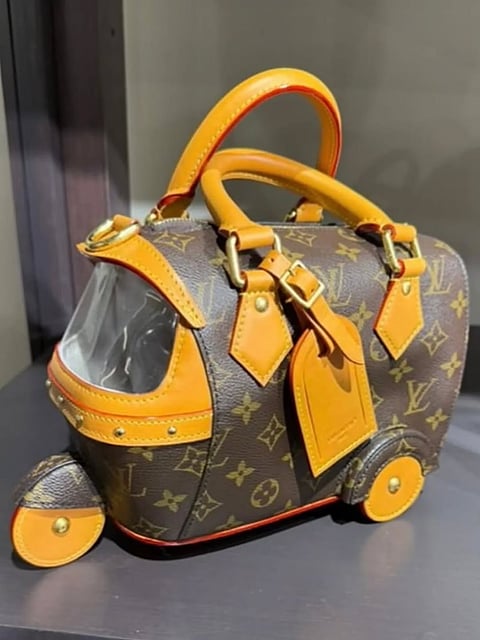
By now you’ve probably seen it. The bag that looks like it just rolled off the streets of Delhi and straight onto the Paris runway. Louis Vuitton, in its Spring/Summer ’26 menswear show, dropped what might be its most viral accessory yet: a luxury handbag shaped exactly like an Indian autorickshaw. Handlebar, tiny windshield, yellow canopy and all. The only thing missing is a sticker that says “Horn OK Please.”
Naturally, the internet is losing it. Reactions range from bemused admiration (“Middle-class struggle is now high fashion”) to existential confusion (“Did this bag just colonise me?”). But whatever side of the spectrum you land on, there’s no denying the auto bag has done what any piece of fashion should do—start a conversation.
LV’s rickshaw bag isn’t new in the brand’s playbook of novelty pieces (see: airplane trunks, hamburger clutches, toolbox totes). But this one feels… different. More pointed. More loaded. Because while other bags were whimsical nods to objects, this one taps into something far deeper—class, culture, and the complicated gaze of global fashion houses looking east.
The autorickshaw is no ordinary prop. In India, it’s an everyday reality, a symbol of the working class, a lifeline for daily commute. It’s what you flag down on a dusty road when Uber surges are out of control. Seeing that transformed into a 35-lakh rupee leather collectible is both absurd and—depending on how you read it—either a celebration or a provocation.
There’s something undeniably powerful about Pharrell Williams, now LV’s menswear creative director, turning a piece of Indian street life into high fashion. The show itself was an ode to India—not in the lazy, postcard kind of way, but in a detailed, textured homage. Snake-and-ladder runways, Mughal-style trunks, crepe-soled sandals, AR Rahman scoring the soundtrack, and colour palettes straight out of Darjeeling sunsets.
But that doesn’t mean the rickshaw bag escapes critique. For many Indians, there’s a double take. It’s hard not to wonder why the things we grow up normalising—like chappals and rice sacks and three-wheelers—suddenly become exotic only when they’re rebranded by Western luxury. There’s pride, sure, but there’s also a twinge of irony. It’s cool now because it’s on their runway? If, instead of the trademark LV embossed leather, if the same bag was selling for 5000 Indian rupees in a street market, would we buy it?
Still, let’s not pretend this isn’t masterful. The bag is beautifully crafted, clever in detail, and loaded with personality. It knows exactly what it’s doing—poking fun, sparking headlines, turning nostalgia into capital. It’s viral bait that also, strangely, feels personal to a billion people.
And maybe that’s why it works. Because it doesn’t just reference India—it recognises it. Not as a moodboard, but as a protagonist. Fashion, at its best, can do that. It can make you feel seen, even if you’ll never actually buy the thing.
So yes, the LV autorickshaw bag is ridiculous. It’s also brilliant. And somewhere in between meme and museum piece, it’s managed to pull off what every brand wants: attention, emotion, and just the right amount of cultural whiplash. I still wouldn't buy it for Rs. 35 lakhs, but sure.