- Entertainment
- Style
- Lifestyle
- Food & Drinks
- Tech & Auto
- Culture

In India, conversations around obesity is still wrapped in crude jokes, stigma, and WhatsApp university forwards. Now, with Ozempic entering the Indian market, that problem is getting a dangerous new shortcut. What was meant to be a tightly supervised diabetes drug is fast becoming a cultural fix for shame, pressure, and aesthetic panic in a country that still treats weight as a moral failure rather than a medical condition.
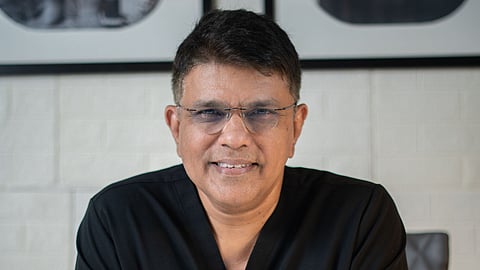
Few voices are better placed to cut through the noise than Dr. Muffazal Lakdawala. The Director of Surgery at Sir H.N. Reliance Foundation Hospital and founder of The Digestive Health Institute, he has spent over two decades dismantling the myth that obesity is about willpower or vanity. His legacy is built on breakthroughs: from performing India’s first laparoscopic gastric bypass to leading humanitarian milestones such as the life-saving surgery on Eman Ahmed, once the world’s heaviest woman.
Beyond the operating room, Lakdawala reveals the human layers that shape his work: a near-miss with professional cricket, a lifelong love for photography, and the stories that keep him going in a profession that asks the most of the people who practice it.
Excerpts from a conversation.
You almost pursued cricket professionally—what do you think your life would’ve looked like if you’d chosen that path instead of medicine?
There is always a gap between what if and reality. I am grateful that I chose surgery as a profession and I truly enjoy what I do. If you ask me whether I would change anything today, my answer is a definite no. Though I am sure my son Kiaan who is a passionate cricketer would have love to trade as a surgeon to a cricketer as a dad! I am glad I opted for surgery as a profession and am enjoying what I am doing every day, even today.
Surgeons are often trained to detach emotionally. You seem to lean into empathy. Is it difficult sometimes?
Honestly, I think every doctor - surgeon or not - ends up building some kind of rapport with their patients. We meet people at some of the most vulnerable moments of their lives, so it’s impossible not to feel something. And yes, when the cases are unusually challenging, they can drain you mentally, physically, and emotionally.
For me, empathy isn’t optional in medicine. It’s an important part of becoming a complete doctor, it helps us understand the patients' pain, their fear, or the trauma they’re carrying. That perspective keeps me grounded and reminds me why I chose this profession in the first place. But of course, there’s a flip side. This job isn’t a once-in-a-while emotional event; it’s day in and day out, hundreds of patients, tough decisions, and high stakes. If I let my emotions control my actions for every single person who walked into my clinic, I’d be a puddle on the floor by lunchtime.
So, we learn to balance. Not detachment, but enough emotional discipline to make the right decisions when it matters.
And I always tell people: please don’t categorise doctors as cold-hearted or uncaring. We’re not a separate species. We care deeply; we just don’t allow people to see our disappointments and fears.
You performed India’s first laparoscopic gastric bypass. What’s the part of that story the world doesn’t know?
In 2004, when I performed India’s first laparoscopic gastric bypass, it took me eight hours. We didn’t have long instruments back then, the teams weren’t trained either for something this advanced, and there was very little exposure — it really felt like pioneering work. Cut to today, as we enter 2026: we’re doing the same surgery with robots in under an hour. The leap in technology and skill has been extraordinary.
The part that most people don’t know? That very first patient is doing brilliantly, living a full, happy life, and still stays in touch. That’s the part of the story I value the most.
Coming to obesity…You’ve said obesity is a disease, not a cosmetic issue. What’s the most dangerous misconception India still holds?
Obesity was and always will remain a disease.
Unfortunately, until a recent publication in The Lancet, where it was declared as a disease, obesity was always associated with various other diseases like T2DM, Infertility, arthritis, Gout, Fatty liver disease like MASH, MAFLD, Sleep Apnea, Heart failures or Cancers. It was never given the true tag of being a standalone disease.
In India the biggest misconception about obesity is ‘Khate pite ghar ke log hai - So it’s okay to be slightly plump and overweight’. The fact of the matter is that the amount of sugar addiction we have in India, obesity is always going to remain a relevant issue. It’s time we recognize the elephant in the room and call out all its ills, I am really happy that the Honourable PM Shri Narendra Modi has called a war against obesity.
The world is obsessed with quick fixes: fat burners, weight-loss teas. Which trend worries you most?
It’s true that the world today is obsessed with quick fixes. Anybody and everybody who has any knowledge tells you how to lose 20 kgs with either crash diets, famous nutritionists or gym trainers, fat burners that they know, or some form of concoction which nobody has ever heard off. The fact of the matter is that you do lose weight initially with non-surgical methods, but its weight loss maintenance that is really difficult.
Today we have got really powerful drugs like GLP -1 analogues. These are lifesaving drugs, but the worrying trend is that they are being misused for weight loss by self-medication and by non-qualified quacks. There is nothing like mini dosing of Ozempic or Mounjaro.
Trust me, if you have got only 5 -8 kgs to loose, follow a diet, take the sugar off, and exercise regularly. Please do not use any of these drugs without supervision, because these drugs are meant for serious health conditions.
How do you help patients rebuild self-worth after years of stigma?
The gut–mind axis is real — what happens in the stomach affects the mind, and vice-versa. Many people living with obesity struggle with mental health because of years of stigma, especially in India where we still tend to judge quickly.
So I focus on two things: professional support through counselling and community groups, and social support from family, friends, and workplaces. When the environment becomes kinder and more inclusive, patients start rebuilding their self-worth surprisingly fast. Our job as doctors treating obesity is to guide them medically and help them recognise their own value again.
How should India rethink nutrition and fitness to tackle metabolic disease at scale?
In India, we tackle two ills, one is obesity and the other is malnutrition. Unfortunately, nobody really recognizes that obesity and malnutrition go hand in glove. A lot of obese people in India are deficient in Iron, B12 and Vitamin D. Multiple hours of sitting in the sun will never get your Vitamin D levels back up if you are Obese. So, we need to start rethinking nutrition, beyond quick fixes. Nutrition has to be local, healthy and cheap for it to sustain. A variety of options like multigrain attas, millets are available in India which are cheap and packed with nutrients, which can be tried by the richest as well as poorest of the country.
Apart from this, we are blessed with a huge variety of local fruits and vegetables which are a great source of nutrients. So, we no more need to depend on that fashionable quinoa only from a particular part of the world. Everything is available in India and it's time we start rethinking our nutrition and focus more on wholesome local foods.
How have your rural surgical camps revealed healthcare gaps that urban India often overlooks?
I have been doing rural charity camps for 25 years now. This has revealed that the ultramodern urban healthcare that we offer in many Indian cities like Delhi, Mumbai, Hyderabad, Chennai and Bangalore is far different from what the reality of rural healthcare is.
70 % of our healthcare is rural and therefore it is time that the government recognizes these problems. It cannot be bridged by only increasing the number of healthcare professionals, we will have to use technology and AI tools.
We miss out on capturing tons of healthcare data generated from the rural healthcare. If we use this data we can really improve our rural healthcare and for me personally the goal is to save lives from cardiovascular and neurovascular strokes during the golden hour in rural healthcare.
What does photography give you that surgery cannot?
Photography and surgery are quite alike actually. Both need precision, concentration and focus, that's why I probably use photography as my choice of relaxation tool when I want a break from the stresses of being a surgeon.
What photography gives me that surgery can't is the serenity and peace of the forest, which is completely different from the chaos of an operating room along with the appreciation of natural beauty. Therefore, if you see some of the pictures that I take, especially in wildlife photography, they are not touched up too much in post-production. I try to keep it as natural as possible because nature is always beautiful in its barest form. It allows me to recuperate and prepare for tough surgical battles ahead.
After everything you’ve seen — the surgeries, the stories, the struggles — what do you think matters most in the end?
In the end, what matters most are the lives you touch, both inside the hospital and outside it. Surgery gives you incredible victories, but it also asks for sacrifices. You miss school concerts, family gatherings, nights out with your friends… and the guilt is real. The tears are real.
But so are the moments when a patient walks back into your clinic healthy and grateful.
I’ve learned that in this profession, you don’t find work–life balance; you build it. You embrace the imbalance, shape it, and keep reminding yourself why you chose this path. And I’m only able to do that because my family, parents, and friends stand behind me. Their support is what makes the tough days worth it.