
- Entertainment
- Style
- Lifestyle
- Food & Drinks
- Tech & Auto
- Culture
The human body works in rhythms. Come to think of it, ever wondered why most men actually feel sharp in the morning, and feel like they're running on fumes later in the evening? Turns out, it’s not random. It comes down to a rhythm most men never think about. If recent researches are anything to go by, testosterone follows a daily clock. It peaks between 6 am and 10 am — when focus, drive, and physical performance are naturally at their highest — then declines through the day and bottoms out in the evening, exactly when the body should be shifting into recovery.
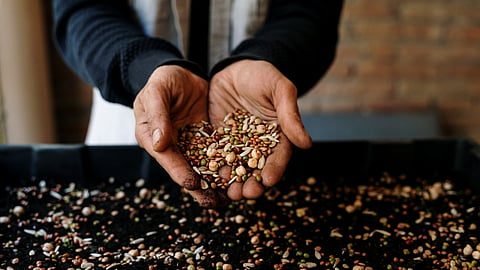
This observation triggered Samah, India's first seed cycling brand, built The Man Blend to work with that clock instead of against it. It's two distinct blends for two distinct windows. The AM blend, Mucuna pruriens, turmeric, ginger, lemon peel, maca, and amla, supports the natural morning peak rather than forcing an artificial one. The PM blend, tulsi, chamomile, ashwagandha, sweet potato, nettle leaf, and hibiscus, is built for the part almost nobody optimizes, the wind-down and deep sleep window where real recovery happens. No stimulants, no synthetic boosters, just whole foods working with a rhythm the body already runs on.
With Indian men finally paying heed to how they truly feel, can seed cycling be the answer we’re all on the lookout for?
“Men in their twenties and thirties are also increasingly anxious about low testosterone, much of it driven by online content. There's a clear shift away from synthetic supplements towards whole foods, and in India has an Ayurvedic familiarity, since herbs like ashwagandha and tulsi feel safe and traditional. Wearables have made the idea of a body clock tangible too, because people see their sleep and recovery data every morning. The underlying physiology is real. Testosterone does peak in the morning, and sleep does protect it. What hasn't been shown is that timing a herbal blend around that rhythm adds a benefit,” avers Dr Mukul Mittal, Medical Director, Ultrahuman.
What has genuinely changed over the last few years is that burnout, low energy, and inconsistent focus are finally being understood as patterns tied to biological rhythm rather than personal failings or lack of discipline. Wellness conversations that used to focus purely on women's cycles are slowly expanding to include men, partly because more research is emerging on male hormonal patterns, and partly because men themselves are starting to ask why their energy feels so unpredictable despite doing everything "right" on paper. That shift in awareness is opening space for simpler, food-based ways of supporting the body through the day, instead of the older default of reaching for caffeine or stimulants every time energy dips.
“A lot of people give up far too early because they expect to feel noticeably different within a few days, when hormonal patterns actually take several weeks to meaningfully shift,” notes Keerthi Aashish, Founder of Samāh and Vice Chairperson of Maheswara Medical College and Hospital, Hyderabad, adding, “Consistency matters far more than intensity here, and that is especially true around sleep, which is the part most men skip or deprioritize entirely, usually because mornings feel more urgent and evenings feel optional.”
Experts cite that the part most young men miss entirely is what happens overnight. Sleep is not simply rest, it is the actual window where the body repairs and replenishes itself hormonally. Testosterone recovery largely happens during deep sleep, so cutting sleep short or staying up late scrolling quietly undoes a lot of what a good, productive day built. “For someone just starting to think about this, I would frame it less as a performance hack or a trick to chase more energy, and more as learning to work with a rhythm the body already runs on naturally, rather than constantly fighting it with coffee, energy drinks, and sheer willpower. It is less about optimising and more about simply not working against yourself,” concedes Keerthi Aashish.
If there’s one takeaway you’d like to gain from this piece, let it be this: the biggest advantage of working with the body's own rhythm, rather than overriding it, is that there is no crash or dependency involved, unlike the cycle that comes with relying on stimulants to force energy that is not naturally there. It tends to feel more sustainable precisely because it is not fighting the body's baseline. energy, focus, and sleep patterns over time instead of relying on guesswork or vague impressions. And for men who want a simple starting point rather than trying to rebuild their entire routine at once, seed cycling can be a low-effort way to begin without overcomplicating things.
