
- Entertainment
- Style
- Lifestyle
- Food & Drinks
- Tech & Auto
- Culture

You have probably come across clips of athletes pulling off polished, gymnastics-style skills that look almost unreal. When you only see those highlights, it’s easy to assume callisthenics is meant for people with a very specific build or a lifetime of training behind them. That impression sticks, even though it has little to do with how most people actually start.
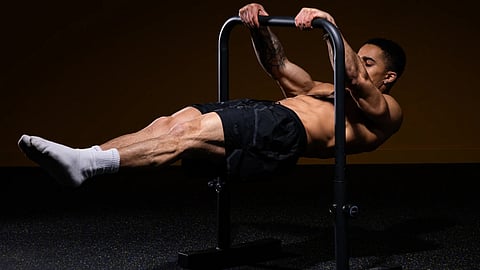
What those videos don’t show you is the long stretch of beginner progressions, the failed attempts, and the slow strength work that every athlete goes through. So if you have been holding back from bodyweight training because you think you would never be able to pull a human flag yourself, now is the time to drop these thoughts. Below, we debunk the most common myths regarding bodyweight training to make you a little less overwhelmed and get you started on that callisthenics journey.
You absolutely can. Muscle growth comes from three things: the stimulus you give your muscles, the nutrition you use to support that stimulus, and how much rest you allow your body to get (including sleep!).
As for stimulus, our muscles do not distinguish between a barbell and our own weight. It only reacts to resistance, fatigue, and progressive overload. So if an exercise becomes too easy, you increase the difficulty. If you can do fifteen regular push-ups, switch to pike or pseudo-planche push-ups. If squats feel too easy, try single-leg variations. The limiting factor is never the method. It is always your willingness to master the progressions.
The other half of the equation is diet and rest. If you aren't eating enough protein, eating at a surplus or getting enough sleep, your body will not prioritise building new muscle regardless of the training style. Meanwhile, exercising causes microtears in your muscle (that’s why leg days hurt like hell). If you don’t sleep eight hours a day, you don’t give your body enough time to recover and build new muscle with the surplus calories. Bodyweight training can be extremely effective, but only if the nutritional foundation matches the physical workload.
If anything, beginners should start here. Callisthenics builds functional strength by teaching you how to control your body, brace your core, stabilise your joints, and move with intention. Many gym injuries happen because people jump into heavy external loads without understanding basic mechanics. Training with your own body first lets you build that foundation safely.
What tends to discourage beginners, however, is the pace of visible progress. Muscle definition builds more slowly here because you rely on progression through leverage and control instead of quick jumps in external weight. But while the changes might appear gradual, you gain something that strength training alone often cannot match: better mobility, stronger joint stability, and more efficient movement patterns. Over time, that foundation makes you stronger overall and reduces the likelihood of injury, whether you stay with callisthenics or transition into weighted training later.
Serious athletes use callisthenics precisely because it builds functional strength and carries over into almost any sport. Gymnastics rings alone can humble elite weightlifters. If callisthenics were truly limited, gymnasts would not look like carved marble statues with freakish relative strength. When someone says this, what they really mean is that callisthenics stops working the moment they get bored.
This myth survives because people assume progress ends the moment an exercise becomes easy. That only happens when you stop progressing. You can increase difficulty through tempo changes, leverage shifts, unilateral movements, higher ranges of motion, weighted variations, and complex skill-based elements.
This idea usually shows up because people misunderstand how bodyweight mechanics work. If you are lighter, certain high-level skills like levers and planches may feel more efficient. That does not mean you cannot progress if you are taller or heavier. You simply need programming that matches your build and a bit more patience as you work through each stage. Your height does not stop you from doing pull-ups, dips, rows, push-ups, inverted work, or advanced strength progressions. It only changes how long it might take you to reach specific milestones.
Calling callisthenics a short person’s sport is like saying basketball is only for tall people. Height gives you an edge, not a pass.
You always need rest days, no matter what you do. Are you a dancer? You need a rest day. Are you an athlete? Goes without saying. A weightlifter? Absolutely, take a break. Are you into bodyweight training? The same rules apply. Your muscles need recovery, your tendons need time to adapt, and your nervous system needs breaks. Training every day without rest does not make you hardcore. It just guarantees plateaus and injuries.
As for equipment, you may not need a full gym, but you will benefit from a pull-up bar, rings, or even resistance bands. The former you can get at any park near your house. You can still wrap a bedsheet across your door for a makeshift ring. Make sure that the hinges are strong if you plan to do this, or you have a serious accident incoming.
A lot of gym goers can move impressive weight, yet cannot do a strict pull-up or hold their body stable on rings. If your only definition of effective training is building powerlifter-level numbers, then no, callisthenics is not here to help you bench three times your bodyweight. If you want strength, mobility, coordination, endurance, joint stability, and a balanced physique that actually moves like a gymnast while being ripped like an athlete, callisthenics is the superior technique.
This one refuses to die even though science buried it years ago. Bodyweight training does not stunt growth. What stunts growth is malnutrition, chronic illness, or poor lifestyle habits. Callisthenics is one of the safest ways for teenagers to build strength because it teaches control before load. It protects joints instead of overloading them. It reinforces healthy movement patterns instead of forcing the body into compromised positions under heavy weight.
If anything, teenagers benefit more from callisthenics than adults because they adapt faster and build coordination earlier.