
- Entertainment
- Style
- Lifestyle
- Food & Drinks
- Tech & Auto
- Culture

Walking into your first tasting menu can feel a bit like stepping onto the set of The Menu, minus the homicidal chef and cult-like diners, hopefully. It can feel intimidating at first, especially when you’re surrounded by people who seem to know when to swirl, sip, mix or pause. Besides, if your main exposure to fine dining is The Menu or the more chaotic moments of The Bear, it’s easy to assume tasting menus are high-pressure, high-stakes affairs designed to test your palate and your patience.
But the beauty of a tasting menu is that you don’t need to be an insider to enjoy it. You just need to show up curious and willing to trust the process. A good tasting menu works like this: there’s a larger story as envisioned by the chef, a flow in which the dishes are served, and a point to each dish. The point of a tasting menu is that the chef guides you through this vision for the meal. The servers, meanwhile, are like translators, explaining the chef's vision and helping you experience the menu in the best way you possibly can.
Still, if you’re hesitant to go ahead with it, here are a few things you should keep in mind before you sit down for that first course.
Arriving ravenous will have you inhaling the first few courses and burning out fast. Coming in too full will leave you unable to enjoy the progression. Find the balance: enough to avoid hangry mistakes, but light enough to taste everything. Eat something light beforehand, but keep enough room to savor the journey.
Don't forget to hydrate either: water cleanses your palate, allowing each dish to hit as the chef intended.
If you’re unsure how to eat a dish, what order to follow, or which utensil to use, just ask. Chefs and servers expect curiosity, so you won't lose face by voicing your doubts. Often, servers relay specific instructions from the kitchen: maybe a dish is meant to be eaten in one bite, or ingredients mixed in a particular order. Ignoring these directions can alter the intended experience. Asking shows engagement, and it ensures you’re tasting the meal as it was designed.
Tasting menus are the chef’s narrative. Some courses might seem unusual or “out of place” when they arrive, but they usually make sense in the larger context of the meal, so just trust the chef. Approach each course without judgment, and let the progression unfold. Who knows, you might be in for a surprise by the end!
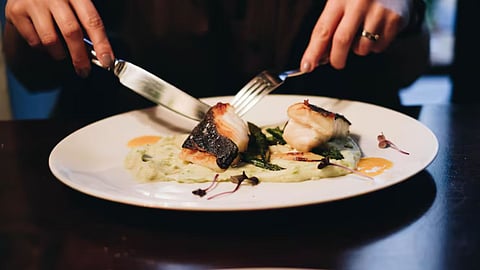
Contrary to the popular social media narrative, small plates are intentional; they are not a sign of stinginess. Each dish represents hours of labor, precision, and skill, often with multiple staff involved in preparation. Besides, many tasting menus can have up to twelve, even twenty courses, so rest assured that you will be full by the end.
Instead of focusing on volume, try to understand the techniques, ingredients, and creativity that went into every bite. Many dishes take hours of dedicated staff to prepare. Recognizing this effort can change your perspective and a series of small courses into a full, immersive experience.
Enjoy the experience fully: limit phone use to a single snap per course, follow pacing, and pick companions who can appreciate the food with you. Comfort matters too, so wear something you can sit in for hours without distraction. Most importantly, don’t pretend to be an expert. Genuine curiosity and openness will make the evening more enjoyable for you and those around you.