
- Entertainment
- Style
- Lifestyle
- Food & Drinks
- Tech & Auto
- Culture
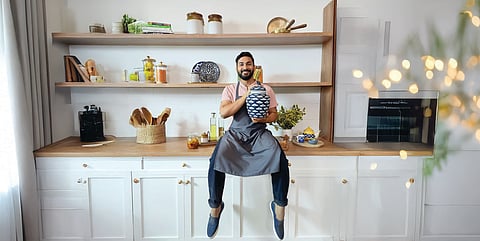
Sadaf Hussain has been cooking since the age of eight. One afternoon in his home in Ranchi, he decided to make his own garam masala. He threw in the ingredients into a mixer-grinder and gave it a good whizz. He felt proud of his achievement and decided to take a whiff, resulting in an obvious sneezing frenzy.
But that’s not the genesis of his journey. His journey from a curious kid romanticising the art of cooking to chef extraordinaire, he attributes to his name. “Sadaf is typically a girl’s name. It means mother of pearl. It’s had an impact on my vocation,” he quips.
He was initiated into kitchen errands at a young age when his late ammi (mother) was paralysed on her left side and everyone helped as a family. “Everything we cooked turned into a team effort – ammi, abbi (my father), my brother and I,” says Hussain. “Ammi would prep all the masalas, and abbi would blend it in a mixer. When we made pickles, I would go to the roof and put the chillies or mangoes out to dry. Ammi, in the final step, would add mustard oil,” says Hussain, who refers to his father as the skilled chef and taster.
Last year, Hussain, who is a two-time TedX speaker, co-host of an award-winning food podcast, Naan Curry, and a finalist on MasterChef India in 2016, released his third book, Masalamandi: A guide to the world of Indian Spice Blends, published by Penguin India. Each page takes the reader through a flavourful storytelling of biryani, chaat masala, chai, chole rajma, curry, garam masala, kebab, state spices, nihari paratha pickle, street food and haleem, in the hope to inspire them to try the recipes from scratch – beginning with blending the masalas. “Every state, every city, every family has a different ratio of ingredients in their masalas – that’s why a korma in Lucknow, tastes different than the one in Delhi, even if it has the same meat and recipe. Garam masala wears a name stamp but if you think, chai masala is also derivative garam masala,” says Hussain.
ESQUIRE: What spices can multitask in a global cuisine?
SADAF HUSSAIN: Since not every meal is Indian in homes anymore, there are a handful of spices that are good to stock in the kitchen pantry. These include cumin seeds, cinnamon, sesame and whole mustard. When I am making kebabs, be it India, middle-eastern or British grills, I like to rub the meat with a garam masala, which gives it a wholesome flavour.
ESQ: Is there a simple way to understand flavours?
SH: Think of it like perfumery, or jazz music. Every fragrance or musical note is doing a job, that impacts the result. In Jazz, the bass is the ground note from the cello or a heavy drum. Even while making garam masala, the idea is to balance a sharp flavour with a mellow it.
The base flavours are earthy like cumin and coriander seeds. Then, we have the floral, from coriander seeds, cinnamon and star anise. The third flavour is sharp – from black pepper, chillies and tez (sharp) masalas like a badi elaichi or nutmeg. The fruitiness comes from Jaiphal. The sharpest note is the one standout dominating note, be it nutmeg or pepper. All this, in cooking, is brought together by a squeeze of lemon – an opening note. Be it biryani, kormas, all of it needs symphony of flavours. We like it over night because the flavours settle into their places. So that leftover biryani, is not a bad idea (laughs).
ESQ: How to set up a man’s pantry?
SH: To set up a kitchen pantry for a man, we must understand his psyche. Most men cook on rare occasions, unless they are trained chefs or an exception. My recommendation would be to have everything stocked in a cupboard above the stove. This way, they can easily pull out all the ingredients and place them in a line. Since they are not used to cooking every day, keeping ingredients ready smoothens the cooking process. Every ingredient has a timing, at what time it is added in a dish.
ESQ: What are the must-have masalas?
SH: Apart from salt, pepper and red chilli powder, they should stock one ‘Ram baan’ garam masala that suits all dishes and can be added to ghosht as well as sabzi. Khade (whole, unground) masala list should include cumin seeds, choti elaichi, dal chini (cinnamon), Hing (asafoetida) kasuri methi (store in fridge), turmeric power – for adding colour, the Indian metallic flavour and is anti-inflammatory. Mustard oil for tadka along with a preferred choice. When it comes to choosing the storage option, please, ditch the fancy wooden boxes. They are most inconvenient. A good, steel masala dabba which is airtight is practical and handy. If it is something that is passed down in your family, even better.
