
- Entertainment
- Style
- Lifestyle
- Food & Drinks
- Tech & Auto
- Culture

At some point, most people discover that subtitles are not the obstacle they once thought they were. In fact, after enough world cinema, English-language films can start feeling strangely over-explained. That’s part of the appeal of MUBI. The platform has quietly become one of the best places to discover international films. These are the films people recommend when they want cinema to feel immersive again. The kind of films that stay with you for days after you've watched them.
Here are 15 world cinema films on MUBI worth making time for.
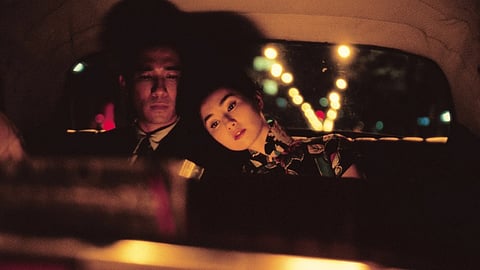
Directed by Wong Kar-wai, In the Mood for Love follows two neighbours in 1960s Hong Kong who slowly realise that their spouses are having an affair with each other. Few films capture longing as accurately as this one does. Not dramatic love or cinematic passion, but longing in its purest form.
Visually, the film is extraordinary. Even people who don’t usually watch world cinema tend to remember In the Mood for Love because it understands something painfully human: sometimes the relationships that affect people most are the ones that never properly happen.
Perfect Days follows a middle-aged man who cleans public toilets in Tokyo and lives a life built around routine and small rituals. It is about the dignity of ordinary life, about finding peace in repetition.
A large part of why the film works so beautifully is because of Koji Yakusho. One of Japan’s most respected actors, known for films like 13 Assassins and Babel, his performance is built almost entirely on restraint. In a film where very little happens on the surface, he somehow makes every routine feel emotionally revealing.
Wong Kar-wai’s Chungking Express is a film about romance and emotional confusion inside a city that never seems to slow down. The film follows two separate love stories involving chance encounters that feel both accidental and strangely fated. The real subject of the film is emotional disconnection in modern urban life.
Set in 18th-century France, the film follows a painter who is hired to secretly paint the portrait of a young woman before her arranged marriage. Because the woman refuses to pose willingly, the artist studies her quietly during walks, conversations and shared moments, memorising her face in secret.
The film is also visually extraordinary without ever feeling ornamental. It also quietly critiques the way women have historically been observed and painted through male perspectives.
La Haine unfolds over twenty-four hours in the lives of three friends who are living in the housing projects on the outskirts of Paris. Made in response to real incidents of police violence and unrest in France, La Haine remains startlingly contemporary more than three decades later.
Despite its political urgency, the film never feels like a lecture. Shot in striking black and white, the film gives Paris an entirely different texture from the one usually seen in cinema.
Originally conceived as a companion piece to Chungking Express, the film follows a collection of disconnected souls moving through Hong Kong's sleepless nights. The film is famous for its visual style, and rightly so. Shot by legendary cinematographer Christopher Doyle, Hong Kong becomes a distorted dreamscape of neon reflections and impossibly wide-angle lenses.
The film is often described as a psychological thriller but that label only captures part of what it is doing. At its core, Burning is a study of class anxiety and invisible resentment. Directed by Lee Chang-dong and loosely adapted from a short story by Haruki Murakami, a young aspiring writer reconnects with a childhood acquaintance who later returns from a trip accompanied by an affluent, charismatic stranger. From there, something shifts. Not immediately. But just enough to make everything feel slightly wrong.
Past Lives is about the quiet grief of unrealised possibilities. Directed by Celine Song, the film follows Nora and Hae Sung, childhood friends in South Korea whose lives diverge when Nora emigrates to Canada with her family. Years later, after reconnecting online as young adults, they lose touch again before finally meeting in New York in their thirties.
Most great romances are about people trying to be together. Cold War is about two people who can never quite manage it. It follows Wiktor, a musician and Zula, a young singer, who meet in post-war Poland and begin a passionate relationship that unfolds across nearly two decades and several countries. Over the next fifteen years, they meet, separate and find their way back to each other across different countries, political systems and stages of their lives.
At first glance, Decision to Leave looks like a murder mystery. A man has fallen to his death from a mountain peak and detective Hae-jun is assigned to investigate the case. But the film is never really interested in solving a crime. Directed by Park Chan-wook, it gradually transforms from a detective procedural into something much stranger.
The Worst Person in the World follows Julie through her twenties and early thirties as she drifts between careers, relationships. She finds versions of herself, never quite certain what kind of life she wants. The film understands that uncertainty is not a failure of character. For many people, it's simply part of growing up.
Happy Together follows Lai Yiu-fai and Ho Po-wing, a volatile couple from Hong Kong who travel to Argentina hoping to repair their relationship. Instead, they find themselves trapped in the same cycle of separation and reconciliation that has defined their lives together. The film strips away the fantasy of romance and focuses on what happens after love becomes difficult.
Yi Yi follows a middle-class family in Taipei over the course of a year. A wedding, a birth, a first love, a failing marriage, a business trip, an illness. Nothing particularly extraordinary happens, yet by the end it feels as though an entire lifetime has passed. At its heart, Yi Yi is about perspective. About how differently life appears depending on where you stand.
Directed by Park Chan-wook, The Handmaiden begins as a con. Set in Japanese-occupied Korea during the 1930s, the film follows Sook-hee, a young pickpocket who is hired to become the maid of a wealthy Japanese heiress, Lady Hideko. Adapted from Fingersmith, The Handmaiden is built around deception. Characters who appear powerless become powerful. Victims become conspirators.
Directed by Justine Triet, Anatomy of a Fall begins when a man is found dead outside his family's isolated chalet in the French Alps. His wife, Sandra, becomes the prime suspect and the case soon goes to trial. But Anatomy of a Fall is ultimately far less interested in a man's death than in the life that preceded it. As the trial unfolds, lawyers begin examining Sandra and her husband's marriage in microscopic detail.