
- Entertainment
- Style
- Lifestyle
- Food & Drinks
- Tech & Auto
- Culture
You know exactly how this goes. Someone cries in a hallway. Someone says, “I’m not here to make friends” and means it more than they think. Someone gets voted out for a reason that has nothing to do with the reason everyone gives. You watch anyway, not despite knowing, but because knowing... is the whole appeal.
Ten years ago, Indian streaming didn’t want you to know anything. It wanted you patient, unsure, sitting through a slow first act on the promise that the payoff would justify the wait. A genre that was neither cinema nor television, built on the specific pleasure of a story earned by inventiveness and audacity. Shows like Sacred Games and Delhi Crime were cast into that mould.
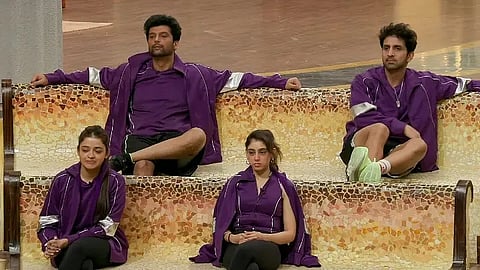
However, somewhere along the line that changed. Bigg Boss OTT took us there first. Lock Upp followed in 2022. Earlier this year, The Alliance dropped. And The Traitors was back for a second season, dragging half the internet’s group chats behind it. The same platforms that spent a decade selling ‘merit’ and ‘craft’ are now getting their loudest hour of the week from a format television perfected decades ago and the culture has always filed under low-brow.
Which leaves one real question. Did the audience change, or did people just stop pretending?
“Your investment is zero,” says Mamlesh Tiwari, an editor on Fabulous Lives of Bollywood Wives. He’s not talking about subscription fees—he’s talking about the debt every prestige show makes you carry: sit through the setup, trust the payoff, don’t check your phone or you’ll lose the thread. Reality TV waives all of it. Miss three episodes of The Traitors and you’re caught up by the next scene, because the plot was never really the plot. The plot is: who you believe and who’s about to be proven wrong.
The tidy explanation—that audiences tune in to watch the rich humbled—doesn’t survive contact with what each format actually offers. Prestige television sells certainty: the colour grade, the score, the ending, all under control. Pair that with an increasingly PR-scrubbed version of everyone’s public self, and what people are really starving for isn’t humiliation. It’s old-school human pettiness and authenticity. Reality TV is the one format left that still refuses to promise polish.
“It’s the discomfort and the unscripted nature of it,” says Rida Tharana, who appeared on the second season of The Traitors. And she doesn’t let the audience off easy: watching someone unravel comes with a free upgrade to moral high ground. “You feel superior,” she says, “just because you think you’d have acted better.”
So... discomfort, plus the older, less noble pleasure of judging someone for free. That’s the whole appeal, and it doesn’t need a third theory.
Which brings us to the real fault line—not taste, but permission. Nobody is actually swapping out one audience for another. It’s the same person on the same couch, watching a prestige thriller on a Tuesday and a house of strangers turn on each other on a Thursday, with no sense of contradiction because there isn’t one. Sufi Motiwala, who went from The Traitors Season 1 right into the second season of Lock Upp, makes the case plainly: “A person who can enjoy both high-octane fiction and super chaotic reality television is a fully rounded person.” What has changed isn’t the appetite. It’s that people stopped treating one half of it as something to hide.

For instance, Rabbani Narula, a 21-year-old copywriter who had a zero reality-TV habit a year ago and now treats Lock Upp as appointment viewing, isn’t an outlier but the pattern. Attention spans have shrunk; even watching a film now feels like a commitment. The old escapism of film-watching has curdled, because we’re already detaching from reality faster than fiction can offer refuge from it.
What’s left is something rawer and, ironically, more human—a place to root for someone, plainly and without irony. “Gradually I secretly wish for a specific someone to win,” Narula says, adding, “a journey of liking someone’s game, their attitude, just the way they’ve carried themselves.” That’s not a lesser form of attention. It’s the same instinct prestige drama has always run on, one it’s increasingly failing to deliver: the simple pleasure of picking a side.
None of this needed the audience to get dumber. It required the platforms to stop pretending the audience was only ever in it for the architecture. And once the platforms noticed nobody minded, the rest was just math. “At the end of the day,” Tiwari says, “the market wins.”