- Entertainment
- Style
- Lifestyle
- Food & Drinks
- Tech & Auto
- Culture

AI generated summary, newsroom reviewed
After two and a half seasons, Rhaenyra Targaryen is finally on the Iron Throne. Wait, doesn’t it mean that the show should end here?
Far from that, actually. If anything, we saw this week how her problems have just begun. Rhaenyra is in an emotionally fragile state. She is grieving the death of Jacaerys, trying to hold together a divided council, and attempting to win over a city that is already displeased with her. On top of that, Daemon is urging her to focus on expanding her territory, and Mysaria insists that the suffering people of King's Landing should be her priority.
And to make matters worse, the Queen’s Hand and her most important ally, Corlys Velaryon, seems like he might change sides at the end of the day, after everything they have been through together. Here’s what caused the rift between the two.
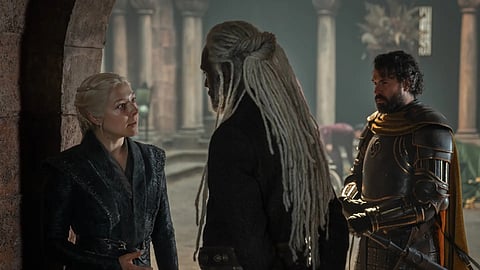
In season 3, episode 1, we saw Corlys lose his castle. His family has already been burnt to a crisp (at least according to him) in the previous seasons. Now, Jace is dead, which means House Velaryon’s heir, Joffrey, is automatically the heir to the Iron Throne. Scared that his house will die out, Corlys requests at a dinner that his bastard sons, Adam and Alyn, be legitimised. Rhaenyra does not outright refuse. Instead, she says she may be able to honour his wishes "one day, when there is not so much scrutiny." But Corlys snaps, lashing out at her and calling her sons bastards in front of everyone.
It might look like a rash decision on Rhaenyra’s part to say no to him, but legitimising the Velaryon bastards means bringing in more trouble for her.
Throughout her life, Rhaenyra’s claim to the throne has been undermined by persistent rumours that her three eldest sons with Ser Laenor Velaryon, Jacaerys, Lucerys, and Joffrey, were fathered by Ser Harwin Strong. It doesn’t help that the boys had Ser Strong’s black hair when no one in their family had it.
Now that she has only just claimed the throne, publicly legitimising two acknowledged bastards would only add more fuel to the rumours. The optics would be disastrous. Immediately elevating Addam and Alyn could encourage both the nobility and the smallfolk to reopen questions about her own children's parentage.
You have to understand here that Corlys has lost everything in support of Rhaenyra’s cause. His wife, Rhaenys, died fighting for Rhaenyra's claim. His house committed its fleet and resources to her war, and for years he publicly accepted Rhaenyra's sons as his own grandsons despite knowing very well who their true father was.
When Rhaenyra refuses to do the same for Addam and Alyn, Corlys sees hypocrisy.
So, at the dinner, he openly challenges her, asking why her own illegitimate children were allowed to carry the Velaryon name while his sons cannot. For Corlys, the issue is no longer just about inheritance. It is about fairness and loyalty. He believes he protected Rhaenyra's family despite the controversy surrounding her children, yet she is unwilling to extend that same protection to his.
This feeling was made worse when Daemon unwillingly knighted the new Dragonseeds (Addam being one amongst them), and instead of knighting him as Adam Velaryon, he said Addam Hull.
Corlys' confrontation does not necessarily mean he has abandoned Rhaenyra's cause, but it marks the deepest crack in their alliance so far.
In the book, Corlys will ultimately betray Rhaenyra’s cause, but that’s because Far and Blood’s Rhaenyra is much more paranoid than her show counterpart, and when Hugh and Ulf betray her cause to join the Greens, she begins to think all the Dragonseeds are traitors. She orders for Addam’s arrest, which ultimately leads Corlys to abandon her cause for the Greens. The question about legitimising the Velaryon bastards appeared much earlier in the book, where Jace himself had helped settle it.
In the show, however, there’s no Jace to settle the dispute, and with the liberties already taken by the showrunners, this might be where the two houses finally diverge.