
- Entertainment
- Style
- Lifestyle
- Food & Drinks
- Tech & Auto
- Culture
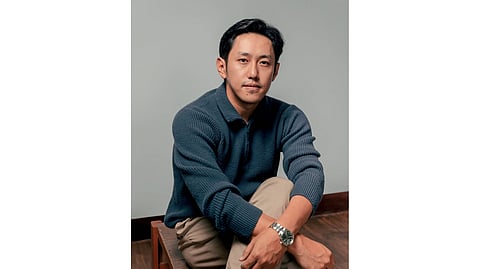
CHEERS, APPLAUSE AND PRIDE FILLED DIMAPUR Airport earlier this week when Naga filmmaker Theja Rio returned after his film Angh won at the Toronto Film Festival. Elders of his tribe—Angami—welcomed the 31-yearold, along with the film’s producer, Nancy Nisa Beso and lead cast, Anglong Konyak and Sobino Rengma.
The morning after, Rio is still trying to wrap his head around the welcome. “It’s so surreal. There were hundreds of people at the airport and they had come to celebrate our film. I am so overwhelmed,” he confesses. Angh, his debut feature film premiered in competition at TIFF and won the Platform Prize. As per the new Academy guidelines, this makes the film eligible to compete in the Best International Feature Film category at the Oscars despite not being chosen as India’s official entry.
Adapted from his 2021 eponymous short film, Angh is centred on Konyak village chief Anghbha (played by Konyak) and his mute son (played by Rengma). Set in early 1960s Nagaland, the film follows the duo as their world is irrevocably changing. The largest among Nagaland’s 17 major tribes, the Konyaks primarily live in the Mon district, along the India-Myanmar border. The tribe is famous for being fierce warriors and their historical practice of headhunting. Warriors had tattoos etched on their faces to mark the number of kills after a battle. The advent of Christianity in the ’60s ended both practices.
“In 2016, I travelled extensively in Mon to do research for another project. Seeing older Konyak men with tattooed faces while dressed in modern clothes felt like going into a time warp. It was like witnessing the past and the present coexisting,” Rio recalls. Exploring this cultural gentrification through a father-son story, Rio’s short film Angh did the festival rounds in 2021. Its reception gave him the confidence to expand it into a feature. The new script, written by Rio and James Davis, was shared with the Konyak Literature Body for approval and translation. “The Konyak community was involved from the inception. We’d have someone on set every day making sure that we got everything from the language to appearances and customs right. They even helped us build our sets,” says Rio. As an indigenous filmmaker, he understands the responsibility that comes with telling a story about people and places that are underrepresented in films. “By default, the film becomes a representation of that region; the responsibility is almost inherent. My biggest task was balancing this with the emotional core of my story,” he states.

Scottish actor Douglas Henshall (Shetland and Primeval) joins an ensemble cast of hyper-local, non-professional actors. “Except Sobino, almost the whole cast is Konyak,” Rio adds. For almost a year, the film’s casting team travelled the region looking to populate the cast. “When acting knowledge or experience isn’t a criterion, you can look for people who embody the attributes of the character. Hiring people who already spoke the language, lived in the region and understood the culture meant that in front of the camera, they didn’t really need to ‘act’; they could just be.” Finding an actor to play the stoic village chief and father took a little longer. Two months before the shoot, Rio was still unhappy with his options for Angh. Then he came across videos of Anghlong Konyak, a well-known Konyak stand-up comic. “It’s such a demanding role; the heart of the film is Anglong’s performance. I am so grateful he agreed to do this film,” he says.
Early in the process, Rio knew that he wanted to shoot on 16mm film ‘to capture the mystique and the texture that you see in archival footage of early missionaries that came to the region’. He reached out to director Raam Reddy, whose Jugnuma—The Fable (2025) was also shot on 16mm, and used Reddy’s Arriflex 416 camera for the film, with Polish cinematographer Adam Pietkiewicz behind the lens. Though Rio was comfortable with the format, he sometimes regretted the decision during filming. “Logistically it was a nightmare because the print had to be sent to Mumbai from Dimapur by train for processing. There’d be a long lag between shooting and actually being able to see what you had shot.” Days before Angh’s win at TIFF, Pietkiewicz bagged the Artisan Award for the film.
Pietkiewicz and Davis are among the many friends and batchmates of Rio from the National Film and Television School (NFTS) in the UK who collaborated on this film. “They aren’t just collaborators but friends who really know me. They decided to come on board because they were passionate about this story.” Since completing his master’s in directing from NFTS, he’s completed Angh and shot his second feature, a coming-of-age story that expands on his short film Ade (on a Sunday). There are also multiple other scripts in different stages of completion. “I fell in love with stories when I was very young. Having lost my brother when I was just six,I was the only child. Making up stories became my way of dealing with boredom.”
And now, it might just take him all the way to the Oscars.
To read more stories from Esquire India's October 2026 issue, pick up a copy of the magazine from your nearest newspaper stand or bookstore. Or click here to subscribe to the magazine.