
- Entertainment
- Style
- Lifestyle
- Food & Drinks
- Tech & Auto
- Culture
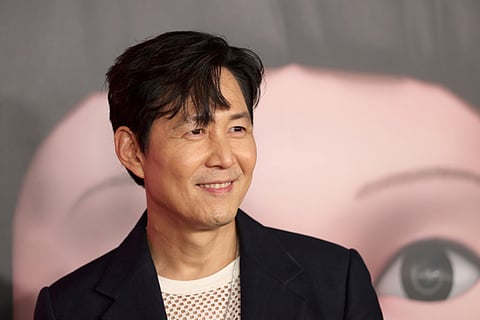
For nearly four years, Lee Jung-Jae was best known as Player 456 in Netflix's Squid Game, the role that turned him into a global household name. Now, the 53-year-old star is shifting gears with Not Nice To Meet You, a Prime Video rom-com where he plays, with ironic self-awareness, an actor trapped by the very roles that defined him.
It’s a bold pivot for someone whose career has spanned over three decades — from his start as a model in 1990s Seoul to breakout K-drama roles in Sandglass and The Affair, and acclaimed films like The Face Reader (2013). The last five years alone have seen him scale unprecedented milestones: becoming the first Korean actor to win an International Emmy in 2022, the first Asian actor cast as a Jedi Master in Star Wars: The Acolyte, and delivering hits like Deliver Us from Evil (2020) and Hunt (2022).
Off screen, Lee has cemented his place as a global cultural and style icon, serving as a worldwide ambassador for Gucci. In this exclusive conversation with Esquire India, he talks about shifting genres, the global rise of Korean content, and why craft and not fame continues to be his anchor.
After Squid Game, was doing a light-hearted rom-com a conscious decision?
Rom-coms are a favourite genre in the K-drama verse. I wanted to try my hand at it and seek an absolutely different character after coming out of the Squid Game world. One cannot keep doing similar roles, because there is no growth. In every actor, there is a desire to do something they have never done before.

In Not Nice To Meet You, you play an actor who cannot shed the image of detective roles. Has any role in your career been so consuming that it was hard to shake off?
I get asked this often, but for me, it comes quite easily to separate any role from my personal life. From the moment I step onto the set, I live as the character. But once the shoot ends and I’m back in my car, I snap out of it and return to myself. But of course, you never know—maybe one day I’ll meet a character I have to carry with me even off set.
Has the global rise of Korean content influenced the kinds of stories and roles you now choose?
I think early in my career, success influenced the way I chose projects. When you have a hit, there’s a natural ambition for the next one to be even bigger. But over time, I realised life doesn’t always work that way. Now, no matter how successful my previous project was, I don’t let that define my next step. I’m drawn to stories that challenge me and projects which would have a universal appeal. Of course, it’s wonderful when something becomes a huge success, but that’s never my priority. Squid Game holds special significance for me because of the many ‘Korean-first’ milestones it achieved.
And what about style—how do you approach fashion?
I try to find a balance between what's comfortable and fashionable, aiming for a sophisticated yet not boring look. I consider the venue, the people, and the purpose of the occasion—it’s all about context.