
- Entertainment
- Style
- Lifestyle
- Food & Drinks
- Tech & Auto
- Culture

India has always had a fraught relationship with the Oscars, and every year the conversation lands with the same tired split: cinephiles squint for signs of serious cinema, while Bollywood stans want blockbusters selected.
This year, though, the decision came out like a strong statement.
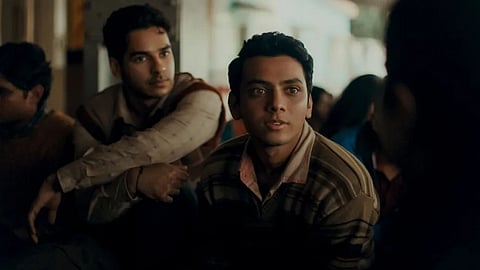
Neeraj Ghaywan’s Homebound is India’s official entry for the 2026 Oscars—and it’s a film that isn’t afraid to drag our lockdown ghosts back into the light.
The news broke while Ghaywan was tinkering with the trailer, days ahead of the film’s release. “Disbelief” was the word the entire cast reached for. Perhaps because, in the middle of blockbusters like Pushpa 2 or the politically loaded Bengal Files, a story about a Dalit boy and a Muslim boy trying to make it as police constables seemed unlikely to stand out. But that’s precisely the point.
Homebound takes its roots from Basharat Peer’s 2020 New York Times essay on India’s migrant crisis, and grows into a fully realised narrative about friendship, survival, and the desperate pursuit of dignity. Chandan (Jethwa) and Shoaib (Khatter) are not heroes in the cinematic sense; they’re stand-ins for millions who walked highways during the Covid lockdown, whose lives never made it past statistics. Their shared dream of joining the police force becomes both a lifeline and a cruel reminder of the structures they’re up against—caste, religion, bureaucracy.
For Ghaywan, who broke out with Masaan in 2015, the project was never just reportage. He has spoken about filtering the story through his own past—his teenage years of trying to pass as upper caste, his Dalit but patriarchal household, his negotiation with belonging. That layering is what elevates Homebound from topicality to something closer to testimony. The personal folds into the political, the friendship folds into the nation.
The selection is a bigger win because this certainly wasn’t a quiet year. The entry list featured heavyweights—Abhishek Bachchan’s I Want to Talk, Anupam Kher’s Tanvi the Great, even Allu Arjun’s megahit sequel Pushpa 2. That Homebound emerged from that scrum is telling. The Film Federation of India is, for once, signalling that prestige cinema doesn’t have to mean decorative exotica or nationalist chest-thumping; it can mean a film that premiered in Cannes’ Un Certain Regard, placed second runner-up in Toronto’s People’s Choice Award, and still speaks in the plain, urgent language of the lockdown years.
It helps, of course, that Dharma Productions backed it, with Martin Scorsese himself attached as executive producer—credentials that will count in Hollywood. But the film’s real wager is whether a deeply Indian story, heavy with the specifics of caste and community, can travel. Ghaywan believes it can: “To take our stories to the world and represent India at one of the biggest global stages is humbling,” he said.
Will it actually go the distance? Hard to say. The International Feature category is a blood sport, where politics, budgets, and timing matter as much as craft. But even if Homebound flames out before the shortlist, the choice itself says something: that Indian cinema, sometimes, can just tell the truth. And sometimes, that’s enough.