
- Entertainment
- Style
- Lifestyle
- Food & Drinks
- Tech & Auto
- Culture
Imagine this scenario: you’re having a late-night conversation with your mother over a cup of chai. She's telling you stories from her youth, not just her achievements but also her mistakes. Her dreams, her heartbreaks. The life she lived and the one she didn’t get to. It's in that moment that you realise that the woman in front of you isn’t just your mother but a person whose life extends way beyond what you’ve known, and what you’ve ever thought about. We’ve all been there, haven’t we?
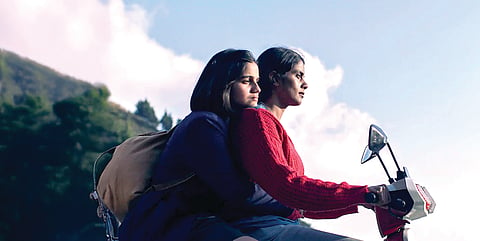
This uncomfortable yet inevitable emotional terrain has been expertly captured in Girls Will Be Girls, a coming-of-age story about a young girl and her mother. It’s an unflinching exploration of the mother-daughter dynamic, riddled with unspoken emotions, years of misunderstandings, and the silent ache of expectations unmet. Mira and Anila’s dynamics will force you to think how, as children, we rarely see our parents in human terms — imperfect, erring, and deserving of sympathy.
Anila is a study in contradictions. She is a woman shaped by disappointments. Compromises she had to make, a denial of the life she had wanted. To Mira, she is a figure of frustration in the form of a mother she cannot understand: regressive, needy, and almost impossible to pin down. Isn't this how many of us imagine our parents? We grow up blaming them for everything that feels wrong in our world, be it their decision or their actions or the silences of theirs—never taking into account what has formed them.
When Shree enters their home and lives, both women are seeking his validation, wanting his attention. The mother-daughter are at odds with each other, suddenly aware of how different they are and how much they’ve let be for years. For most of the movie, it's easy to side with Mira. Anila's traits don't make her likable, and she's overbearing yet distant, protective yet controlling. And you feel all the cracks along both of their facades starting to show as it tells.

Director Shuchi Talati’s brilliance lies in the way she makes you complicit in all those judgments by Mira. You go through quick assignations, naming the antagonist in a relation. Only later it dawns on you that no, there is just no real competition here to begin with. It is just two human beings fighting with the burdens of their own expectations and unspoken wounds.
It’s when Shree remarks about her mother’s need for attention, that Mira is forced to see her mother in a new light. Her reaction is shame, not merely at how she has been treating her mother but for the fact that she let herself become blind to the human being that Anila is. She realizes that her mother's severity was never about Mira herself. It was a defense mechanism, a way for Anila to shield herself from the vulnerability of admitting her own fears and failures. For the first time, Mira realizes that she's been so busy judging her mother that she's never sought to understand her.
It's such an intimate revelation that it seems the film is holding a mirror up to its audience. How many times have we done that? How many times have we put our parents on a list of their mistakes and shortcomings, without once stepping back and giving their weight any consideration?
By the end of the film, their relationship hasn't magically been fixed. However, they have developed respect and understanding towards each other. Mira starts seeing her mother as a person with her dreams, struggles, and flaws. And Anila starts viewing Mira not just as her daughter but as another human being finding her own place in this world.
The reason Girls Will Be Girls is so potent is its universality. It's not just Mira and Anila's story; it's a story about any parent-child relationship that ever strained under the pressure of unstated expectations and generational differences. The film calls for us to confront our own biases and see the humanity in those whom we are closest to and realize that understanding is possible only when one lets go of blame and embraces the messy, intricate reality of love.
It's simple to assign roles: parent, child, hero, villain. But life isn't that simple. Girls Will Be Girls is a reminder that empathy is the bridge we all need, a bridge that requires us to step back, to see the whole picture, and to find grace in the imperfections of those we love.